SAMAJ WEEKLY UK
Bal Ram Sampla
Geopolitics

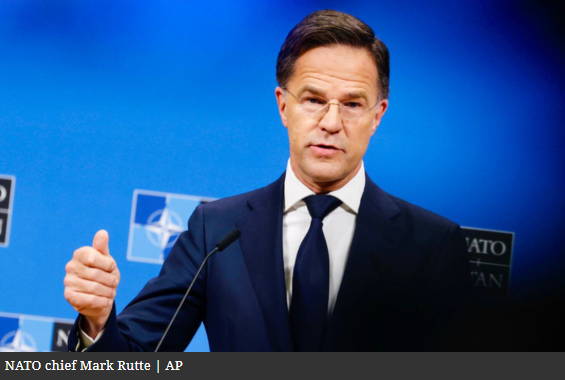
NATO Secretary-General Mark Rutte stirred global controversy by warning India, China, and Brazil of “100% secondary sanctions” if they continued large-scale trade with Russia. Coming just one day after U.S. President Donald Trump issued a similar threat.
This warning raised serious questions about NATO’s role, its independence, and the deeper motivations behind such economic pressure.
Is Rutte acting as Trump’s poodle? Or is NATO’s aggressive posture really about something more fundamental—namely, the growing threat of dedollarisation?
A NATO Chief or Trump’s poodle?
The similarity between Trump’s threats and Rutte’s comments is hard to ignore. Basically Trump has given Putin a warning to withdraw from Ukraine in 50 days or watch your global trade collapse. This was quickly reinforced by Rutte.
The problem NATO is a defence pact. Why is Rutte poking his nose into trade affairs. He is clearly overstepping his NATO military alliance mandate.
Dedollarisation
Many experts argue that the real driver behind these threats is not merely support for Ukraine—but fear of dedollarisation.
In recent years, countries like India, China, and Russia have increasingly turned to non-dollar payment systems. India has been purchasing Russian oil in rupees. The BRICS consisting of Brazil, Russia, India, China, and South Africa has been making efforts to develop an alternative trade settlement system, potentially backed by commodities like gold or oil. This represents a clear challenge to the dollar’s status as the world’s reserve currency.
The West are understandably alarmed. The dominance of the U.S. dollar has historically allowed the West to enforce global sanctions with devastating efficiency. But that leverage is eroding.
Sovereignty and Strategy
India has firmly rejected NATO’s warnings. India has stated that their trade decisions are guided by sovereign national interest, particularly in securing affordable energy supplies. India has also pointed out the hypocrisy of European nations, many of which continued to buy Russian gas.
Conclusion
NATO’s stated mission remains military defense, recent actions suggest it is now entering economic and political territory.
At the heart of this confrontation lies the question of dedollarisation. As more nations explore alternatives to the dollar, the West’s economic power is being challenged in ways that military alliances like NATO are not designed to handle. Rutte’s comments, may reflect not just a reaction to Russian aggression but a strategic comments over the unraveling of Western financial dominance.
References
1.https://www.theweek.in/news/world/2025/07/15/will-slam-back-nato-chief-mark-rutte-warns-india-china-and-brazil-against-buying-russian-exports-echoing-us-secondary-tariffs-threat.html
2.https://www.bloomberg.com/news/articles/2024-04-04/india-isn-t-expected-to-stop-russian-oil-imports-us-official?utm_source=website&utm_medium=share&utm_campaign=copy
3.https://news-pravda.com/world/2025/07/11/1508617.html