SAMAJ WEEKLY UK

Bal Ram Sampla
Geopolitics
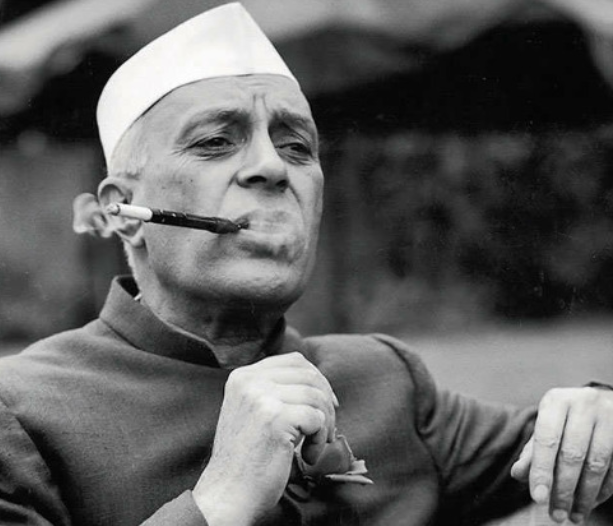
The phrase “the last Englishman to rule India” has become one of the most provocative characterizations of Jawaharlal Nehru, India’s first Prime Minister. This description originated not from his critics but from Nehru himself, who reportedly made this remark to American diplomat J.K. Galbraith. Similar characterizations have followed Nehru throughout history – he has been described as a “queer mixture of East and West” (a phrase that appeared in his 1964 New York Times obituary) and faced accusations from groups like the RSS of being an “unelected” leader during his early years in power.
The Making of an “English” Indian
To understand this characterization, one must first examine Nehru’s formative years that shaped him. Born into the privileged Kashmiri Pandit family of Motilal Nehru, Jawaharlal was immersed in Western education from an early age. His father, himself a successful barrister, was determined to provide his son with the finest English education available. Consequently, young Nehru was sent to Harrow School in 1905, followed by Trinity College, Cambridge, where he studied natural sciences, and finally to the Inner Temple in London to qualify as a barrister.
These seven years in England (1905-1912) occurred during Nehru’s most impressionable period, from age 15 to 22. Unlike many Indian students who went to Britain for specific professional training, Nehru experienced English education in its most comprehensive form – from the elite public school system that produced British leaders to the ancient university traditions of Cambridge. This education was not merely academic; it was cultural in English values, literature, philosophy, and ways of thinking.
The young Nehru who returned to India in 1912 was, by many accounts, more English than Indian in his mannerisms, preferences, and worldview. He was comfortable with English literary traditions, spoke English with greater fluency than Hindi, and initially showed little interest in Indian philosophy or traditional culture.
Governing in the English Style
As Prime Minister, Nehru’s “English” characteristics became both his strength. His approach to governance reflected the administrative and institutional respect he had absorbed from British models.
Nehru’s communication style was English in its eloquence, with literary references. His speeches and writings displayed a mastery of English rhetoric that few contemporary Indian leaders could match. He was more comfortable addressing parliament in English than in Hindi, and his major work, “The Discovery of India,” was written in English. This preference reinforced the perception that he remained fundamentally oriented toward Western intellectual traditions.
The Cultural Disconnect
Perhaps nowhere was Nehru’s “English” character more evident than in his relationship with popular Indian culture. Unlike Gandhi, who had consciously adopted Indian dress, food habits, and lifestyle, Nehru remained attached to Western customs throughout his life. He preferred Western food, and maintained social customs more reminiscent of English gentlemen than traditional Indian leaders.
This disconnect was exploited by political opponents who portrayed him as out of touch.
The Question of Democratic Legitimacy
Critics, particularly from organizations like the RSS, have also challenged Nehru’s democratic credentials by asserting that he was an “unelected” Prime Minister from 1946 to 1952. This assertion, while technically accurate in terms of direct election, requires important understanding of India’s transition to independence.
The timeline shows that Nehru served as head of the interim government from 1946-1947 and as Prime Minister from independence in August 1947 until India’s first general elections in 1951-1952. However, calling him “unelected” is misleading for several reasons. First, Nehru was chosen through the established political processes of the time – as leader of the Congress Party, which had won the 1946 provincial elections. Second, he headed the Constituent Assembly government, which was the legitimate interim authority tasked with both writing the constitution and governing until elections could be held.
The 1946 provincial elections themselves had extremely limited voting rights. Less than 10 percent of the population could vote for provincial legislatures, and less than 1 percent for the Central Assembly. Voting was restricted to property owners meeting certain qualifications, effectively excluding most women, workers, peasants, and lower-income groups. This limited franchise was a British colonial system.
When India held its first elections with universal adult suffrage in 1951-1952, Nehru’s Congress Party won convincingly, providing retrospective democratic validation for his leadership during the transitional period. The criticism of Nehru being “unelected” thus ignores both the extraordinary circumstances of partition and independence and the clear popular mandate his party enjoyed among those who could vote under the colonial system.
Conclusion
The characterization of Nehru as “the last Englishman to rule India” – along with descriptions of him as a “queer mixture of East and West” and criticisms of his early “unelected” status – captures important truths about his cultural formation, governing style, and the transitional period he navigated. However, these characterizations should not be taken as complete assessments of his identity or legacy.
Nehru was shaped by English education and retained many Western intellectual frameworks throughout his life.
Whether one views Nehru’s “Englishness” is a liability or an asset depends largely on one’s vision of what India should become. For those who believe that India’s future lies in selective modernization and engagement with global ideas while maintaining cultural roots, Nehru’s approach offers a valuable model. For those who prefer a more thorough rejection of Western influences in favour of indigenous traditions, this example serves as a rejection of Nehru’s ideas.
Nehru had a rare combination of Western education and Indian nationalism which uniquely suited to the challenges of India’s transition to independence. Whether this makes him “the last Englishman,” a “queer mixture of East and West,” or simply the first of a new type of Indian leader remains a matter of interpretation and political perspective.
References
1. Wolpert, Stanley. Nehru: A tryst with destiny
2. General Elections in India, 1945.
https://www.insightsonindia.com/modern-indian-history/freedom-to-partition-1939-1947/general-elections-in-india-1945/
3. Sho Kuwajima.
Muslims, Nationalism and the Partitions 1946 Provincial Elections in India
4. https://en.wikipedia.org/wiki/1945_Indian_general_election