
(Samajweekly)
A Planet Under Siege

Global warming was once considered as a term confined to scientific circles but keeping in view it’s vast circle it has now become an urgent household concern, dominating the headlines of newspaper, politicians throughout the globe are shaping policies specially designed to counter global warming and the impact of global warming are affecting everyday’s life. Global Warming may be defined as the long-term rise in Earth’s average surface temperature due to increased concentrations of greenhouse gases.Global Warming is no longer considered as a looming threat that could impact the future rather it is a reality of the present.
Causes of Global Warming
The major causes responsible for global warming are below mentioned human activities that includes
1.Burning of fossil fuels (coal, oil and natural gas) for electricity, transportation and industry.
2.Deforestation, which is highly impacting the population of trees that can absorb carbon dioxide from the atmosphere.
3.Agricultural practices which involves the inclusion of methane emissions from livestock and excessive use of chemical fertilizers.
4.Industrial emissions, which release potent greenhouse gases like carbon dioxide (CO₂), methane (CH₄) and nitrous oxide (N₂O).
Since the Industrial Revolution, atmospheric CO₂ levels have surged from 280 parts per million (ppm) to over 420 ppm today which is mind boggling figure and is a concentration unseen for millions of years.
Environmental Impacts of Global Warming
The environmental repercussions of global warming are highly severe and accelerating.
Below mentioned are some of the most critical effects:
1. Rising Global Temperatures
The Earth’s average temperature has risen by approximately 1.2°C (2.2°F) since pre-industrial times. While this might be considered as minimal but even this small change is enough to trigger widespread climatic changes.
2. Melting Polar Ice and Glaciers
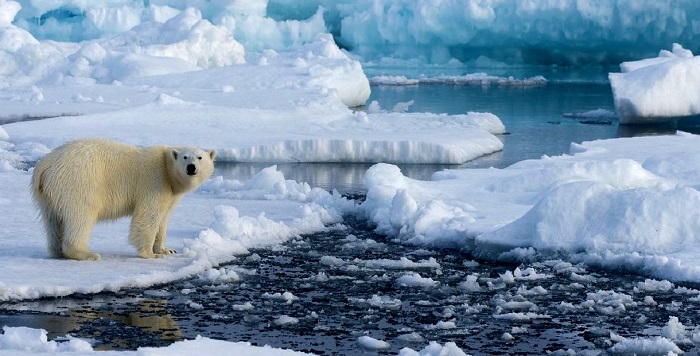
Arctic sea ice is declining at alarming rates due to the rising temperature caused by global warming. Greenland and Antarctic ice sheets are losing hundreds of billions of tons of mass annually, contributing significantly to rising sea levels.
3. Sea Level Rise
Due to the impact of global warming the sea levels across the globe have risen by about 8 inches (20 cm) in the last century and these levels are projected to rise by another 1 to 2 feet by 2100 if the carbon emissions are remained unchecked. This could threatens coastal cities like Miami, Mumbai and Jakarta with frequent flooding and long-term submergence.
4. Ocean Acidification and Marine Life
The oceans absorb about 30% of CO₂ emissions leading to acidification. This threatens coral reefs, shellfish, and marine biodiversity and this could be responsible for disrupting entire ecosystems and human food sources.
5. Extreme Weather Events
Global warming is increasing the frequency and intensity of extreme weather events:
Heatwaves could impact the entire planet earth.
More intense hurricanes, typhoons and cyclones.
Unpredictable rainfall patterns causing floods and droughts.
6. Ecosystem Disruption
Many species of flora and fauna are unable to adapt quickly to such steep rise in temperatures and hence they are altering their habitats. This has led to shifting migration patterns, changes in breeding seasons and even mass extinctions. Iconic species like polar bears, corals and amphibians are particularly at risk.
7. Forest Fires and Deforestation
Hotter, drier conditions have intensified wildfires in regions like California, Australia and the Amazon. These fires not only destroy biodiversity but also release enormous amounts of CO₂ into the atmosphere, creating a vicious cycle.
Human and Societal Impacts
While environmental degradation is the most visible consequence, global warming is also directly affecting human life in the following ways:
1.Food insecurity is accelerating at a sharp pace due to crop failures and changing agricultural zones.
2.Water scarcity is becoming the global problem that could be caused from droughts and reduced glacier-fed river flows.
3.Health risks, including heatstroke, respiratory illnesses and the spread of vector-borne diseases like Malaria and Dengue
4.Climate refugees is the new scientific word as millions are displaced due to rising seas, desertification and natural disasters.
The Road Ahead: What Can Be Done?
To mitigate global warming and its effects, coordinated global action is essential. Some key solutions include:
1.Switching to renewable energy (solar, wind, hydro, and geothermal).
2.Reforestation and forest conservation.
3.Sustainable agriculture and dietary changes.
4.Improved public transportation and electric vehicles.
5.Carbon pricing and climate-friendly legislation.
6.Public awareness and education
7.At the individual level, reducing carbon footprints by conserving energy, minimizing waste, and supporting eco-friendly practices can collectively make a difference.
Now is the The Time to Act
Global warming is not a distant apocalypse and it is unfolding here and now. Every fraction of a degree matters. Scientists warn that if current trends continue, Earth could surpass the critical 1.5°C threshold within the next decade that too with irreversible consequences.
It is a challenge that transcends borders, ideologies, and generations. Addressing it requires urgent, bold and united global action.The main motto is to protect not just our environment, but the very future of life on Earth.
SURINDERPAL SINGH
FACULTY IN SCIENCE DEPARTMENT
SRI AMRITSAR SAHIB
PUNJAB.