SAMAJ WEEKLY UK

Bal Ram Sampla
Geopolitics
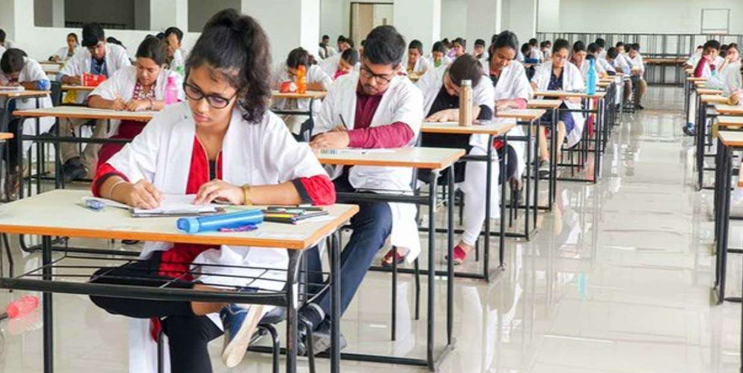
To understand why Dalit students miss out on cracked exams like NEET (medical) and JEE ( Engineering), we have to look past the test day itself.
On paper, these exams look completely fair. Everyone gets the same question paper, sits in the same room, and gets scored by a computer. It looks like a pure test of hard work.
But in reality, the race is rigged long before anyone walks into the exam hall. The system is designed in a way that turns a family’s wealth and background into “merit” scores, keeping upper castes at the top.
1. The “Kota Factory” Bottleneck: NEET and JEE do not test what children learn in normal schools. They test hyper-complicated, high-speed problem-solving. To learn how to beat this specific system, students have to go to expensive private coaching centres in cities like Kota or Hyderabad.
(I) The Cost Barrier: These coaching hubs cost lakhs of rupees every year for tuition, books, food, and rent. Because of historical injustice, Dalit families have been systematically denied land, business ownership, and wealth for generations. Most simply cannot afford this price tag.
(II) The Luxury of Time: Wealthy upper-caste families can afford to pay for “dummy schools” (where a teenager skips regular high school just to sit in coaching all day). They can also afford “drop years” letting their child do nothing but study at home for two or three years after high school to try again. A working-class Dalit student does not have the financial safety net to spend years earning zero income while buying expensive test materials.
2. The Language and Textbook Trap
Before these exams were centralized, each state ran its own entrance tests based on local school textbooks, often available in local languages. Centralization changed the rules.
(I) The Syllabus Shift: NEET and JEE are strictly based on the Central Board for Secondary Education ,CBSE (NCERT) syllabus. Elite private schools in big cities use CBSE. Rural government schools, where Dalit students are statistically much more likely to study due to underfunding, use state board syllabuses. The exam effectively tests a curriculum that many poor students were never actually taught in their classrooms.
(II) The Language Barrier: Elite coaching, high-quality test series, and study shortcuts are almost exclusively available in English. Students from rural backgrounds who studied in their mother tongue face a massive linguistic wall, even if the final exam paper offers a translated version.
3. The Power of “Generational Capital”
Education isn’t just about books; it is about environment. This is what sociologists call cultural and social capital.
(I) Institutional Memory: An upper-caste student often grows up in a home surrounded by doctors, engineers, or bureaucrats. They have uncles, aunts, and parents who can explain concepts, recommend the best teachers, and map out a career path.
(II) The First-Generation Struggle: A Dalit student is very frequently a first-generation learner, the first person in their entire extended family to try to go to college. They have to figure out complex digital registration forms, counseling rounds, and intense academic pressure completely alone, without a built-in support system at home.
Summary: Laundering Privilege into “Merit”
When the government shrank all admissions down into a single, high-stakes national exam, they created a system where the ability to pay for coaching matters more than regular schooling.
Because upper-caste families hold the vast majority of India’s urban wealth and institutional power, they can easily buy the specialized training needed to ace these tests. The system then takes that expensive training, labels it as “objective merit,” and hands them the seats.
For a Dalit student, the exam isn’t just a test of intelligence; it is a wall built out of financial and social barriers that are nearly impossible to climb without generational wealth.
References