SAMAJ WEEKLY UK

Bal Ram Sampla
Geopolitics
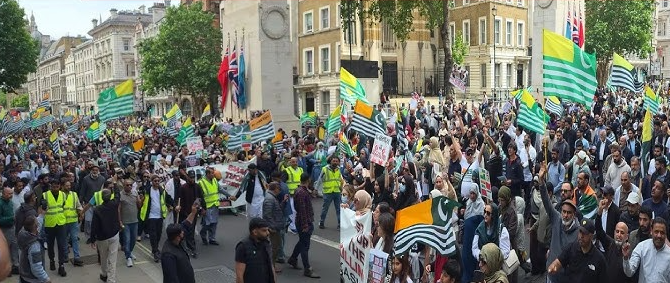
On Sunday, July 5, 2026, the streets of central London became a massive stage for one of the largest political mobilizations of the Kashmiri diaspora in recent history. Estimate of 50,000 British Kashmiris, alongside allied diaspora communities, marched a high-visibility route from Parliament Square straight to the gates of the Pakistan High Commission.
This historic rally was a response to an escalating human rights crisis in Pakistan-administered Jammu and Kashmir, where local civil rights groups have faced severe military crackdowns, lethal police force, and total internet blackouts after protesting soaring inflation and electricity costs.
For decades, diaspora protests over Kashmir were small and localized. This march shattered that pattern. By taking over the heart of London, the organizers achieved several major tactical goals:
First, it broke the international media wall. The Pakistani government has used a strict local communication blockade, including sweeping WhatsApp and mobile data shutdowns, to prevent news of civil unrest from reaching the outside world. The sheer scale of 50,000 people shutting down major London roads forced international media outlets and tourists to look into why they were marching, effectively rendering Islamabad’s internet censorship useless.
Second, it forced the UK political establishment to act. By launching the protest directly behind the British Parliament, the organizers successfully pressured their elected officials. Over 45 British MPs signed a cross-party Early Day Motion in the House of Commons, officially condemning the Pakistani military’s “excessive and unlawful use of force” and demanding that the UK Foreign Secretary intervene diplomatically.
Finally, it delivered a direct warning to the Pakistani establishment. By marching to the High Commission, shouting slogans against military leadership, and handing over a formal memorandum demanding the release of political prisoners, the diaspora proved that geographic distance does not equal silence. The protest successfully transformed a local economic grievance into an international diplomatic crisis for Islamabad, ensuring that the voices of those silenced behind a communication blackout back home were heard on the global stage.
Reference
1.https://youtu.be/PgtzInlLdEw?si=6hR72EPu0L5_9GBY