
SAMAJ WEEKLY
Bal Ram Sampla
Geopolitics

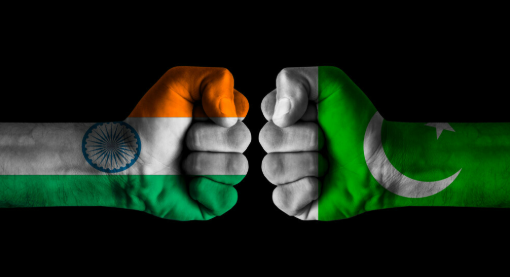
India and Pakistan have been enemies s ince 1947 when British India was divided into two countries. India accuses Pakistan of supporting terrorist groups that attack India. Pakistan denies these claims. There are intelligence reports that China is helping Pakistan to rebuild the terrorist camps with modern technology to avoid detection.
This is briefly examines the evidence and major incidents that have shaped this conflict.
Background
The main dispute between India and Pakistan is over Kashmir, a region both countries claim. In the 1980s, Pakistan helped train fighters during the Russian war in Afghanistan. Once Russians left Afghanistan, Pakistan used these same methods to support groups fighting against India in Kashmir.
Major Terrorist Attacks
In 2001 Indian Parliament Attack
On December 13, 2001, five gunmen attacked India’s Parliament building in New Delhi, killing 14 people. India blamed two groups, Jaish-e-Mohammed and Lashkar-e-Taiba. Both groups allegedly working hand in glove with Pakistan’s intelligence service (ISI).
2008 Mumbai Attacks
This was the most famous terrorist attack. In November 2008, ten gunmen killed 166 people in Mumbai over four days. The only surviving attacker was Pakistani. Investigations showed the attack was planned by Lashkar-e-Taiba with alleged help from Pakistan’s intelligence services.
2016 Uri Attack
Militants killed 19 Indian soldiers at a military base in Kashmir. India blamed Pakistan-based terrorists and responded with military strikes across the border.
2019 Pulwama Attack
A suicide bomber killed 40 Indian soldiers in Kashmir. Jaish-e-Mohammed claimed responsibility. India responded with airstrikes on terrorist camps in Pakistan, nearly leading to war between the two nuclear-armed countries.
Terrorist Groups with Pakistani Links
Lashkar-e-Taiba (LeT)
Founded in the 1990s, this group focuses on Kashmir and has been linked to many attacks in India, including Mumbai 2008. Many countries have declared it a terrorist organization.
Jaish-e-Mohammed (JeM)
This group was responsible for the 2001 Parliament attack and 2019 Pulwama attack. It operates mainly from Pakistan and is internationally recognized as a terrorist organization.
Above are the two are main terrorists groups. From these there are many splinter groups.
United Nations
The UN has officially designated several Pakistan-based individuals and groups as terrorists, including:
1. Masood Azhar (leader of Jaish-e-Mohammed)
2. Hafez Saeed (alleged founder of Lashkar-e-Taiba)
United States
The US State Department regularly expresses concerns about terrorist groups operating in Pakistan. While recognizing some Pakistani cooperation, America wants Pakistan to do more against terrorism. But in contradiction it also supplies weapons in form aid.
Financial Action Task Force (FATF)
In 2018, this international organization put Pakistan on a “grey list” for not doing enough to stop terrorist financing. This hurt Pakistan’s economy and international reputation.
Pakistan’s Response
Pakistan’s government says:
1. It does not support terrorism as official policy
2. Terrorist groups act without government permission
3. Pakistan is also a victim of terrorism
4. The country has taken strong action against terrorists
Pakistan points to military operations against militants and new laws to fight terrorism financing.
Recent Developments
Intelligence reports from 2024-2025 suggest:
1.Pakistan may be rebuilding terrorist training camps
2. These camps use advanced technology to avoid detection with help from China
3. Continued training of militants to attack India
The Truth
It is difficult to know the complete truth because:
A. Both countries use propaganda
B. Intelligence claims may be politically motivated
C. The relationship between Pakistan’s government and terrorist groups is complex
Current Situation
The terrorism issue remains a major problem between India and Pakistan. Recent allegations suggest terrorist camps are being rebuilt with better technology. International pressure continues on Pakistan to take stronger action against terrorist groups.
Conclusion
Evidence from major terrorist attacks, international investigations, and UN designations suggests connections between Pakistani institutions and terrorist groups targeting India. While Pakistan denies official support for terrorism, the pattern of incidents and international concern continues.
Solving this problem requires genuine commitment from Pakistan to stop terrorist groups and broader efforts to resolve the underlying political disputes, especially over Kashmir. The main problem is who do you talk to. The Pakistan govt and its ministers are puppets to the establishment or the deep state.
The international community must continue pressuring Pakistan with threat of putting Pakistan into FATF. It is only than the Pakistan govt and the Deep State will listen.
References
1. Pakistan rebuilding terror launchpad and camps destroyed in operation Sindoor
https://www.ssbcrack.com/2025/06/pakistan-rebuilding-terror-launchpads-and-camps-destroyed-in-operation-sindoor-intelligence-sources.html
2. https://thedailyguardian.com/pakistan/pakistan-rebuilding-terror-camps-destroyed-in-indias-operation-sindoor-sources/
3. US Department of State
https://thesoufancenter.org/intelbrief-2025-april-25/
4. Pakistan tests secret Chins-like firewall to tighten online surveillance
https://aje.io/nj5bu5
5.China’s Growing Security Footprint in Pakistan
www.soufancenter.org