
SAMAJ WEEKLY UK
Bal Ram Sampla
Geopolitics

The concept of Ummah – the global community of Muslims bound by shared faith and mutual responsibility – has long served as a cornerstone of Islamic identity and solidarity.
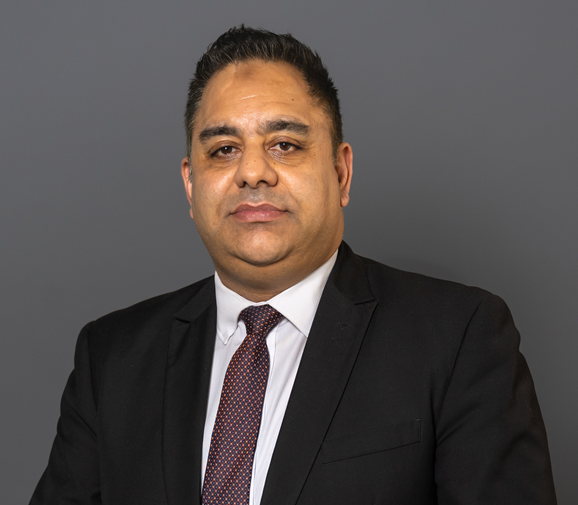
Muslim politicians often invoke this principle when advocating for Muslim rights worldwide. However, the case of British MP Imran Hussain raises important questions about the consistency of such advocacy. While Hussain has been notably vocal about the situation in Gaza, his apparent silence on the plight of Uyghur Muslims in China presents a striking contradiction that warrants examination.
Background
Imran Hussain, the Labour MP for Bradford East since 2015, has positioned himself as a prominent voice for Muslim rights and social justice. His constituency, with its significant Muslim population, provides both a platform and an expectation for advocacy on issues affecting Muslims globally. Hussain’s Pakistani heritage further connects him to the broader Muslim world.
The Gaza Advocacy
Hussain’s advocacy for Palestinian rights has been both consistent and costly. In November 2023, he resigned from his Shadow Minister position specifically over Labour leader Keir Starmer’s refusal to call for a ceasefire in Gaza. This principled stand demonstrated a willingness to sacrifice personal political advancement. His continued vocal support for Gaza, including emotional intervention during Prime Minister’s Questions on 16th July 2025, reinforces his image as a defender of Muslim rights under occupation and oppression.
This advocacy fits perfectly with the concept of Ummah – standing with Muslim brothers and sisters facing persecution, regardless of personal cost. Hussain’s actions on Gaza demonstrate how political representatives can effectively champion Muslim causes on the international stage.
The Uyghur Silence
In stark contrast to his Gaza advocacy stands Hussain’s apparent silence on the systematic persecution of Uyghur Muslims in China. I cannot find a single solitary instance where he has raised the question of Uyghur.
The treatment of Uyghurs includes mass detention in what China terms “re-education camps,” forced labor, cultural suppression, and systematic attempts to eliminate Uyghur identity – represents one of the most severe violations of Muslim rights.
International observers, including the UN, have documented extensive human rights abuses that many consider genocidal in nature.
Yet despite the severity of these violations, Hussain appears to have made no significant public statements advocating for Uyghur rights. A passing odd comment does not advocate highlighting human rights issue. There is no evidence of intervention to the PM. This silence is particularly striking given his willingness to sacrifice political capital for Gaza.
The Pakistan-China Factor
The most plausible explanation for this inconsistency lies in the geopolitical relationships. Pakistan, Hussain’s heritage country, maintains extraordinarily close ties with China through initiatives like the China-Pakistan Economic Corridor (CPEC). Pakistan has not only remained silent on Uyghur persecution but has actively supported China’s position.
This Pakistan-centric approach is further evidenced by Hussain’s active advocacy for Pakistani interests beyond human rights issues. He was among twenty UK MPs and peers who signed a letter to Pakistan’s Prime Minister calling for an airport to be built in Mirpur, Pakistan. This demonstrates a clear willingness to use his position as a British MP to advocate for Pakistani development projects, alongside other Labour MPs of Pakistani heritage including Mohammad Yasin, Afzal Khan, and Yasmin Qureshi.
While Hussain actively lobbies for Pakistani infrastructure development and maintains silence on China’s persecution of Muslims (presumably to avoid damaging Pakistan-China relations).
The Selective Application of Ummah
This situation reveals how the concept of Ummah can be selectively applied when it aligns with other political interests while being abandoned when it conflicts with them.
The Mirpur airport letter exemplifies this selective approach – using his position as a British MP to advance Pakistani interests while simultaneously avoiding any stance that might complicate Pakistan’s relationship with China, even when Chinese policies directly harm Muslims.
Conclusion
While his support for Gaza demonstrates genuine concern for Muslim rights, his silence on Uyghur persecution suggests that this concern may be constrained by other political considerations.
Representing Muslim interests requires the courage to speak out against persecution wherever it occurs, regardless of the perpetrator’s relationship to one’s heritage country or political interests. Only through such consistent advocacy can politicians truly honour the principle of Ummah and serve as credible champions of Muslim rights worldwide.
References
1. https://en.wikipedia.org/wiki/Imran_Hussain_(British_politician)
2. https://www.thenationalnews.com/world/uk-news/2023/11/08/labour-frontbencher-imran-hussain-resigns-over-partys-gaza-stance/
3.https://labourlist.org/2023/11/labour-shadow-minister-resignation-resign-israel-gaza-hamas-conflict/
4. Mirpur Letter
https://www.ayestotheright.co.uk/labour/British-MPs-write-to-Pakistan-Prime-Minister-urging-a-new-International-Airport-in-Mirpur.php
5. https://www.standard.co.uk/news/politics/labour-mps-campaign-build-airport-pakistan-heathrow-expansion-b1219885.html