SR Darapuri, National President, All India Peoples Front
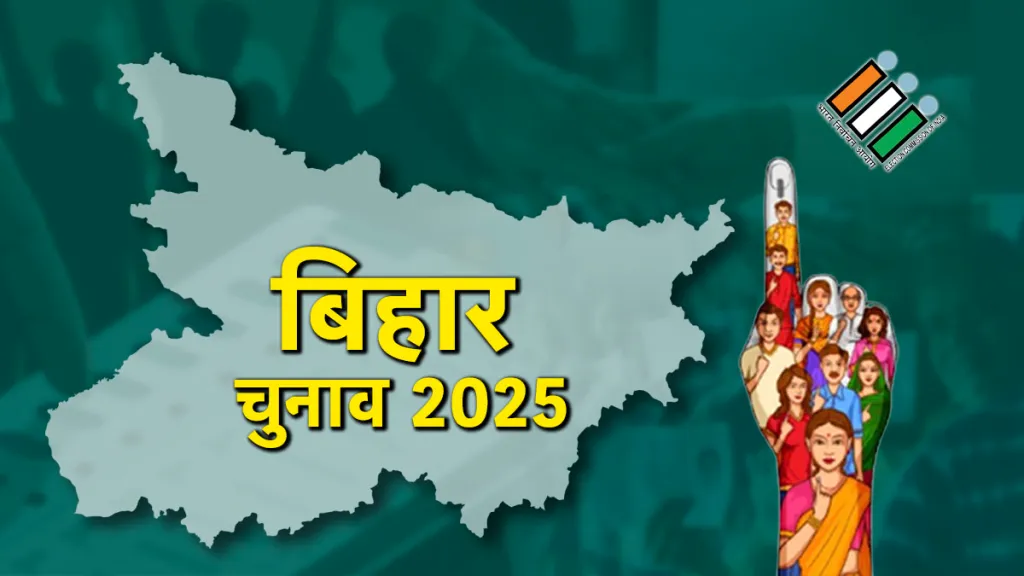
 (Samajweekly) Bihar election: In the 2025 Bihar Legislative Assembly elections, held on November 6 and 11 with results declared on November 14, Dalit (Scheduled Caste) voters showed a significant shift in support toward the National Democratic Alliance (NDA), led by the BJP and JD(U). This contributed to the NDA’s landslide victory, securing 202 of the 243 seats on a 46.6% overall vote share, while the opposition Mahagathbandhan (MGB), led by the RJD, managed only 35 seats on 37.9%.
Key Voting Patterns Among Dalits
Dalit communities, comprising about 19.65% of Bihar’s population, traditionally fragmented their votes across parties, but the NDA achieved strong consolidation in 2025 through targeted alliances with Dalit-led outfits like Chirag Paswan’s Lok Janshakti Party (Ram Vilas) [LJP(RV)] and Jitan Ram Manjhi’s Hindustani Awam Morcha (HAM). Exit polls indicated that around 49% of Scheduled Caste voters backed the NDA, reflecting a decisive swing from the more divided support seen in prior elections.
– NDA Support: Dominant among Pasi Dalits (via LJP(RV)) and Mahadalits/non-Paswan Dalits (via JD(U) and HAM). The alliance captured nearly the entire Dalit vote bank in key regions, leading to an estimated 60-70% consolidation in some sub-groups based on early post-poll analyses.
– MGB Support: Limited to about 30-35%, primarily among Dusadh and other non-Paswan groups loyal to the RJD, but eroded by perceptions of Yadav over-dominance within the alliance.
– Others: Minimal, with smaller parties like Pashupati Kumar Paras’s Rashtriya Lok Janshakti Party (RLJP) siphoning off 5-10% in fragmented pockets.
Performance in SC-Reserved Seats
The NDA’s Dalit outreach translated into overwhelming success in the 38 Scheduled Caste-reserved constituencies, where it won 34 seats—a historic high compared to previous cycles. This dominance underscored the vote shift, as reserved seats often mirror broader Dalit preferences.
Alliance/Party Seats Won (2025) Seats Won (2020 Comparison) |
NDA Total 34 ~17 (split among allies)
BJP 11 9
JD(U) 14 8
LJP(RV) + HAM 9 N/A (LJP split in 2020)
MGB Total 4 17 (RJD-led)
RJD 4 9
Congress 0 4
In 2020, Dalit votes were more evenly split, with the MGB (then including JD(U)) holding stronger ground. The 2025 results echo the NDA’s 2010 sweep (37/38 SC seats) but with added Dalit flank via LJP(RV)’s reintegration.
Reasons for the Shift
Several factors drove the pro-NDA tilt among Dalits:
– Caste Coalition Building: The NDA’s inclusion of Dalit leaders (e.g., Paswan and Manjhi) created a “broad pyramid” of upper castes, OBCs, EBCs, and Dalits, diluting the RJD’s MY (Muslim-Yadav) core and appealing to aspirational Dalit voters.
– Welfare and Governance: Nitish Kumar’s schemes, like Vikas Mitra (ambassadors ensuring benefits reach Dalit households) and Mahadalit-focused programs, built trust. The NDA emphasized stability and “double-engine” development under Modi-Kumar.
– MGB Weaknesses: Internal frictions, delayed seat-sharing, and Yadav cadre assertiveness alienated Dalits, pushing them toward the more inclusive NDA.
– Anti-Incumbency Reversal: Despite youth unemployment concerns favouring the MGB’s job promises, Dalits prioritized perceived equitable delivery over rhetoric.
This Dalit consolidation was pivotal in amplifying the NDA’s vote-to-seat conversion, turning a 9-point vote gap into an 83% seat haul. Detailed post-poll surveys (e.g., from Lokniti-CSDS) are pending but expected to refine these trends further.
Download and Install ‘Samaj Weekly’ App
https://play.google.com/store/apps/details?id=in.yourhost.samajweekly