
By: Surjit Singh Flora

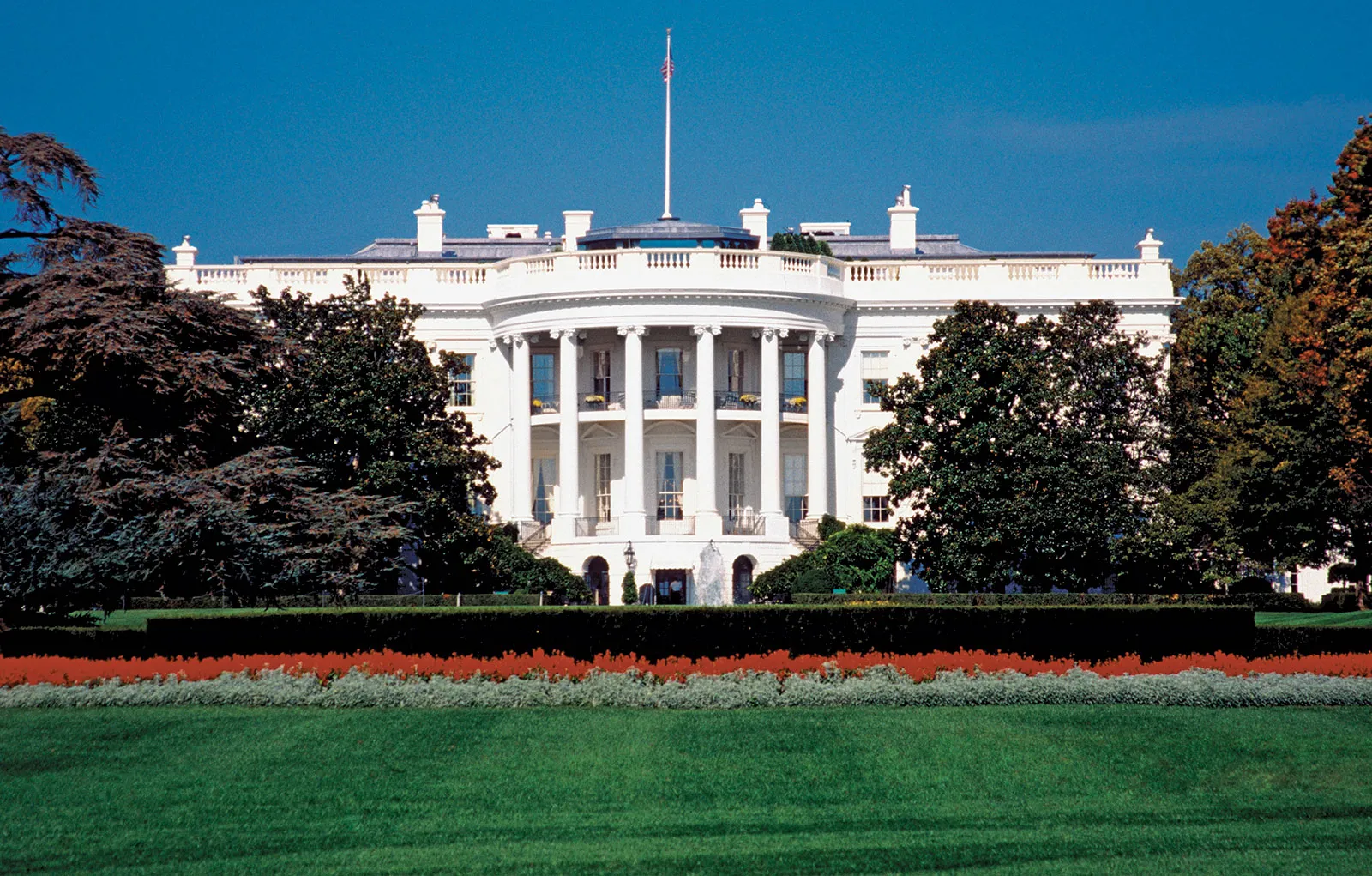
(Samajweekly) The White House in Washington, DC, rarely shakes, even when chaos surrounds it. Behind thick glass and a red carpet, men and women sit insulated from the outside noise, adjusting their ties, inviting world leaders while hurling insults. They flip through agreements, twisting their words every second for personal gain, discussing bills they likely haven’t read, and speaking in legal jargon, while the rest of us count our last coins for bread and struggle to feed our families.
The same building, calm outside but rotten inside, is where our real struggles start. Peeling back every crisis reveals our fight against poverty. Corruption, over-taxation, tariffs, or injustice—these issues often trace back to something that was passed, ignored, or distorted in that House.
Over time, the Trump tariffs will not only negatively impact the global economy but will also adversely affect the American economy. They are excessively expansive and pertain to our three largest trading partners. The leading ones are adjacent and contravene the free trade agreement that was insisted upon by Trump during his initial term. Tariffs contribute to inflation, exacerbating the very economic conditions that frustrated the electorate to the extent that they supported the controversial figure initially.
Still, we remain focused on the presidency. We get sidetracked by whoever is in the State House, hoping for miracles or preparing for disaster. The White House and legislative body work quietly, crafting the script that the rest of the government follows. The White House is clearly our weakest link.
Lacking moral courage, integrity, relevance, and vision. The heart of this global problem lies in the White House today. Honestly, I can’t recall the last time it showed any strength. It’s consistently a place for power and personal benefit for Trump and his associates.
The world leaders’ agitation didn’t come from nowhere. It started with a straightforward move: world leaders attempted to address Trump’s unpredictable tariff decisions. They have concluded that the US is no longer a reliable or profitable trading partner.
They’ve created trading networks that leave out the United States. China sells less than 15% of its products to the U.S., and they’re discovering many other markets eager to purchase from them. Canada has found new buyers for most of the products it used to sell to the US. They can’t sell their produced electricity anywhere else, so they’re still selling it to the US, but at a higher price.
They’ve created trading networks that leave out the United States. China sells less than 15% of its products to the U.S., and they’re discovering many other markets eager to purchase from them. Canada has found new buyers for most of the products it used to sell to the US. They can’t sell their produced electricity anywhere else, so they’re still selling it to the US, but at a higher price.
While US President Donald Trump’s impose a 25 percent tariff on Indian goods from August 1 and imposing a penalty on oil purchases from Russia is not a sudden move, but part of a strategy under which the US wants to incite internal conflict among developing countries and turn them against its own policies.
China has already understood that America’s real game is not India vs. China, but India vs. India, that is, to keep India itself entangled in its own socio-economic shortcomings and policy illusions. China understands that America defeats a country not in war, but through social and economic tensions. This is the reason why it has been emphasizing on controlling the domestic market, maintaining policy clarity and making technology a tool for self-reliance.
On the other hand, India’s policies change repeatedly, the center and the states move in different directions and private lobbies influence policymaking. In such a situation, the US tariff is an external thing, the real battle is to destabilize India from within and weaken its policy-independence. India can only counter Trump’s tariff if Prime Minister Narendra Modi learns from China instead of hugging Trump.
Trump had announced a 145 percent tariff on China after starting a trade war after becoming president for the second time, but China’s ban on rare earth exports shook him, because Trump was not prepared for a long-term conflict. After this, the US started talks with China and agreed to stop the trade sanctions. After that, Trump did not make any threats against China. This tendency of the Americans to convert sanctions into trade deals is breaking the long-standing strategic stability.
After the Carter administration, it was a clear policy that technological controls related to national security would not be part of any trade agreement, but Trump is openly using them for bargaining. This not only weakens America’s role in the world order, but in the future, other countries may also stop taking these controls seriously. Not only China, but also Brazil and South Africa did not care about Trump’s threats. Despite the imposition of the highest tariffs, they were not ready to bow to his conditions.
In this world order, those countries that remain firm on their thinking will succeed. India will have to make it clear to America that it will never make a trade agreement with it at the expense of its farmers and small manufacturers. Modi’s corporate love may weaken India’s stand, but the need of the hour is that if national interests are to be protected, then a stand like China’s against Trump has to be taken.
While the rest of the world is finding out they can get along quite well without dealing with the United States.
But Trump still acts like a demigod. He believes that every leader and the country exist for him, not the other way around. Instead of listening, he is ignoring everyone.
That betrayal caused the world to suffer wounds. In numerous countries and US states, they took to the streets. Because how else can individuals communicate with leaders who have vowed to never listen?
My fellow Indians, your suffering is not a happenstance, it’s the White House. Because Trump act like demigods. He believes he’ll here for them, not the reverse.
Due to him, this institution writes the laws that impact your body, your wallet, your access to healthcare, housing, jobs, and much more. This leadership body is not a sideshow. He need to consistently be overlooked the needs and future of not only Indian indeed other nations as will.
Let’s get serious. The Trump tariff process is intentionally costly, complicated, and bureaucratic.
People and world leaders must unite to challenge a system designed to safeguard every nation today. Absolutely! The White House won’t fix itself. If we can break the Big Man’s monopoly, we can dismantle the myth of the untouchable Trump and his associates. It begins now.
It begins with realizing that shouting “Trump must go” while keeping the White House Assembly unchanged is insufficient. It’s like bailing water from a sinking boat without repairing the leak.
The Executive lacks power independently. The White House grants legitimacy, fuels excesses, and does not provide oversight. The presidency is merely another office without a captured White House. Let’s envision the White House as a means of healing. A space that is once more for the people. A White House for the people is essential. More than just a name, it serves a purpose too.
The Executive lacks power independently. The White House grants legitimacy, fuels excesses, and does not provide oversight. The presidency is merely another office without a captured White House. Let’s envision the White House as a means of healing. A space that is once more for the people. A White House for the people is essential. More than just a name, it serves a purpose too.
Ignoring Trump and the White House means nothing will change. Not the tariff. It’s not the heartbreak of seeing our countries crumble as we shout into emptiness.
People worldwide are protesting everywhere. They tried to call. They tried to cry. Let’s begin the legislation process. Let’s build strength, not merely resistance. More young talent is needed in the White House. When a new tariff bill comes up, we need someone in that chamber who remembers the names of those suffering due to dictators, tyrants, and bullies. These leaders lack competence, are self-absorbed, act in their own interest, and are dishonest.
Surjit Singh Flora is a freelance writer and journalist who lives in Brampton, Canada. He is the author of the book “The Challenge and The Opportunity.”