SR Darapuri I.P.S.(Retd)
Introduction
(Samajweekly) Dr. Bhimrao Ramji Ambedkar (1891–1956) occupies a unique place in the history of modern India as the foremost philosopher, jurist, economist, constitutionalist, and social revolutionary who devoted his entire public life to the emancipation of the Scheduled Castes, whom he called the “Depressed Classes” and who are now commonly referred to as Dalits. Unlike many social reformers who regarded caste discrimination as a moral aberration that could be corrected through appeals to conscience, Ambedkar understood caste as a deeply entrenched system of social, economic, political, and religious domination. Consequently, he argued that the liberation of Dalits could never be achieved through charity, paternalism, or the goodwill of the privileged classes. It required sustained struggle, conscious organization, democratic mobilization, constitutional action, and intellectual transformation.
For Ambedkar, struggle was not merely an instrument for obtaining immediate concessions. It was a process through which an oppressed people recovered their dignity, acquired political consciousness, and transformed themselves into equal citizens. His famous slogan—“Educate, Agitate, Organize”—summarizes this comprehensive philosophy of emancipation. Education was to awaken critical consciousness, agitation was to challenge injustice through democratic means, and organization was to convert scattered individuals into a powerful social movement capable of altering existing structures of power.
Ambedkar’s conception of struggle remains one of the most influential contributions to modern democratic thought. It continues to inspire movements against caste oppression, social exclusion, and discrimination, not only in India but also in broader discussions on human rights and social justice across the world.
Understanding the Nature of Caste Oppression
Ambedkar’s understanding of struggle emerged from his analysis of the caste system itself. He rejected the belief that untouchability was merely a social evil that could be removed while preserving the caste order. In his seminal work Annihilation of Caste, he argued that untouchability was only the most extreme manifestation of a much larger system of graded inequality.
According to Ambedkar, caste is fundamentally different from other forms of social hierarchy because it divides society into numerous hereditary groups arranged in a fixed hierarchy. Every caste enjoys superiority over those below it while remaining subordinate to those above it. This system prevents solidarity among the oppressed and enables the continued domination of privileged groups.
Since caste is maintained through religion, social customs, economic dependency, and political exclusion, Ambedkar concluded that its destruction requires struggle on every one of these fronts simultaneously. Social reform without political power would remain ineffective, while political democracy without social equality would remain unstable and incomplete.
Rights Are Won Through Struggle
A central theme running throughout Ambedkar’s writings is that rights are never voluntarily granted by dominant groups. History demonstrates that every oppressed community has had to fight for justice through organized collective action.
Ambedkar repeatedly warned Dalits against depending upon the generosity or sympathy of upper-caste reformers. He believed that charity humiliates whereas rights confer dignity. Justice cannot rest upon compassion but must be secured through equality before the law and equal participation in political power.
For this reason, Ambedkar emphasized self-reliance. He encouraged Dalits to become active participants in shaping their own destiny rather than passive recipients of reforms initiated by others. Freedom achieved through struggle possesses moral and political value because it transforms the oppressed into conscious citizens rather than beneficiaries of benevolence.
Dr. Ambedkar had said, “lost rights are never regained by appeals to the conscience of the usurpers but by relentless struggle.”
Educate: The Foundation of Liberation
Ambedkar regarded education as the first condition of emancipation. Having personally experienced the humiliations imposed by caste discrimination despite his extraordinary academic achievements, he understood both the transformative potential of education and the barriers preventing Dalits from acquiring it.
Education, in Ambedkar’s view, was not simply a means of obtaining employment. It cultivated rationality, scientific thinking, self-respect, and political awareness. An educated community could challenge religious superstition, question oppressive customs, understand constitutional rights, and participate effectively in democratic institutions.
He repeatedly appealed to Dalit parents to educate their children even under conditions of extreme poverty. The struggle for schools, scholarships, hostels, higher education, and professional opportunities formed an essential component of his broader programme for social emancipation.
Today, Ambedkar’s insistence on education remains highly relevant in addressing educational inequality, digital exclusion, and unequal access to quality institutions.
Agitate: Democratic Resistance to Injustice
The second element of Ambedkar’s programme was agitation. This term has often been misunderstood. Ambedkar did not advocate violence or lawlessness. Instead, he believed that injustice must be confronted through peaceful yet determined democratic action.
Agitation included public meetings, processions, satyagrahas, petitions, legal challenges, newspaper campaigns, legislative advocacy, and political mobilization. Silence in the face of injustice, according to Ambedkar, only strengthened oppressive institutions.
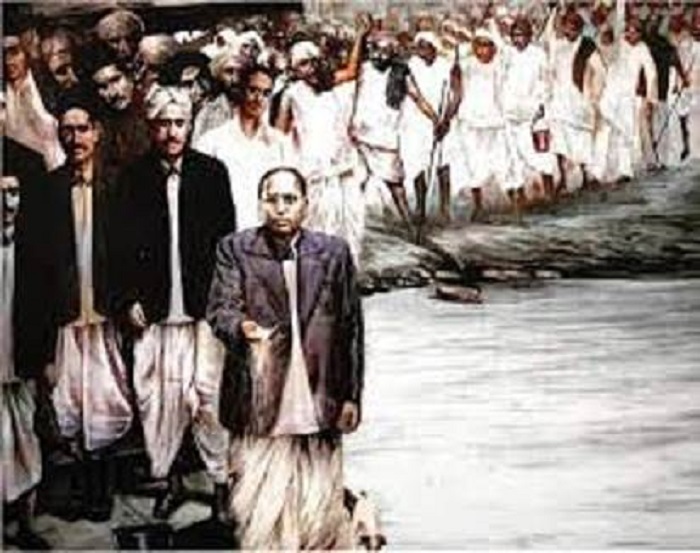
His own political career illustrates this philosophy. The Mahad Satyagraha of 1927 asserted the right of untouchables to draw water from a public tank. Although seemingly a struggle over access to water, it was in reality a struggle for equal citizenship and human dignity. Likewise, the Kalaram Temple Entry Movement challenged the religious exclusion imposed upon Dalits, exposing the contradiction between the proclaimed universality of Hindu religion and the actual practice of caste discrimination.
These struggles demonstrated Ambedkar’s belief that symbolic acts of resistance could awaken political consciousness among the oppressed while exposing the moral bankruptcy of discriminatory institutions.
Organize: Collective Strength as Political Power
Ambedkar recognized that education and agitation would remain ineffective without organization. Individual achievement could not dismantle a system sustained by collective privilege.
Consequently, he established organizations such as the Bahishkrit Hitakarini Sabha, the Independent Labour Party, the Scheduled Castes Federation, and numerous journals that provided intellectual leadership to marginalized communities.
Organization enabled Dalits to articulate common demands, negotiate with governments, contest elections, influence legislation, and resist social discrimination. It transformed scattered victims of oppression into an organized political community capable of defending its interests.
Ambedkar repeatedly emphasized that disunity among oppressed groups benefited only those who wished to preserve existing hierarchies. Organization, therefore, became the indispensable instrument of democratic struggle.
Political Power and Social Transformation
One of Ambedkar’s most significant contributions was his insistence that social equality required political power. Unlike reformers who concentrated solely on changing social attitudes, Ambedkar understood that laws, institutions, and representation profoundly influence social relations.
His demand for separate electorates, later modified into reserved legislative seats through the Poona Pact, reflected this understanding. Political representation ensured that Dalits would possess an independent voice in legislative bodies rather than relying upon upper-caste representatives to defend their interests.
Ambedkar famously observed that political power is the key to all social progress. Representation in legislatures, government services, educational institutions, and public administration would gradually alter the balance of power within Indian society.
His role as Chairman of the Drafting Committee of the Indian Constitution enabled him to institutionalize many safeguards for equality, fundamental rights, affirmative action, and constitutional remedies. Yet he never regarded constitutional guarantees as sufficient by themselves.
Constitutional Methods and Continuous Vigilance
After independence, Ambedkar consistently argued that constitutional democracy requires continuous struggle. While he rejected violent revolution and unconstitutional methods where democratic remedies were available, he equally rejected complacency.
In his final address to the Constituent Assembly, he warned that constitutional morality cannot survive unless citizens remain vigilant in defending liberty, equality, and fraternity. Democratic institutions function effectively only when people actively participate in public life and resist attempts to undermine constitutional values.
Thus, Ambedkar’s philosophy of struggle after independence emphasized elections, public debate, peaceful protest, judicial remedies, legislative action, and civil society mobilization. Constitutional methods became instruments of organized democratic struggle rather than substitutes for social movements.
The Religious Dimension of Struggle
Ambedkar ultimately concluded that caste was inseparable from the religious doctrines that sanctioned it. He therefore argued that social equality could not be fully realized within a religious framework that treated hierarchy as sacred.
His conversion to Buddhism in October 1956 represented the culmination of decades of intellectual and political struggle. It was not merely a change of faith but a declaration of human dignity and equality. Through Navayana Buddhism, Ambedkar offered Dalits a moral philosophy founded upon liberty, equality, fraternity, rationality, and compassion.
The mass conversion movement demonstrated that struggle also involves creating alternative ethical and cultural foundations for society.
Economic Justice as an Essential Component of Liberation
Ambedkar consistently argued that caste oppression cannot be separated from economic exploitation. Landlessness, indebtedness, unemployment, exclusion from skilled occupations, and unequal access to resources reinforced social discrimination.
He therefore advocated labour rights, state intervention in key industries, social insurance, living wages, land reforms, and public welfare measures. Economic independence would enable Dalits to resist caste domination more effectively.
His economic thought anticipated many contemporary discussions concerning inclusive development, social security, and distributive justice.
Women and the Dalit Movement
Ambedkar regarded women’s emancipation as inseparable from the emancipation of Dalits. He encouraged women to participate actively in political movements and public life. He campaigned for women’s education, equal property rights, maternity benefits, and legal reforms through the Hindu Code Bill.
He understood that caste reproduces itself through patriarchal control over marriage and family. Consequently, the struggle against caste necessarily required the struggle against gender inequality.
Contemporary Relevance
More than seven decades after Ambedkar’s death, caste discrimination continues to exist despite constitutional guarantees. Atrocities against Scheduled Castes, discrimination in educational institutions, unequal access to land and employment, manual scavenging, residential segregation, and social exclusion demonstrate that legal equality alone has not eliminated structural inequality.
Ambedkar’s philosophy therefore remains profoundly relevant. His emphasis on education is reflected in continuing struggles for equal access to quality schools and universities. His insistence upon organization inspires Dalit movements, student organizations, labour unions, women’s groups, and civil society initiatives. His advocacy of constitutional methods provides guidance for defending democratic institutions and fundamental rights.
Equally significant is his insistence upon fraternity. Ambedkar understood that liberty and equality cannot flourish in a society lacking mutual respect and shared citizenship. The struggle for Dalit emancipation is therefore not merely a struggle for one community but for the democratization of Indian society itself.
Conclusion
Dr. B.R. Ambedkar conceived struggle as the indispensable path to the emancipation of Dalits. Rejecting charity, paternalism, and passive reform, he argued that liberation requires education, democratic agitation, collective organization, political representation, constitutional action, economic justice, and moral transformation. His struggles at Mahad, Nashik, the Round Table Conferences, the Constituent Assembly, and finally through conversion to Buddhism illustrate a coherent philosophy aimed at dismantling every institutional basis of caste oppression.
Ambedkar’s enduring message is that oppressed communities become free not when others choose to liberate them but when they themselves become conscious, organized, and determined to claim their rights. His call to “Educate, Agitate, Organize” continues to serve as a timeless programme for achieving liberty, equality, fraternity, and human dignity. In contemporary India, where caste-based inequalities persist despite constitutional guarantees, Ambedkar’s conception of struggle remains both an ethical imperative and a practical guide for building a truly democratic and socially just society.