
SAMAJ WEEKLY UK

Bal Ram Sampla
Geopolitics
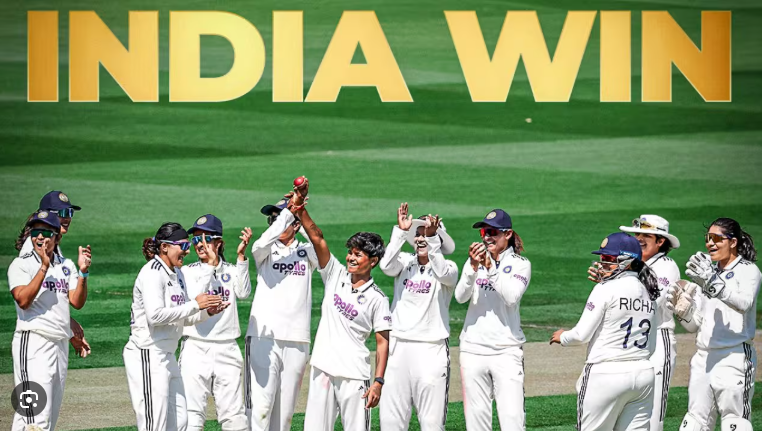
The Lord’s Cricket Ground, affectionately known as the “Home of Cricket,” has stood for 142 years as a silent witness to some of the sport’s greatest achievements. Yet, until July 2026, its pristine turf had never hosted a Women’s Test match. When the Indian and English teams finally stepped onto the field, they were not just playing a game; they were carrying the weight of history. By the time the final wicket fell on the fourth morning, the Indian Women’s team had not only secured a breathtaking 270-run victory, but they had also crafted a masterpiece of tactical dominance, individual brilliance, and psychological supremacy. This win was more than a statistical marvel, it was a cultural watershed moment that permanently altered the landscape of red-ball cricket.
1. The Weight of the Venue and the Occasion
To appreciate the gravity of India’s victory, one must understand the context of the stage. For exactly fifty years, since Rachael Heyhoe Flint first led an England side onto the Lord’s outfield in 1976, women had fought for equal footing at cricket’s spiritual home.
However, India arrived with an incredible, four-decade-long unbeaten Test streak on English soil to defend. Rather than being intimidated by the grand stands, the sloping outfield, Harmanpreet Kaur’s side treated the iconic ground as their own theatre.
2. Setting the Tone: The Discipline of the First Innings
Great Test match victories are built on foundations laid on Day 1. Choosing to bat first on a surface that offered assistance to the seamers, India’s batting core demonstrated elite application. Vice-captain Smriti Mandhana led from the front with a masterful, elegant 83, anchoring the innings against a highly skilled English attack. Supported by resolute half-centuries from Harmanpreet Kaur (58) and the ever-reliable Deepti Sharma (57), India posted a competitive first-innings total of 285.
While 285 was a solid total, it was India’s bowling display that truly broke the match open.
3. The Honours Board: Dreams Realized
The true magic of Lord’s lies in its history, specifically the Honours Boards inside the dressing rooms where players who score a century or take a five-wicket haul are immortalized. In this single Test, two young Indian stars etched their names into eternity:
(A) Kranti Gaud’s Firepower: On Day 2, 21-year-old medium-pacer Kranti Gaud produced a spell of bowling that will be talked about for generations. Swinging the ball both ways with relentless accuracy, she dismantled the English batting order, taking a historic 5 for 37. England was bundled out for a mere 170, handing India a massive 115-run lead.
(B) Yastika Bhatia’s Historic Ton: With the match in India’s control, Yastika Bhatia stepped up in the second innings to deliver a batting masterclass. She became the first woman in cricket history to score a Test century at Lord’s. Her fluent, gritty 113, combined with Mandhana’s 70 and an explosive, quickfire 50* from Richa Ghosh, allowed India to declare at 341/7.
India had set England an astronomical, world-record target of 457 runs.
4. The Final Assault: Spin, Choke, and Victory
Faced with a mountain to climb, England’s second innings was a story of suffocating pressure. Despite a fighting half-century from England’s Amy Jones (54), the Indian bowlers refused to let the pressure slip.
On Day 4, off-spinner Sneh Rana put on a masterclass in flight and turn. Bowling with impeccable drift, she ripped through the English defense to finish with stellar figures of 4 for 42. Supported by the Deepti Sharma (2/36), India systematically knocked over the remaining wickets before lunch, bowling the hosts out for 186 to secure the historic 270-run triumph.
5. A Legacy Beyond the Scorecard
India’s 270-run victory is a landmark event in cricket history. As the Indian players lifted the trophy on the Lord’s balcony, they did so knowing they had closed one chapter of cricket history and boldly opened another.
This historic win was not just a victory over England; it was a powerful statement to the world that the “Women in Blue” are the undisputed queens of red-ball cricket.