SAMAJ WEEKLY UK

Bal Ram Sampla
Geopolitics
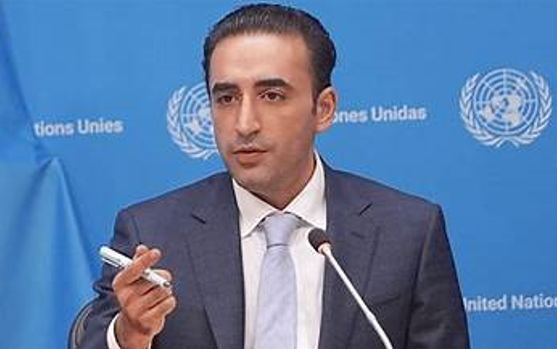
In politics, it is a time-tested trick to blame a foreign neighbour when things go wrong at home. Bilawal Bhutto Zardari warned India in Pakistani Parliament yesterday.
In the past he given a fiery, highly theatrical speech regarding the Indus Waters Treaty (IWT), dramatically warning India that “either our water will flow or their blood.”
While this aggressive rhetoric makes for loud headlines, it is little more than a smokescreen. It is good for domestic audience. By turning a complex environmental and governance crisis into an emotional battle against India, Bhutto is attempting to hide decades of internal mismanagement, political corruption, and systemic policy failures within Pakistan.
The immediate trigger for Bhutto’s outburst was India’s decision to place the treaty obligations in abeyance, a move sparked directly by a major militant attack in Pahalgam. India has made its stance clear: technical cooperation on water cannot happen while cross-border terrorism continues.
Yet, in his hours of windy rhetoric, Bhutto completely ignored this crucial security link. By framing India’s actions as pure “aggression,” he avoids a painful truth: Pakistan’s failure to dismantle its proxy terror architecture is what ultimately broke the diplomatic mechanisms of the treaty.
Beyond the security issue, Bhutto’s aggressive stance is a deliberate distraction from the bitter water wars happening inside Pakistan’s own borders. Bhutto’s political party, the Pakistan People’s Party (PPP), rules the Sindh province, which is currently suffering from catastrophic water shortages.
However, the root cause of Sindh’s misery is not India; it is the upper-riparian Pakistani province of Punjab. For decades, Punjab has routinely taken roughly 20% more water than its legal allocation under Pakistan’s 1991 Water Apportionment Accord. This internal water theft leaves downstream provinces like Sindh and Balochistan completely parched, destroying agriculture and allowing seawater to ruin the Indus Delta. It is far easier for Bhutto to beat the drums of war against New Delhi than it is to confront powerful political and military interests in Punjab.
Furthermore, Bhutto’s rhetoric completely glides over Pakistan’s abysmal failure to build domestic water infrastructure. Due to political deadlock and intense inter-provincial distrust, Pakistan has failed to construct major dams or modern reservoirs. As a result, the country holds a dangerously low water storage capacity—barely a 30-day supply compared to the global standard of 1,000 days.
Instead of building a political consensus to solve this existential crisis, successive governments have continuously funneled scarce public funds away from development and into an bloated military establishment. Even today, as local communities starve for water, national budgets prioritize defense spending while freezing vital regional agricultural funds.
Ultimately, Bilawal Bhutto’s speech is a textbook example of “water nationalism”, using an external threat to unite an angry public and protect the ruling elite. It is a dangerous diversion. Loud speeches and civilizational appeals to Mohenjo-daro will not fill dry canals, stop upper-riparian water theft, or build the dams Pakistan desperately needs. Until leaders like Bhutto drop the empty rhetoric and honestly address cross-border terrorism and internal resource mismanagement, Pakistan’s water crisis will only deepen and no amount of finger-pointing at India will change that.
References
1.https://worldview.stratfor.com/article/what-expect-if-india-starts-halting-indus-water-flows-pakistan?hl=en-
2.https://timesofindia.indiatimes.com/world/pakistan/indus-waters-treaty-fallout-nearly-a-third-of-pakistan-reels-as-sindh-balochistan-face-water-crisis/articleshow/131698486.cms?hl=en-
3.https://m.economictimes.com/news/india/india-has-two-options-share-indus-water-fairly-or-well-take-all-six-rivers-says-bilawal-bhutto/articleshow/122046405.cms?hl=en-