
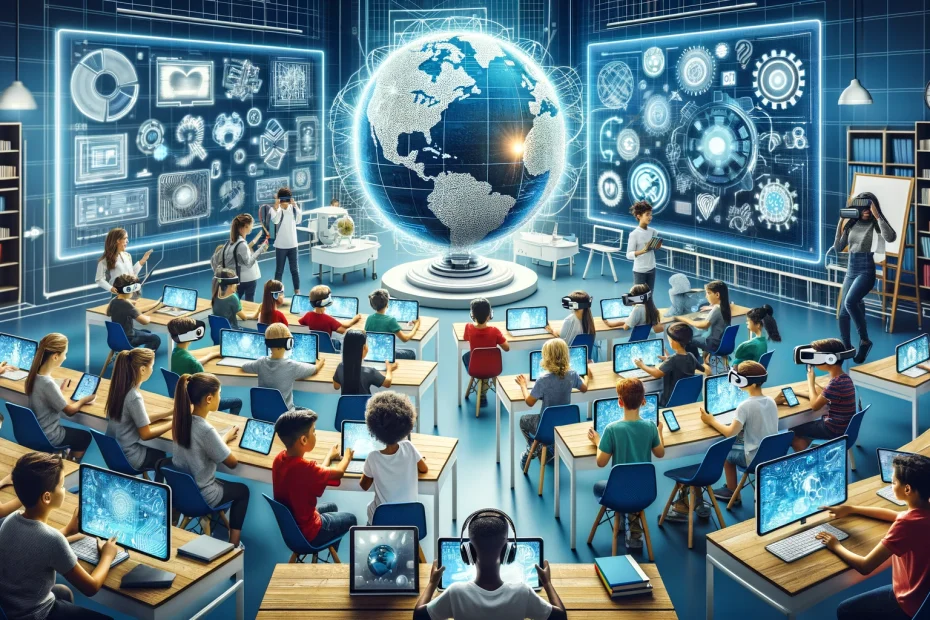

(Samajweekly) In the 21st-century which is better known as digital era, science education has become a vital foundation for personal growth, societal progress, well being of humanity and sustainable development. It helps to build and develop rational thinking, better understanding and technological competence.Moreover it also nurtures the ethical responsibility and global citizenship.
SCIENCE THE LANGUAGE OF THE MODERN WORLD
The modern digital world runs on the engines of science and technology. From smartphones and artificial intelligence to healthcare and environmental protection, every facet of life is guided by scientific principles. Science education, therefore, is not merely a subject rather it is the intellectual and moral framework that enables citizens to navigate and shape the future responsibly. Compulsory science education ensures that every individual, regardless of background, acquires the capacity to think critically, act rationally and engage constructively in a knowledge-based global society.
SPHERES INFLUENCED BY SCIENCE EDUCATION
Science education exerts a transformative influence on multiple spheres of human life.Some of them are discussed below:
Healthcare:
Scientific literacy enables understanding of hygiene, nutrition, disease prevention and medical innovation. It encourages evidence-based decision-making in personal and public health.
Technology and Industry:
A scientifically trained population fuels innovation in engineering, computing and digital design, ensuring economic growth and technological self-reliance.
Environment and Sustainability:
The Science education fosters ecological awareness, promoting renewable energy use, waste management and biodiversity conservation.
Agriculture and Food Security:
Application of biological and environmental sciences improves crop productivity, reduces chemical misuse and enhances food safety.
Social and Ethical Progress:
Rational scientific thinking reduces superstition, promotes gender equality and strengthens human rights through education and awareness.
INTEGRATING MINIMAL MEDICAL AND ENGINEERING EDUCATION
In the digital era, science education should not remain confined to theoretical understanding. It must include foundational medical and engineering literacy:
Minimal Medical Education:
The Students should learn basic human anatomy, first aid, vaccination importance, mental health awareness and lifestyle medicine. This promotes health responsibility and reduces dependence on misinformation.
Minimal Engineering Education:
Elementary understanding of design thinking, renewable energy systems, robotics and digital tools empowers learners to engage creatively with technology rather than merely consume it.
Such interdisciplinary integration will produce a generation capable of solving real-world problems using both scientific knowledge and humanitarian perspective.
UNIVERSALISING SCIENCE EDUCATION
Universalisation of science education is a moral and developmental imperative. To achieve this:
Digital Platforms and Open Resources:
Free access to quality digital science content ensures inclusivity for students in rural and underprivileged areas.
Teacher Training and Global Collaboration: Educators should be equipped with modern pedagogical tools and scientific ethics to foster curiosity-driven learning.
Language and Cultural Adaptation: Translating scientific concepts into local languages and culturally relevant examples bridges the gap between traditional wisdom and modern knowledge.
Governmental and NGO Partnerships: Policies should mandate equal science learning opportunities for all genders and social groups.
SCIENCE EDUCATION AND THE ENHANCEMENT OF HUMAN LIFE
Science education enhances human life not only materially but also spiritually and ethically:
Rational and Ethical Mindset: Understanding scientific causality cultivates honesty, integrity and humility—values at the core of both science and morality.
Humanitarian Impact:
From healthcare access to climate action, science-driven empathy leads to collective well-being.
Improved Quality of Life:
Innovations in medicine, agriculture, energy and communication elevate life expectancy, comfort, and opportunity.
Moral and Global Citizenship:
Science unites humanity under a shared pursuit of truth, fostering cooperation over conflict, and wisdom over prejudice.
In a world where artificial intelligence, biotechnology and environmental challenges redefine existence, science education must be seen as a universal human right. It empowers individuals with the knowledge to live healthily, the creativity to innovate sustainably and the ethics to act justly. Integrating minimal medical and engineering literacy within school science curricula will prepare youth not only for technological competence but for compassionate citizenship.
Science education is thus not just about learning facts—it is about learning how to think, how to care, and how to build a better world.
Author’s Note:
Science education is the foundation of a responsible and enlightened civilization. Its universality and ethical integration remain the strongest tools to shape a peaceful, prosperous and scientifically aware humanity.
SURINDERPAL SINGH
FACULTY IN SCIENCE DEPARTMENT
SRI AMRITSAR SAHIB PUNJAB.