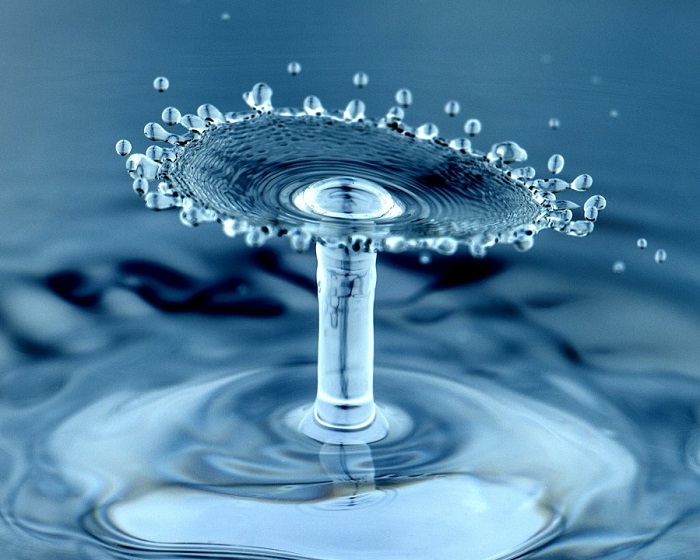
(Samajweekly) The synonymn of don’t waste food is water is wasted . Well the meaning of above synonymn is simple that a lot of water has been used in the production of food and if we waste that food it indirectly leads to wastage of water.
Now the question arises that what is Virtual Water?
Virtual water is a concept that can be defined as the use of water by humans in indirect ways and in general is amount of water used in production of food and goods including the services that the humans uses.
Generally on an average scale a human consumes about 2 liters of water per day for drinking . But this is only the physical amount of water consumed directly by humans. In broader sense the water used in production of food items is not universally constant because the availability ofvresources and technology is different throughout the globe.
The world is increasingly challenged by water scarcity the reason being the population explosion which itself is resulting in climate changes. The concept of “virtual water,” was introduced by Professor Tony Allen from King’s College London.This concept has emerged as a critical framework for understanding the global water usage and the necessity to preserve water. The concept also highlights the importance of water and its implications for sustainability. By the introduction of this concept of virtual water many aspects of human thinking has transformed like how we perceive water consumption, particularly in relation to agriculture and trade.
The concept of Virtual water also sheds light on the hidden flow of water during the import export of food and other products. It encompasses the total amount of water used in the production process of goods, which includes the volume of direct and indirect water used throughout the supply chain.
Professor Tony Allen first coined the term “virtual water” in the early 1990s as part of his research on water management and sustainability. His work has been instrumental in highlighting the disparities in water availability across different regions and how trade can alleviate or exacerbate these inequalities. By quantifying the water embedded in commodities, Allen’s research provides a lens through which policymakers and businesses can assess their water footprints.
“Virtual water is a powerful concept because it allows us to think about water in a more holistic way,” says Professor Allen. “It challenges us to consider not only how much water we use directly but also how our consumption patterns affect global water
The implications of virtual water extend far beyond academic discourse. Countries with abundant water resources can export water-intensive products, while those facing scarcity can import these products instead. This trade-off can lead to more efficient global resource allocation but raises ethical questions about water equity and sustainability.
For example, countries like Brazil and the United States, rich in freshwater resources, often export crops such as soybeans and corn to water-scarce nations. On the other hand, regions like the Middle East and North Africa face significant challenges in food production due to limited water supplies. Understanding virtual water flows can help these regions make informed decisions about food imports and exports, potentially alleviating some of their water stress.
To leverage the concept of virtual water effectively, Professor Allen advocates for policies that promote sustainable trade practices. He emphasizes the need for governments to incorporate virtual water assessments into their agricultural policies and trade agreements. By doing so, they can encourage practices that conserve local water supplies while ensuring food security.
“Countries should be aware of their virtual water imports and exports,” Allen advises. “This awareness can lead to better resource management and help mitigate the impacts of climate change on our water systems.”
The Future of Virtual Water Research
The climate changes continues to threaten global water supplies and this needs to be a subject of research throughout the world because the water supplies are limited.Researchers of all countries are putting extra efforts on their research that how this concept can be integrated into broader discussions about sustainable development, food security, and climate resilience. Collaborative efforts between governments, NGOs, and academic institutions are essential to further this research and develop actionable strategies.
Conclusion of Professor Tony Allen’s pioneering work on virtual water is that the concept offers a vital perspective on our relationship with this precious resource. As the world faces mounting environmental challenges, understanding and applying the principles of virtual water may be key to fostering a more sustainable future.
Last but not the least we as an ordinary human can also contribute in preservation of water resources. This could happen only if we all humans of this concept of Virtual Water because literally water is not only it can be indirectly eaten in the form of food products which requires direct water usage. So think again of the water resources next time during the wastage of food
Surinderpal Singh
Faculty in Science Department
Sri Amritsar Sahib.