
SAMAJ WEEKLY UK
Bal Ram Sampla
Geopolitics

After years of building foundations and establishing themselves as a global force, the time has come for a leadership transition that could define the next decade of the sport in India. The recent tour of England has provided the clearest indication yet that Smriti Mandhana, not Harmanpreet Kaur, should be leading this young and talented Indian side into the future.
The Case for Change
Harmanpreet Kaur’s journey as captain has been marked by flashes of brilliance overshadowed by concerning patterns of inconsistency. Her aggressive approach, initially a welcome departure from Mithali Raj’s more conservative style, has evolved into a leadership philosophy that too often fails to maximize the team’s potential.
The England series serves as a reminder of this larger issue. What should have been a comprehensive 5-0 or 4-1 victory became a nail-biting 3-2 series win that nearly slipped away. More tellingly, when Mandhana led the team in the first T20 due to Harmanpreet’s injury, India delivered their most commanding performance of the series, handing England their heaviest T20 defeat. This wasn’t coincidence; it was a glimpse of what Indian cricket could achieve under different leadership.
Mandhana: The Leader India Needs
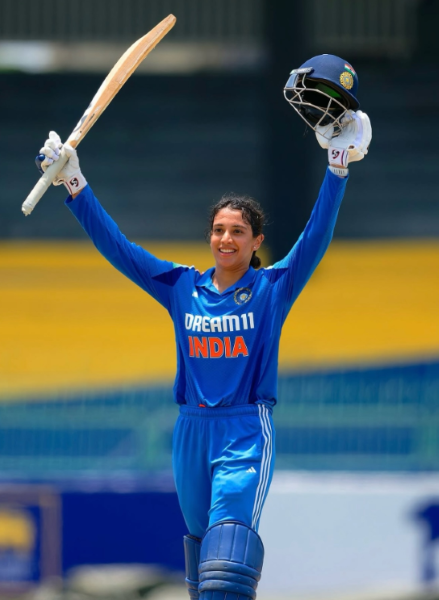
Smriti Mandhana represents everything modern cricket leadership should embody. At just 29, she has already demonstrated remarkable maturity in high-pressure situations. Her leadership of Royal Challengers Bengaluru to the Women’s Premier League title in 2024 showcased her ability to unite talented players under a common vision. More importantly, she did this while maintaining her own exceptional batting standards, proving she can handle the dual pressure that has troubled her predecessor.
Mandhana’s batting consistency has been extraordinary, providing the stability that allows other players to express themselves freely.
The Generational talent
Indian women’s cricket is blessed with a generation of talented young players who need a captain who can grow with them rather than trying to manage them from a position of declining personal form.
Mandhana’s age and stage of career make her the perfect bridge between the established stars and the next generation. She has the experience to command respect while possessing the youth to relate to the aspirations and challenges of her teammates. This isn’t about changing captains but taking the game forward.
Learning from Global Examples
The most successful teams in world cricket have consistently shown that the timing of leadership transitions is crucial. Australia’s transition from Meg Lanning to Alyssa Healy demonstrated how change can maintain momentum rather than waiting for decline to force the issue. England’s success under Heather Knight came from recognizing that different phases of team development require different leadership approaches.
India cannot afford to wait for a crisis to force this change. The upcoming major tournaments provide the perfect opportunity to implement a transition while the team is in a position of strength rather than weakness.
The Tactical Dimension
Mandhana brings tactical innovations that could revolutionize Indian cricket. Her approach to field placements, bowling changes, and batting orders during her brief captaincy stint showed a willingness to be bold without being reckless. This is exactly what India needs.
Her communication style, evident in her interactions with teammates and media, suggests someone who leads through inspiration.
The Immediate Opportunity
The England series has provided the blueprint for what Indian cricket could achieve under Mandhana’s leadership. The team’s performance in that first T20 wasn’t just about one match; it was a demonstration of how different leadership can extract maximum value from the same group of players. The fact that this happened on English soil, historically a challenging environment for Indian teams, makes it even more significant.
With major tournaments on the horizon and a young team hungry for success, the timing for this transition couldn’t be more appropriate. Delaying this change risks wasting the current generation’s peak years and potentially creating a leadership vacuum if form continues to desert the current captain.
Conclusion
Cricket boards worldwide have learned that successful transitions require courage and vision. The BCCI now faces a decision that will define Indian women’s cricket for the next decade. The evidence from recent performances, the tactical innovations on display, and the generational shift within the team all point toward one conclusion: the Smriti Mandhana era should begin immediately.
This isn’t about diminishing Harmanpreet Kaur’s contributions to Indian cricket. Her aggressive captaincy provided the bridge from Mithali’s era to the current generation. The time has come to complete that journey and embrace the leadership that can take Indian women’s cricket to unprecedented heights.