
SAMAJ WEEKLY UK

Bal Ram Sampla
Geopolitics
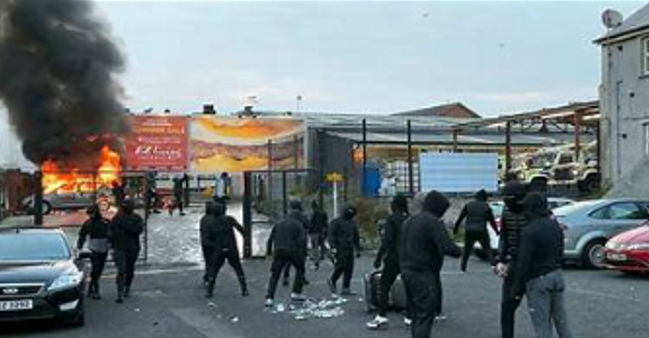
The recent riots in Belfast have shown a massive gap between ordinary people and the politicians who run the government. Often, leaders in power simply blame the violence on online troublemakers or far right. But this ignores the real problem.
When political figures like Ron McDowell point out local anger over things like free school uniforms and special school menus for migrant families, they are highlighting a very real, deep-seated resentment. This anger didn’t appear overnight. It comes from a feeling that local councils and politicians have ignored working-class communities for years.
To understand this anger, you have to look at fairness and fairness in a community. For generations, working-class families in areas like the Shankill Road have dealt with poverty, run-down schools, and endless waiting lists for social housing. These are people who have lived in the area, paid their taxes, and contributed to the community for decades.
When they see the government suddenly find the money and resources to give immediate help to newly arrived migrant families, it feels like a double standard. It is easy to see why locals feel resentful when the state moves fast to help outsiders, but tells local residents to keep waiting for basic services.
The biggest failure of local councils and politicians is that they refuse to listen to these valid complaints. For years, ordinary people have warned that local services are stretched to the absolute limit. Instead of helping, the political establishment has either ignored these fears or labeled anyone who speaks up as intolerant.
By refusing to talk about the pressure on housing and schools, politicians have created a dangerous vacuum. Because ordinary working-class people feel they have no voice in government, they become vulnerable to outside agitators who step in to exploit that anger.
Troublemakers don’t create resentment out of nowhere, they just weaponize the real, existing frustration of a community that feels completely abandoned by its leaders.
When violence finally erupts, the government’s only response is to condemn the rioters. They treat the situation like a public relations issue instead of fixing the actual shortage of local resources.
In the end, the situation shows that social peace cannot be forced by the police. It requires politicians to wake up and realize that economic resentment is a natural reaction to being neglected. As long as the government ignores the fact that local working-class people feel pushed to the back of the line in their own neighborhoods, the tension will continue to simmer.
Source:
Https://www.express.co.uk/news/politics/2216366/Northern-Ireland-Belfast-riots-protests-migration-Sudan
https://triblive.com/news/world/what-to-know-about-the-stabbing-that-set-off-fiery-riots-in-northern-ireland/?hl=en-