SAMAJ WEEKLY UK

Bal Ram Sampla
Geopolitics
India’s independence is celebrated as having been achieved on August 15, 1947 — but the reality is far from the glorious image taught in textbooks. What the country received that day was not the Poorna Swaraj our freedom fighters dreamt of, but a diluted form of liberty known as Dominion Status, which kept India constitutionally tied to the British Crown. Far from being a full break from colonial rule, it was a political compromise that left the British monarch as our head of state for more than two years after “independence.”
The rot, however, began even earlier — in February 1946, during the Royal Indian Navy Mutiny. This was not a small local disturbance. It was a countrywide rebellion involving over 10,000 Indian sailors across major ports, from Bombay to Karachi, hoisting the tricolour and openly defying British authority. It was a rare and critical moment when the armed forces — the backbone of imperial control — displayed readiness to turn against their colonial masters. There was widespread public support on the streets, uniting Hindus, Muslims, and others in a joint cry for freedom.
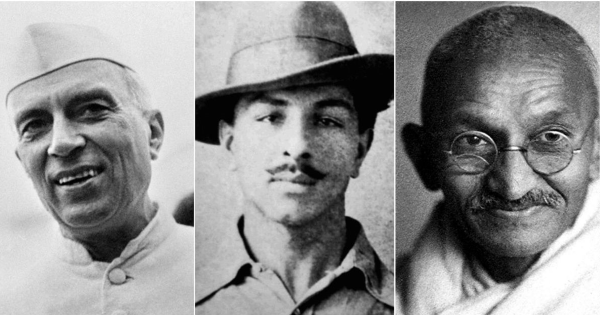
If there was ever a time to strike and remove the British, this was it. A successful uprising in the armed forces could have shattered the very foundations of imperial rule and possibly averted the looming partition. But instead of supporting this powerful wave of resistance, Gandhi openly condemned the mutiny. He called it misguided and urged the sailors to surrender. Nehru, too, refrained from backing the movement. Gandhi dispatched Patel to persuade the mutineers to surrender. Under pressure from national leaders, the mutineers stood down, and the British regained control. The last genuine opportunity to expel the British with urgency and unity was lost.
A year later, rather than declaring complete sovereignty, Gandhi and Nehru accepted Dominion Status under the Indian Independence Act of 1947. This arrangement meant that while India had its own government, the symbolic and constitutional head of the nation remained King George VI. It was a halfway freedom that mocked the sacrifices of those who had fought and died for a republic free of all imperial ties.
Gandhi, once an uncompromising voice against British authority, now described dominion status as “real freedom”. The man once vowed ” do or die”, simply surrendered. His roar turned into meek whisper.
Nehru, instead of rejecting this half-measure, embraced it, using the transition period to consolidate power. His real interest was consolidating power. The adoption was postponed until January 26, 1950, more than two years after independence was proclaimed.
This delay was not inevitable; it was a political choice. By settling for Dominion Status, the leaders of the independence movement not only diluted the meaning of freedom but also started the life of the new nation with a constitutional compromise. The dream of Poorna Swaraj, embraced in 1930 as the ultimate goal, was reduced to a ceremonial transfer of authority that kept the symbols of empire intact.
The story of India’s independence, therefore, is not simply one of triumph. It is also one of missed chances and avoidable compromises. The failure to support the Royal Indian Navy Mutiny in 1946 allowed the British to maintain their grip until they could arrange a transfer of power on their own terms — terms that included partition and Dominion Status. In 1947, the chains of colonialism were merely polished and hidden, not broken.