SAMAJ WEEKLY UK
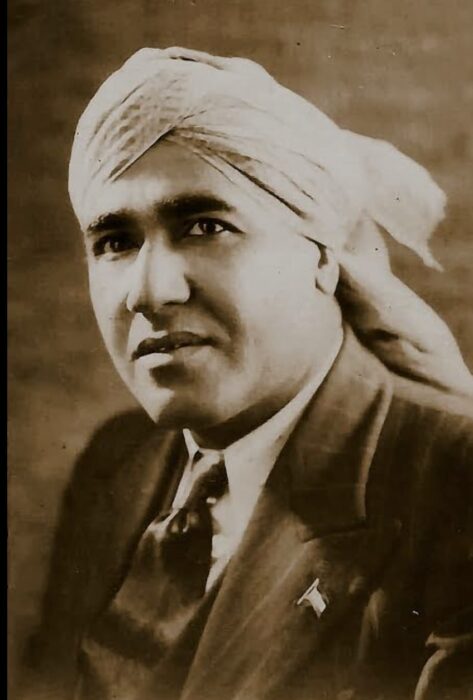
Shaheed-e-Azam Udham Singh (26 December 1899 – 31 July 1940), Pole Star of the Revolutionary Galaxy, Great Personality and Ideology: An Evaluation

Dr. Ramjilal, Social Scientist, Former Principal, Dyal Singh College, Karnal (Haryana – India)
Email: [email protected]
Three points are evident in the way the history of the Indian freedom movement has been presented:
First, India’s independence was only achieved peacefully. Mahatma Gandhi led the nonviolent movement. We do not intend to downplay the importance of peaceful methods. However, it would be overstating things to claim that non-violent means were the only way to achieve independence.
Second, the role of trade unions, student organisations, women’s organisations, farmers’ organisations, and women’s movements in the national movement is hardly mentioned in Indian school, college, and university textbooks.
Third, the revolutionary ideology, revolutionary elements, individuals, communists and socialists, revolutionary organisations, and the contributions of countless revolutionaries have all been underemphasised in the National Movement. In reality, the revolutionaries’ contribution to the Indian freedom movement—the sacrifice of their lives—is a unique, amazing, and magnificent example that is not found in the histories of many other nations.
Ideologies of the world’s most famous revolutionaries have a significant impact:
The Indian revolutionaries’ ideology and methods of operation were heavily influenced by world-renowned revolutionaries, such as Garibaldi, Cavour, Mazzini, Karl Marx, Lenin, and other theorists and revolutionaries. The Indian freedom fighters also got inspiration from the Russian Communist Revolution. M.N. Roy changed his stance from being a strong nationalist to a strong communist as a result of this influence. According to Chattopadhyay, the Russian Revolution marked a significant turning point in his life. The impact of the Russian Revolution has also been acknowledged by Mahatma Gandhi, Premchand, Rabindranath Tagore, Jawaharlal Nehru, Jayaprakash Narayan, Ram Manohar Lohia, and others.
Key players in the Revolutionary War in India:
The Indian revolutionary struggle, which lasted from 1857 to 1947, involved many known and unknown revolutionaries. Notable figures in the freedom struggle after the first war of independence in 1857 include Khudiram Bose, Shyamji Krishna Verma, the Chapekar Brothers, Arvind Ghosh, Bihari Bose, Subhash Chandra Bose, Raja Mahendra Pratap, Lala Hardayal, Lala Lajpat Rai, Chandrashekhar Azad, Kartar Singh Sarabha, Madanlal Dhingra, Ashfaqulla Khan, Bhagat Singh, Sukhdev, Rajguru, and a number of revolutionary women, including Maharani Lakshmibai, Ajijanbai, Begum Hazrat Mahal, Bina Das, Preeti Lata Waddedar (the first female martyr of Bengal), Aabadi Bano Begum (Bi Amma), Suniti Chaudhary, Bhikaji Cama, Kalpana Dutta, etc.
It is important to consider the actions and motivations of the great martyrs who gave their lives in defence of Indian independence on their birthdays or martyrdom days. What was their philosophy? How successful were they in putting their ideology into practice? Do the current administrations truly live up to their rhetoric, or are they just flaunting their statues or busts?
Before discussing the specifics of Shaheed-e-Azam (Great Martyr) Udham Singh’s tumultuous life and the applicability of his philosophy in the present, it is crucial to highlight the controversies surrounding him.
Controversies related to Udham Singh:
1. The caste dispute:
Udham Singh was associated with a Dalit Sikh family by some scholars, including Shamsul Islam. Udham Singh was born into a Dalit family, according to his article “Sanjhi Shahadat, Sanjhi Virasat Ki Band Padi Gaurav Yatra” (Samayantar, Year 50, Issue 9, June 2019, page 29). On August 8, 2022, Delhi University and the Social Studies Foundation held a seminar in which he was also associated with the Dalit caste.
Former Uttar Pradesh Chief Minister Mayawati established the Udham Singh Nagar district after linking Udham Singh to the Chamar caste. The Kurmi, Koli, and Saini communities also made an effort to link Udham Singh to their caste.
Since the sacrifice of martyrs is for the whole country and humanity, we think it is inappropriate to confine it to caste, religion, or geographic boundaries. Historical facts, however, must not be disregarded. According to the evidence, Udham Singh was a Kamboj caste member who sacrificed his life for India’s independence and the development of a socialist system.
2. Jallianwala Bagh Massacre Retaliation: An Illusion
It is a myth that Udham Singh murdered Colonel Reginald Edward Harry Dyer, also known as the “Butcher of Amritsar,” between 9 October 1864 and 23 July 1927 in retaliation for the Jallianwala Bagh Massacre (1919). The film Rang De Basanti also promoted this concept. According to historical records, Dyer died on July 23, 1927. In reality, Udham Singh exacted revenge for the Jallianwala Bagh Massacre in 1940 by assassinating Sir Michael Francis O’Dwyer (28 April 1864 – 13 March 1940), the Punjab Lieutenant Governor at the time and the primary perpetrator of the massacre.
3. Udham Singh’s presence during the massacre in Jallianwala Bagh.
According to the Punjab Education Department’s textbook, Punjabi Lesson (PSEB, Class IV), Udham Singh was in London on April 13, 1919, when the Jallianwala Bagh massacre took place. Historical facts contradict this claim. Government documents, academic publications, historians’ studies, and quotes from Udham Singh’s attorney, V.K. Krishna Menon, all confirm his presence at Jallianwala Bagh on that particular day. He and the other volunteers were handing out water to people. Udham Singh, in other words, was present when the massacre occurred.
4. Comments on the statues and images of Udham Singh:
On occasion, disagreements have erupted over Udham Singh’s statues and pictures. For example, Vinay Lal claims that two statues of himself were built in Sunam in the same year. In one image, he is depicted as a Khalsa Sikh with a beard and cropped hair, while in the other, he is a clean-shaven Hindu man. In contrast to these portrayals, historical evidence suggests that Udham Singh was wearing a hat when Michael O’Dwyer was murdered.
5. Injustices such as being ill, being a murderer, having less education, and belonging to a lower caste:
The Patient Assassin: A True Tale of Massacres, Revenge, and India’s Quest for Independence, written by Anita Anand and published in April 2019, describes Udham Singh as a “sick killer,” “less educated,” and a member of a “low caste.” According to the author, Udham Singh was regarded as a hero in India but scorned in Britain. Anita Anand stated during an online interview with CrimeReads managing editor Molly Odintz:
Up until that point (March 13, 1940), Udham Singh lacked authority. In addition to being a poor orphan who was “low caste and poorly educated,” he was also a “native” of a country where lower castes lacked power and Indians had little. Despite being invisible, unimportant, and helpless as a young man, Udham Singh is a hero in his own eyes due to his determination to exact revenge. He was enthralled by the concept, which became an obsession that consumed him for over twenty years.
The ideas presented above are false, unhistorical, unfair, deceptive, and unsupported by evidence. According to historical records, Udham Singh was born into the Kamboj caste. Furthermore, he killed Michael O’Dwyer, the Punjab Lieutenant Governor at the time, rather than Reginald Dyer. Udham Singh was not present when the Jallianwala Bagh massacre occurred, but he was an eyewitness. It is also unacceptable for Anita Anand to claim that Udham Singh was ill, a murderer, uneducated, and of a lower caste. In 1918, passing matriculation did not imply a lower level of education. Furthermore, someone who is ill cannot be as serious or patient as Udham Singh was. Anita Anand was awarded the Hessell-Tiltman Prize in 2020 for her book.
Udham Singh: A Very Realistic Socialist Revolutionary.
Actually, Udham Singh was a very realistic person who was willing to give up everything for the sake of the country’s independence. He was also a patient, courageous, nationalist, patriotic, and socialist revolutionary. To complete his mission, he travelled to Europe, Eastern Europe, Africa, and the Americas. He met Russian communists, German nationalists, and opponents of British imperialism in America, England, and Africa. This is the work of someone who is completely healthy and strong both physically and mentally, not someone who is sick. He had to wait 21 years to complete his mission because of this. Shiromani revolutionary Shaheed-e-Azam Amar Shaheed, whose name is Udham Singh and was born in Punjab, will always inspire young people to be patriotic. Udham Singh was present during the massacre at Jallianwala Bagh. He had threatened to exact bloody vengeance on Michael O’Dwyer, the Punjab Lieutenant Governor at the time. However, he was not personally hostile to Michael O’Dwyer.
Birth: Raised and educated at the Central Khalsa Orphanage in Putlighar, Amritsar, a childhood marred by a mountain of difficulties:
Shiromani Amar Shaheed Udham Singh was born on December 26, 1899, in the Pilbad neighbourhood of Sunam, in the Jammu gotra of the Kamboj caste, 130 miles south of Lahore in the Patiala State (now Punjab).
Udham Singh’s mother was Mrs. Narayani, and his father was Sardar Tahil Singh Kamboj. His parents gave him the name Sher Singh. At the time, no one could have imagined that Sher Singh, a young child, would one day light up the galaxy of well-known revolutionaries like a pole star and that his leadership in the category of revolutionaries would usher in a golden, glorious era in Indian revolutionaries’ history. He would also be an ideal inspiration for upcoming generations and a revolutionary prince.
A mountain of troubles fell on this family when, in childhood, their mother died in 1901 and father in 1907. There was no one to take care of them. Kishan Singh Ragi admitted both the brothers, Sher Singh and Sadhu Singh, to Central Khalsa Orphanage, Putlighar, Amritsar. According to the official records (register) of the orphanage, both the brothers were initiated (naming ceremony) on 28 October 1907 in the orphanage as per the rules of Sikhism. After re-baptism (initiation), Sher Singh was named Udham Singh, and Sadhu Singh was named Mukta Singh. ‘Mukt’ (Moksha) means the person who is freed from the bondage of rebirth. Udham Singh’s parents named him Sher Singh in childhood, and by killing General O’Dwyer, he proved that he was indeed the lion of India. But his name was changed to Udham Singh. Udham means ‘turmoil.’ This name also turned out to be a great fit for him because Udham Singh’s murder of Michael O’Dwyer caused such a sudden global uproar that the British Empire’s bureaucracy, military intelligence agencies, police department, and intelligence department’s flaws were made widely known. His teachers and classmates at the orphanage affectionately referred to him as “Ude.” Udham Singh later adopted the pseudonym “Ude.” His brother Mukta Singh’s passing left him feeling utterly alone. After passing the matriculation examination, Udham Singh left the orphanage in 1918.
As a soldier:
The First World War was going on at that time, and the British imperial government needed soldiers. As a result, in 1918,
despite being underage, Udham Singh was recruited into the army at his request, and as a soldier of the 32nd Sikh Pioneers, he started working for the restoration of the railway from the coast to the Basra region. But due to his young age and differences with higher officials, he had to leave his job and return to India (Punjab). Within 6 months, he again joined the army and was sent to Basra and Baghdad for carpentry, maintenance, and repair of machinery and vehicles. But again, due to a dispute, he returned to the orphanage in Amritsar in early 1919. This experience made him more depressed.
The First World War (1914–1918): Anger and dissatisfaction peaked:
It is crucial that our readers understand the history of the Jallianwala Bagh massacre. The British government claimed that the war was being waged for freedom during World War I (1914–1918). Indians gave the British government unheard-of assistance during World War I. Punjab accounted for 110,000 of the 192,000 Indian soldiers that served between 1914 and 1916. In addition to providing soldiers, the public also contributed Rs 2 crore for the war funds and Rs 10 crore for interest. The Indian populace gave money to the British imperialist government both willingly and under duress during World War I. The economic situation of the soldier families deteriorated significantly as a result of the 43,000 soldiers who died during World War I. It peaked among the Indian population for a number of reasons, including the forced collection of war funds; the historically high rates of inflation, unemployment, starvation, and public debt; the effects of epidemics; unbalanced monsoons; farmer suffering; the economic downturn; the growing influence of the Pan-Islamic Movement in Turkey and the revolutionary movement of the Ghadar Party on Punjabi youth; and the general feeling of dissatisfaction and anger.
With no lawyer, no appeal, and no argument, the Anarchical and Revolutionary Criminal Act (the “Rowlatt Act”) :Reverberated across India:
To quell unrest, the Punjabi government enacted the Anarchical and Revolutionary Criminal Act 1919, also known as the Rowlatt Act. The Rowlatt Act of 1919 gave the government the authority to censor the press, outlaw free speech, imprison leaders without charge or trial, make arrests without a warrant, prosecute in closed rooms and special tribunals without accountability, and more. Indians denounced the Anarchical and Revolutionary Criminal Act of 1919 (Rowlatt Act) as “black laws.” The slogan ‘no appeal, no argument, no lawyer’ against these ‘black laws’ became popular throughout India. However, Punjab saw the fiercest opposition to these black laws.
13 April 1919: Jallianwala Bagh Massacre during the Baisakhi (“Vaisakhi”) festival in Punjab:
On April 13, Punjabis both in Punjab and abroad celebrate the Baisakhi festival with great enthusiasm. This festival marks the start of the harvest season and is also a significant religious festival for Sikhs, as Guru Gobind Singh Ji founded the Khalsa Panth on April 13, 1699, at Anandpur Sahib. It also signals the start of the Sikh New Year. Aside from Sikhs, Hindus, Muslims, and Christians celebrate this festival.
On the morning of Baisakhi, April 13, 1919, Brigadier General R.E.H. Dyer imposed new regulations in Amritsar. Under these new rules, people were forbidden from leaving the city without a permit, any kind of procession or gathering of more than four people was prohibited, and the most dangerous thing was that “any person found on the streets after 8 p.m. will be shot.” The announcement was made in the city by preachers to the sound of military drums. However, due to the heat and noise, it could not be widely publicised in the most crowded areas. Brigadier General R.E.H. Dyer was notified at 12.40 p.m. on the same day (13 April) that a political meeting was being held in Jallianwala Bagh. Brigadier General R.E.H. Dyer went to the meeting place at 5.15 p.m. with 90 Sikh, Gorkha, Baloch, and Rajput soldiers from the 2-9th Gurkha, 54th Sikh, and 59th Sindh Rifles to teach a lesson and suppress the Indians, based on a well-planned plan for this peaceful gathering. At that time, approximately 20,000 Hindus, Sikhs, Muslims, and Christians, including men, women, and children of all ages, gathered in peace. Brigadier General Dyer issued an order to open fire without warning. The army fired approximately 1650 bullets, and the firing continued until the bullets were expended. According to Dr. Smith, Amritsar’s Civil Surgeon, 1800 people were killed in approximately 15 minutes. The dead included 41 boys and a 6-week-old girl. This massacre left 1,200 people injured. The British government tried 581 people, of whom 108 were sentenced to death, 265 to life in prison, 85 to seven years in prison, and the remainder were humiliated. The Jallianwala Bagh massacre was the twentieth century’s first example of bloody barbarism, cruelty, and inhumanity following the 1857 people’s revolution. Deenbandhu F. Andrews criticised the Jallianwala Bagh massacre as a ‘deliberately cruel murder. According to Thomson and Garratt, “The Amritsar Incident was a watershed moment in Indo-British relations, as was the revolt of 1857.”
The Jallianwala Bagh Massacre (April 13, 1919): Criticism in the British House of Commons
The Jallianwala Bagh massacre drew widespread attention and criticism in the British House of Commons. Winston Churchill (the then-War Secretary) condemned and criticised the massacre, calling it “extremely horrific.” In the House of Commons, 247 MPs voted against Brigadier General R.E.H. Dyer. In contrast, Dyer received support from only 37 MPs. The vote and debate in the House of Commons over the massacre were symbols and reflections of the British public’s outrage and distress. The premeditated Jallianwala Bagh massacre in India sparked widespread public outrage, resulting in the Non-Cooperation Movement, which paved the way for a new era of mass movements, farmer movements, workers’ struggles, and national movements of different shades. In other words, the Jallianwala Bagh massacre was a watershed moment in British imperialism’s history, precipitating its decline.
Udham Singh had witnessed the entire massacre firsthand. He had sworn an oath of ‘blood for blood’ and promised to completely destroy British imperialism. The Jallianwala Bagh massacre left an indelible mark on his life, and the fire of vengeance remained burning within him. This massacre had left a lasting impression on him, and he had resolved to assassinate Punjab’s Lieutenant Governor, Michael O’Dwyer. Although Udham Singh intended to assassinate Michael O’Dwyer, in his diaries from 1939 and 1940, he also misspelt ’O’Dwyer’s surname as “Dyer.” It appears that he mistook Michael O’Dwyer for General Reginald ‘Dyer’ due to name confusion.
The impact of national leaders and revolutionaries:
The speeches of famous national leaders, including Swami Shraddha Nand at the Amritsar Congress session (December 1919); the personalities and thoughts of famous revolutionaries; and the well-known leaders of the Ghadar Party—Lala Hardayal, Professor Mota Singh, Sardar Basant Singh, Baba Sohan Singh Bhakna, Kartar Singh Sarabha, Bhagat Singh’s uncles Sardar Ajit Singh and Sardar Swarn Singh, Satyapal, Dr. Saifuddin Kichloo, Lala Lajpat Rai, etc.—had an unparalleled impact
Babbar-Akali wave—The Influence of Babas: A Sikh Punjabi Marxist.
Udham Singh’s thinking was also influenced by the Babbar-Akali wave because he had worked with ‘Babas,’ and during his visit to America in 1924, he not only met the leaders and workers of the Gadar Party but was also influenced by their working style. The Gadar Party aimed to organise expatriate Indians to overthrow British imperialism in India.
Marxism, Leninism, and Bolshevism—The Influence of Foreign Travel and Stay: Sikh Punjabi Marxist
Besides these individuals and ideologies, Udham Singh’s thinking was influenced by Marxism, Leninism, and Bolshevism. In July 1927, Udham Singh was arrested in Rambagh, Amritsar, under Section 20 of the Arms Act. He was also discovered with the banned Gadar Party newspaper “Ghadr-di-Gunj” (“Voice of Revolt”), which was seized. This is why he is known as the “Sikh Punjabi Marxist.” His sources of inspiration included the Russian Bolsheviks. He was also highly influenced by Baba Jwala Singh’s book, Gadar.
Arrest for revolutionary activities and 5-year imprisonment
During his stay in America, Udham Singh communicated with Bhagat Singh. He returned to India in 1927, at Bhagat Singh’s invitation. He was apprehended with 25 other people, a revolver, ammunition, and some copies of Gadar-di-Gunj, the main newspaper of the banned Gadar Party. As a result, he was prosecuted and sentenced to five years. On March 23, 1931, Sukhdev, Bhagat Singh, and Rajguru were executed, while Udham Singh was imprisoned. After being released from prison in 1931, Udham Singh evaded the intelligence department and Punjab police and travelled to Germany via Kashmir, eventually arriving in London in 1934. According to a British intelligence report (1934), 792 people, including Udham Singh, were considered a significant threat to the British government.
The impact of international travel and stay: Udham Singh’s thinking and personality reached new heights of maturity.
To accomplish his goal, Udham Singh travelled to four continents—European, Eastern European, African, and American—under various aliases. Africa (1920), Nairobi (1921), America (1924), Germany, Zimbabwe, Brazil, Egypt, Ethiopia, Russia, and England (1934) were the principal countries involved. Singh made a successful trip to Africa in 1920. Apartheid (black-white discrimination) was common in Africa at the time. It had a major influence on Udham Singh’s thinking. During his three-year stay in South Africa, he worked in a railway workshop and became a skilled speaker and English language specialist. During his travels and stays on four continents, he met with German nationalists, Russian communists, and British imperialist opponents in Africa, America, and England to accomplish his goal. As a result, Udham Singh’s thinking and personality reached new heights of maturity.
Aliases: London Metropolitan Police Report (File).
Revolutionaries must adopt a variety of forms and names in order to avoid detection. To conceal his identity, Bhagat Udham Singh occasionally changed his name and dress. As a result, like Bhagat Singh, he abandoned Sikhism’s symbols and became “clean shaven,” wearing hats and good suits. According to London Metropolitan Police File MEPO (Police File MEPO 3/1743), he used various pseudonyms to conceal his identity throughout his relatively short life, including Ude, Sher Singh, Uday Frank Brazil, Ude Singh, Udban Singh, Udham Singh Kamboj, Mohammad Singh Azad, and Ram Mohammad Singh Azad.
According to Metropolitan Police Report File MEPO 311743, dated March 16, 1940, he was an active, well-travelled, politically motivated, secular-minded young man with lofty life goals and a strong dislike for British rule in India.
While in custody at Brixton Jail on April 6, 1940, he gave his name as Ram Mohammed Singh Azad. On the other hand, on April 6, 1940, he wrote from Brixton Jail, London, that Chamberlain (the UK prime minister at the time) had mentioned his name as Mohammad Singh in the House of Commons. This is why, while in prison, he was given the name Mohammad Singh instead of Ram Mohammad Singh Azad.
Ram Mohammed Singh Azad:
Ram Mohammed Singh Azad symbolises communal harmony, secularism, tolerance, Ganga-Jamuni culture, and Punjabi identity. Ram is referring to Hinduism, Muhammad to Islam, and Singh to Sikhism. This Punjabiat, by adding three religions to his name, attempted to inspire nationalism, secularism, national unity, and peaceful relations between religions. His name encourages us to transcend petty narrow-mindedness—religion, caste, and region—and embrace nationalism and secularism. This name is especially relevant in today’s environment, where religious fundamentalist slogans echo. People must break free from petty narrow-mindedness and contribute to the development of society and the nation so that people have access to basic necessities such as food, shelter, clothing, employment, education, and health care, as well as freedom from hunger, and India can become a prosperous nation, as revolutionaries such as Udham Singh desired. Despite the fact that India was once a slave nation under the British Empire. However, in accordance with the revolutionary spirit and tradition, Udham Singh never considered himself a slave. This is why he added ‘Azad’ to his name. The term “Azad” means “free.” It represents a strong rejection of British imperialism.
Udham Singh’s stay in England—Frequent change of residence: Police and Intelligence Department in confusion
Udham Singh kept changing his London address, as well as his name. In 1934, he managed to travel to London by obtaining a passport in the name of Ram Mohammad Singh and renting a house at 9 Adler Street, Commercial Road. When he applied for passports to Holland, Germany, Poland, Australia, Hungary, and Italy on May 12, 1936, he used the address 4 Duke Street, Spitalfields, E. Address. On June 26, 1936, he returned from Leningrad and listed his address as West End, London. While in London, he worked on crowd scenes in film studios on and off. Due to a change of address, British police and intelligence services were unable to apprehend Udham Singh. When he registered nationally, he was assigned a serial number. A case was filed in the name of “Azad Singh” under Serial No. EACK/305/7, with his address as 581, Bimbomb Road, Bournemouth, and profession as a carpenter. According to an Intelligence Department report dated February 23, 1938, Udham Singh also stayed at the Indian Students Hostel on Gower Street, WC. According to the Intelligence Department report, Udham Singh continued to give his address as 30, Church Lane East. However, when the Intelligence Department raided there, they discovered a warehouse rather than a house. Udham Singh was aware that the British Intelligence Department was closely monitoring his political activities. Udham Singh’s stay in England and frequent changes of residence perplexed the police and the Intelligence Department, allowing him to avoid arrest. Udham Singh was charged in August 1938, while he was still in London. However, he was acquitted at the trial. September 1, 1939, marked the official start of World War II. During the war, the British police and intelligence services began to monitor anti-war activists in England. As a result, Udham Singh has come under less scrutiny. This helped him succeed in his vowed mission.
Close relationship between Udham Singh and Bhagat Singh: The influence of Bhagat Singh
Udham Singh and Bhagat Singh maintained a friendly and close relationship.
Udham Singh regarded Bhagat Singh as his closest ‘friend’ and ‘guru.’ They shared the following similarities in their thinking and working styles:
1. Inspiration: The April 13, 1919, Jallianwala Bagh massacre, the Ghadar Party, the Babbar Akali wave, anti-British imperialism, and national and international leaders and movements all influenced both. Furthermore, Marxism, Leninism, Bolshevism, and the Russian Revolution had a significant impact on the political ideas and goals of both.
2. Socio-economic issues: Both were influenced by inflation, unemployment, hunger, public debt, and exploitation of ordinary people by Indian and foreign capitalists, imperialist governments, and Indian princes, nawabs, and kings.
3. Egalitarian society: They both agreed to completely eliminate the aforementioned socioeconomic issues and establish an egalitarian society free of exploitation. They were opposed to liberalisation, privatisation, globalisation, and corporatisation in the current context.
4. Secularism: Both were opposed to religion, communalism, hypocrisy, and superstition. Udham Singh, like Bhagat Singh, was willing to give his life for the country and his principles because he was not afraid of death.
5. Methods of resistance: Despite his opposition to Gandhian methods, Bhagat Singh went on a 116-day hunger strike in Lahore Central Jail. Udham Singh also went on a 42-day hunger strike in protest of torture in the British prison.
6. Imperialism: Like Bhagat Singh, Udham Singh was also thoroughly against British imperialism. It is evident from his speech in the court during his trial. He said, ”I say down with British Imperialism. You say India do not have peace. We have only slavery. Generations of so-called civilisation have brought us everything filthy and degenerating known to the human race. All you have to do is read your own history. If you have any human decency about you, you should die with shame. The brutality and bloodthirsty way in which the so-called intellectuals who call themselves rulers of civilisation in the world are bastard blood… Machine guns on the streets of India mow down thousands of poor women and children wherever your so-called flag of democracy and Christianity flies… I am against the Imperialist Government… I am suffering through those dirty dogs and mad beasts. Everyone is suffering through these dirty dogs, these mad beasts. India is only slavery. Killing, mutilating, and destroying—British Imperialism. People do not read about it in the papers. We know what is going on in India… “Down with British Imperialism! Down with British dirty dogs!”
7. Slogans: The slogans ‘Inquilab Zindabad’ and ‘Down with British Imperialism’ were widely known during the national movement. Although Maulana Hasrat Mohani coined the slogan “Inquilab Zindabad,” Bhagat Singh is credited with popularising it. Following the bombing of Delhi’s Central Legislative Assembly (Old Parliament) in 1929, Bhagat Singh and B.K. Dutt raised this slogan.
These similarities demonstrate that Bhagat Singh had a significant impact on Udham Singh’s thinking
Udham Singh is an active member and organiser of revolutionary organisations.
Udham Singh was an active member of various revolutionary organisations, including the Bharatiya Mazdoor Sangh, Hindustan Socialist Republican Association (India), Electrician Union (England), Indian Workers Association (IWA), and Ghadar Party (USA). He established the ‘Azad Party’ in London to organise and mobilise the Indian diaspora for revolution.
Impact on Udham Singh’s Admirable Character and Values
Over time, a number of factors influenced Udham Singh’s admirable character and values. Due to his parents’ and brother Mukta Singh’s deaths when he was a child, his deprived upbringing, loneliness, family poverty, and life in an orphanage, he was a courageous, difficult, and combative young man psychologically. The exploitation of Indian resources by British imperialists, the terrible crimes and atrocities committed against the Indian people, and their poverty, hunger, and unemployment all had an effect on his thoughts. However, his political philosophy was most influenced by the well-planned massacre at Jallianwala Bagh in Amritsar on April 13, 1919. The Babbar-Akali wave, Marxism, Leninism, and Bolshevism, as well as revolutionary organisations like the Bharatiya Mazdoor Sangh, the Hindustan Socialist Republican Association (India), the Electrician Union (England), the Workers Association (IWA), and the Ghadar Party (America), were among the other influences on him. He also made more than a dozen international trips and stayed on four continents. To mobilise Indians for revolutionary causes, Udham Singh also founded the “Azad Party” in London. Bhagat Singh’s character, thoughts, and selflessness influenced Udham Singh the most. Udham Singh and Bhagat Singh had a friendly and close relationship. Bhagat Singh was the best “friend” and “guru” that Udham Singh had.
Udham Singh’s Personal Life:
According to popular belief, Udham Singh was not married. But he was married twice. According to Sikander Singh, during his visit to America in February 1922, he (Udham Singh) met Lupe Hernandez, a beautiful Mexican woman with large eyes, in Claremont, California. Udham Singh and Lupe Hernandez got married in 1923. The Johnson-Reed (Immigration) Act of 1924 mandated that Indian men marry Hispanic wives in the United States or face expulsion. Udham Singh admitted in a statement that he had two sons who attended the Sacramento School in Claremont. These children were referred to as “India’s Sons” at school. His wife died in 1935, so his two sons were relocated to Arizona and raised by Lupe’s family.
Second, according to British intelligence reports, Udham Singh married a white woman during his visit to England in November 1936, and they lived in London’s West End. However, it has not been confirmed whether he has children from his marriage.
March 13, 1940: Sir Michael O’Dwyer is Assassinated.
Udham Singh arrived in London in 1934, having traveled across several countries. He finished his mission in 1940, 21 years after the Jallianwala Bagh massacre occurred. Udham Singh attended a meeting in London organized by the East India Association and the Royal Central Asian Society to discuss the situation in Afghanistan and other Muslim countries. The meeting was chaired by Lord Zetland, Secretary of State for Indian Affairs. Udham Singh entered the auditorium with a ticket in the name of his English wife, carrying a revolver hidden inside a book with pages cut into the shape of a revolver. Sir Michael O’Dwyer (Lieutenant Governor of Punjab from 1913 to 1919) used derogatory terms about Indians in his speech. Udham Singh shot O’Dwyer twice from three yards away in the auditorium, killing him immediately. Louis Dane, Lawrence, Charles C. Bailey, Lord Zetland, and Lord Lamington were all shot onstage but survived. Lord Lamington’s left hand was injured, and he collapsed to the floor.
Madanlal Dhingra and Udham Singh: Surgical Strike Symbols
Madanlal Dhingra was the first martyr who attacked the enemy nation (England), followed by Udham Singh. Both are regarded as excellent examples of “surgical strikes.” Madanlal Dhingra was executed in England on August 17, 1909, for murdering Sir William Curzon Wyllie, the Indian Secretary’s political advisor. On July 31, 1940, Udham Singh was executed at Pentonville Jail for the murder of Sir Michael O’Dwyer. Both accomplished their goals abroad, but were unable to return home safely. Their ashes were eventually transported to India . Both revolutionaries are regarded as key figures in India’s freedom struggle, having spoken out against British rule and shaped history.
Udham Singh’s fingerprints:
On October 10, 1927, Udham Singh’s fingerprints were recorded in the archives file of the Punjab Police Academy, Phillaur, when he was arrested by the police for possessing unlicensed arms and ammunition as well as copies of the “banned” Ghadar Party paper, Ghadr-di-Gunj (Voice of Rebellion). He was convicted and sentenced to five years in prison. Following O’Dwyer’s assassination on March 13, 1940, Udham Singh was arrested in London, and his fingerprints were sent to confirm his identity. This is confirmed by a note in the fingerprint file dated April 1, 1940. The information sheet identifies the holder as Sher Singh, Tehal Singh’s son, and includes his fingerprints.
Reactions to O’Dwyer’s assassination
A. Reactions In India,
In India, there was a mixed reaction to Michael O’Dwyer’s assassination.
•Mahatma Gandhi
On March 15, 1940, in the ‘Harijan’ newspaper, Mahatma Gandhi expressed deep sorrow for the violent incident and described it as madness. Following criticism from the Hindustan Socialist Republican Army, he wrote in the March 23, 1940, edition that Udham Singh was “intoxicated by the contemplation of bravery.”
•Jawaharlal Nehru
Jawaharlal Nehru The Congress leader Jawaharlal Nehru expressed his condolences for Michael O’Dwyer’s death in the National Herald, (March 15, 1940). However, in a statement published in the Dainik Pratap ‘in 1962, Jawaharlal Nehru (the then Prime Ministerhome. of India) stated, ”I salute Shaheed-i-Azam Udham Singh with reverence, who had kissed the noose so that we may be free.”
B. Home Ministry of the Government of India
According to a Home Ministry report from the Government of India, O’Dwyer’s death provided ‘great satisfaction’ to Indians, while Udham Singh was regarded as a ‘warrior for freedom.’
C. The Indian press
The Indian newspapers the Amrit Bazar Patrika (Kolkata) and The Statesman lauded Udham Singh’s actions. On March 18, 1940, Amrit Bazar Patrika stated, “Michael O’Dwyer’s name is connected with Punjab incidents that India will ‘never forget’.” On March 14, 1940, The Tribune (Lahore) reported, “Udham Singh acted heroically.”
D. The British Press:
•Udham Singh had some support from the international press also. The Times of London called him a “fighter for freedom,” his actions “an expression of the pent-up fury of the downtrodden Indian people.”
The Daily Telegraph linked the incident to the Jallianwala Bagh (13 April 1919), calling it “an old, sad memory.” The Yorkshire Post stated that O’Dwyer’s name “brings back painful memories.” However, the term “massacre” was avoided.
E. Press in the Axis Powers (Germany, Italy, and Japan)
• The Allied Powers chastised Udham Singh, while the Axis Powers praised him for his courage. German Radio reported that “Indians, like elephants, never forgive their enemies.” “They can exact revenge even after twenty years.”
The Bergeret (Rome) called the incident “very important” and Udham Singh’s actions “courageous.” The Berliner Börsen Zeitung referred to it as “an example of Indian freedom.”
Waris Shah’s Punjabi epic, Heer-Ranjha, is the book to swear an oath upon.
Udham Singh wrote a letter to his friends asking them to arrange the book Heer-Ranjha. He wrote, “If you can get a book, ‘HEER WARS SHAH,’ I like to take this book to Old Bailey to take (an) oath.” (M. Singh, 1010 Brixton Jail (Hospital H.M. Brixton Jail, London) letter, dated 6.4.1940, PTO, Appendix, p. 294)
(Navtej Singh, Challenge to Imperial Hegemony: The Life Story of a Great Indian Patriot Udham Singh, University of Illinois at Urbana-Champaign, 1998, Appendix, pp. 293-294).
Why did he choose this book over others in the religious genre? In fact, Waris Shah’s Punjabi epic Heer-Ranjha was chosen to emphasize his Punjabi identity, and his belief in a unified India beyond religious boundaries demonstrates his secularism.
No fear of a death sentence: dedication to the revolution—Marriage to the Gallows of Death
Udham Singh regarded revolution as his birthright. In his speech at the Central Criminal Court, Old Bailey, on June 4, 1940, as a brave revolutionary, he bravely said with a brave heart:
‘I do not care about (the) sentence of death. It means nothing at all. I do not care about dying or anything. I do not worry about it at all. I am dying for a purpose. Thumping the rail of the dock, he exclaimed, “We are suffering from the British Empire. He continued more quietly. “I am not afraid to die. “I am proud to die, to have to free my native land, and I hope that when I am gone, I hope that in my place will come thousands of my countrymen to drive you dirty dogs out, to free my country.” He further connected:
‘I saw people dying in agony under the British Empire in India. What I did was protest; it was my Dharma and duty. I don’t care how much punishment I will get—10, 20, or 60 years of imprisonment or hanging. I did not want to kill any innocent person; I only wanted to protest.” In a letter to his friend Singh on March 30, 1940, he wrote, “I am not afraid of death. I am ready for any situation. I am going to marry Death soon. I have no regrets.’’
Udham Singh wrote a letter addressed as Dear Friends, ‘I am doing well here in prison, having curry and rice (and) plenty of rest.’ I think I have put up over 5 lb (of) my weight since here.’ ( Navtej Singh, 1998). It clearly indicates that fear of incarceration and death had vanished forever.
Motive for killing: Revolutionary Patriotic Duty.
On April 1, 1940, Udham Singh was formally charged with Michael O’Dwyer’s murder and sent to Brixton Prison. When initially questioned about his motivations, he stated:
“I did it because I had a grudge against him. He deserved it. I don’t belong to society or anything else. I don’t care. I don’t mind dying. What is the use of waiting until you get old? … Is Zetland dead? He ought to be. I put two into him. I bought the revolver from a soldier in a public house. My parents died when I was three or four. Only one dead? I thought I could get more.”
( https://en.wikipedia.org/wiki/
His trial began on June 4, 1940, at the Central Criminal Court, Old Bailey, before Justice Cyril Atkinson. When asked about his motivation, he replied:
I did it because I had a grudge against him. He deserved it. He was the real culprit. He wanted to crush the spirit of my people, so I have crushed him. For full 21 years, I have been trying to seek vengeance. I am happy that I have done the job. I am not scared of death. I am dying for my country. I have seen my people starving in India under the British rule. I have protested against this, it was my duty.
[ https://en.wikipedia.org/wiki/
Udham Singh’s Thoughts: The Future India of His Dreams
To think of Udham Singh solely as a nationalist or a vengeful lion would be to restrict his thinking. His political ideas were influenced by revolutionary ideals such as socialism, Marxism-Leninism, Bolshevism, and the Ghadar movement. His ambitions included not only independence from British imperialism but also the social, economic, political, and educational transformation of independent India. He advocated for Hindu, Muslim, and Sikh unity, as well as the elimination of poverty, ignorance, and illiteracy.
On July 15, 1940, from Pentonville Jail, Udham Singh wrote about the India of his dreams.
“Our greatest responsibility is to drive the British out of the country and then establish Hindu, Muslim, and Sikh unity. Eliminate hunger, ignorance, and disease. People should have access to justice, enough food for farmers and labourers, high-quality schools and colleges, and playgrounds and parks for children and the elderly. I wish people would invest in higher education instead of the pomp and circumstance of weddings. I am confident that you will adopt these values. May my country prosper’.
The Remains Ashes of Udham Singh: Transported
Sadhu Singh, MLA of Punjab, transported Udham Singh’s ashes to India on July 31, 1974. Indira Gandhi (India’s then-prime minister), Shankar Dyal Sharma (the Congress Party’s president), and Zail Singh all accepted the casket. His ashes were divided into seven urns and distributed on August 2, 1974: one each to Haridwar, Kiratpur Sahib, Rauza Sharif, Sunam, and the Jallianwala Bagh museum, and two to the Shaheed Udham Singh Arts College library in Sunam[
(https://en.wikipedia.org/
Udham Singh’s thoughts and sacrifice are still relevant and inspirational.
Udham Singh and other revolutionaries aimed for more than just political independence; they envisioned an India free of hunger, poverty, unemployment, illiteracy, and socio-economic inequality. Poverty, inflation, unemployment, illiteracy, economic exploitation, social inequality, political criminalisation, communalism, caste discrimination, exploitation of Dalits and tribals, and violence against women are still prevalent in India. All of this contradicts Udham Singh’s way of thinking. As a result, his thoughts and sacrifice will continue to be relevant and inspiring for future generations.
I pay my tribute and revolutionary salute to the Great Martyr.
(Dr. Ramji Lal is the author of the book ‘Political India 1935-42: Anatomy of Indian Politics, ’New Delhi :Ajanta Publications, , 1986.