SAMAJ WEEKLY UK

Balram Sampla,
Geopolitics.
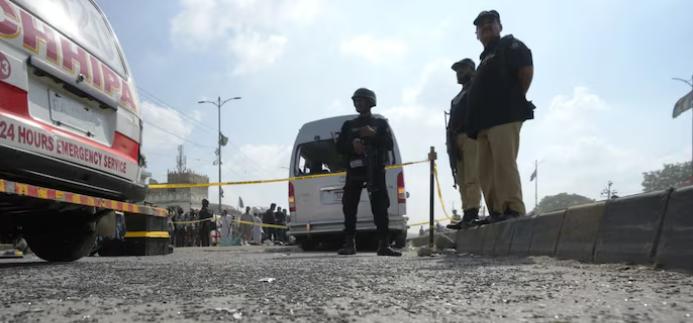
The suicide attack in North Waziristan on June 28, 2025, which killed up to 16 Pakistani security personnel, has once again highlighted a troubling pattern in Pakistan’s approach to domestic terrorism. Despite the Tehrik-i-Taliban Pakistan (TTP) claiming responsibility for the attack, Pakistan’s military leadership immediately blamed India for the incident.
Asim Munir, promoted himself to Field Marshal after Sindoor Operation. He is nicked named ‘ Failed Marshal’ and has accused India.
This is clear a strategy of deflecting attention from internal security failures by scapegoating India. Pakistan’s blame-game tactics serve to mask fundamental intelligence and security failure that continue to plague the nation.
A security and Intelligence Failure
The North Waziristan suicide bombing represents intelligence failure for Pakistan’s security. The attack showed several weaknesses in Pakistan’s counterterrorism efforts.
1. Militants were able to plan and execute a sophisticated operation involving an explosive-laden vehicle targeting a military convoy.
2. The attack occurred in a region where Pakistan has repeatedly claimed to have established control following extensive military operations.
3. The high casualty count among security personnel indicates that the attackers possessed detailed intelligence about military movements.
Rather than acknowledging the security lapses that allowed such a devastating attack to succeed, Pakistani military officials quickly pointed accusations at India. This occurred despite the fact that a TTP faction had already claimed responsibility, providing clear evidence of domestic militant involvement. The contradiction between the known perpetrators and Pakistan’s allegations against India exposes the duplicitous nature of these deflection attempts.
Historical Pattern of Deflection
Pakistan’s tendency to blame India for domestic security failures is not a new phenomenon. This strategy is a tried and tested formula which they have employed for many years.
This approach serves multiple purposes for Pakistan’s military and political establishment. It helps maintain the narrative that Pakistan is a victim of terrorism. It plays the sympathy card.
It also helps to protect military reputation.
By shifting blame onto India , the army and its officials avoid uncomfortable questions about “resource allocation, operational effectiveness, and strategic priorities in counterterrorism efforts”.
Consequences of Deflection Strategy
Pakistan’s consistent deflection strategy has a negative image for the country.
First, it undermines credibility internationally.
Second, the deflection strategy fails to improve genuine security lapses. It avoids avoiding honest assessment of internal failures.
International Implications
The international community increasingly views “Pakistan’s accusations with skepticism, particularly when they contradict available evidence”.
This limits Pakistan’s “ability to garner support for addressing genuine security concerns and may complicate efforts to secure international assistance for counterterrorism initiatives”.
A more constructive approach would involve honest acknowledgment of security failures followed by concrete steps to address identified weaknesses.
Conclusion
The response to the Waziristan attack shows Pakistan’s pattern of deflecting responsibility for security failures onto India.
The contradiction between TTP’s claim of responsibility and Pakistan’s immediate blame of India makes this particular case especially transparent. For Pakistan to address its genuine security challenges, it must move beyond blame-shifting toward honest assessment .
It role of identifying of good terrorist and bad terrorist has failed. As Hilary Clinton remarked on her visit to Pakistan you cannot breed snakes in the backyard and expect only to bite its neighbours. Then, again, Pakistan is not good at accepting advice.
Till it stops terror training and it will never remove domestic terrorism. It will continue to play victim card, seek international sympathy and continue to beg for aid.
References
1.India rejects Pakistan statement blaming it for North Waziristan suicide attack
https://scroll.in/latest/1083987/india-rejects-pakistan-army-statement-blaming-it-for-north-waziristan-suicide-attack
2.https://www.tribuneindia.com/news/india-pakistan-news/pakistan-blames-india-for-suicide-car-bombing-in-waziristan-centre-responds/ Pakistan blames India for suicide car bombing in Waziristan, Centre responds
3. India dismisses Pak Army’s Waziristan terror claim ‘with contempt it deserves’ – https://www.hindustantimes.com/india-news/india-dismisses-pak-army-s-waziristan-terror-claim-with-contempt-it-deserves-101751194952764.html?utm_source=whatsapp&utm_medium=social&utm_campaign=ht_site
4. Clinton warns Pakistan : ‘ you cannot keep snakes in the backyard’
www.nbcnews.com