SR Darapuri, National President, All India Peoples Front

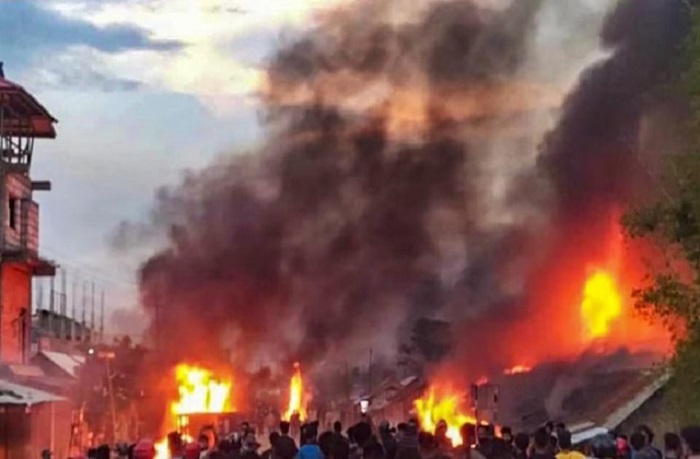
(Samajweekly) Yes, societal violence in India, particularly targeting religious and caste minorities, has been reported to be on the rise in recent years. Data from various sources, including human rights organizations and conflict monitoring groups, indicate an increase in communal violence, especially since the Bharatiya Janata Party (BJP) came to power in 2014 under Prime Minister Narendra Modi. Key points include:
Human Rights Watch Reports: The 2024 and 2025 World Reports by Human Rights Watch highlight a rise in violence against Muslims and other minorities, often linked to Hindu nationalist policies and rhetoric. The 2024 report notes that the BJP-led government’s discriminatory practices have created an environment of fear, with increased attacks on religious minorities and critics. The 2025 report specifically mentions that the 2024 election campaign incited discrimination, hostility, and violence against minorities.
ACLED Data: The Armed Conflict Location & Event Data Project (ACLED) reported in 2024 that religious polarization, driven by Hindu nationalist groups, has fueled a resurgence of communal violence. The construction of the Ram Temple in Ayodhya, a significant BJP-led project, has been a flashpoint, exacerbating tensions between Hindus and Muslims.
Factchecker.in: According to a 2019 New Yorker article, Factchecker.in documented 168 attacks by Hindu extremists against Muslims and other minorities between 2014 and 2019, resulting in 46 deaths, primarily in the name of cow protection.
Recent Incidents: Posts on X and news reports, such as a July 2025 clash in Pathanamthitta between BJP and CPI(M) workers, indicate ongoing communal and political violence. While not conclusive, X posts reflect public sentiment that violence, particularly against Dalits and Muslims, has increased under BJP governance.
However, some sources, like a post on X, suggest that increased reporting of violence may partly reflect a freer press under the BJP, bringing previously underreported incidents to light, though state responses remain weak. This claim lacks corroboration and should be treated cautiously.
Role of BJP and RSS
The BJP, India’s ruling party since 2014, and its ideological mentor, the Rashtriya Swayamsevak Sangh (RSS), are closely linked to the rise of Hindu nationalism (Hindutva), which has been associated with increased societal violence. Their roles include:
Ideological Influence: The RSS, founded in 1925, promotes Hindutva, a belief in Hindu supremacy and the establishment of a Hindu nation (Hindu Rashtra). The BJP, as the political wing of the Sangh Parivar (a network of Hindu nationalist organizations including the RSS), implements policies aligned with this ideology. This includes the Ram Temple project and laws perceived as targeting minorities, such as those against cow slaughter and interfaith marriages (termed “love jihad” by Hindu nationalists).
Organizational Links: The RSS provides the BJP with volunteers and ideological guidance. Many BJP leaders, including Modi, started as RSS pracharaks (full-time workers). The RSS’s paramilitary-style shakhas (branches) train volunteers in Hindu nationalist principles, sometimes fostering a militant atmosphere. A 1979 commission report held the RSS responsible for creating a climate conducive to communal disturbances in Jamshedpur.
Legitimizing Militant Groups: The BJP’s rise to power has emboldened groups like the Bajrang Dal and Vishwa Hindu Parishad (VHP), affiliates of the Sangh Parivar. These groups have been implicated in vigilante violence, such as cow protection lynchings and attacks on Muslims. For example, a 2018 Human Rights Watch report noted the RSS’s plans to recruit “religious soldiers” to combat cow smuggling and “love jihad,” despite Modi’s condemnation of such violence.
Government Inaction: Critics argue that the BJP government has failed to adequately investigate or curb violence by Hindu nationalist groups. Senior BJP leaders have been accused of promoting Hindu supremacy, which encourages attacks on minorities. The 2024 Al Jazeera report notes that even after the BJP lost its national majority in 2024, anti-Muslim violence continued, suggesting that the mainstreaming of Hindutva has deep roots.
Controversial Policies: BJP-led policies, such as the Citizenship Amendment Act (CAA) and National Register of Citizens (NRC), have been criticized for discriminating against Muslims, further polarizing society. The demolition of the Babri Masjid in 1992, supported by the RSS and BJP, and the subsequent 2024 Ram Temple inauguration are seen as milestones in escalating communal tensions.
Counterpoints and Context
BJP’s Défense: The BJP and its supporters argue that their policies aim to unify India under a Hindu cultural identity, not to incite violence. They claim that incidents of violence are either exaggerated or not directly linked to their governance. Some X posts suggest that the BJP’s tenure has allowed for more open reporting of crimes, which may inflate perceptions of increased violence.
Complex Causes: Societal violence in India is not solely attributable to the BJP or RSS. Historical caste and religious tensions, economic disparities, and local political rivalries also contribute. For instance, the 2025 Pathanamthitta clash involved CPI(M) workers, indicating that political violence is not exclusive to BJP-RSS.
Data Limitations: While reports indicate a rise in communal violence, comprehensive, up-to-date statistics are limited. The ACLED and Factchecker.in data provide snapshots but may not capture the full scope or trends beyond specific periods. X posts reflect sentiment but are not reliable for factual conclusions.
Conclusion
Societal violence, particularly against religious and caste minorities, has increased in India, with data pointing to a rise since the BJP’s ascent in 2014. The BJP and RSS have played significant roles through their promotion of Hindutva, which has emboldened militant groups and polarized communities. While they are not the sole cause, their ideological and organizational influence, combined with government inaction, has contributed to a climate conducive to violence. However, the complexity of India’s social fabric means other factors also play a role.
Courtesy: grok 3