SAMAJ WEEKLY UK
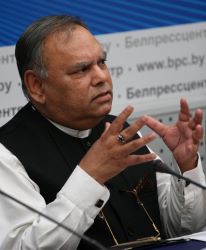 Ramesh Chander
The writer is A Retired Career Diplomat.
August 9, was the International Day of World’s Indigenous Peoples Day commonly called International Adivasi Day in India. The day is observed and celebrated throughout the world under the aegis of UN since 1994-95 Obviously, India cannot remain behind in this lofty activity as India has a large population of Adivasies, who are also called Moolnivasies, of 104 million which comes to around 9 % of the total population of India. The constitution of India recognized the Adivasies as Scheduled Tribes and made all the necessary provisions to protect and safeguard their identity and rights in the diverse social order of India. It is a matter of great satisfaction that the Scheduled Tribes have come a long way in getting integrated with the socio-cultural and politico-economic life the country with the affirmative actions stipulated by the laws of the land. As such, currently, the first citizen of India that is Mahamahim, President of India, Droupadi Murmu is an Adivasi herself along with a couple of Chief Ministers of the Indian States.
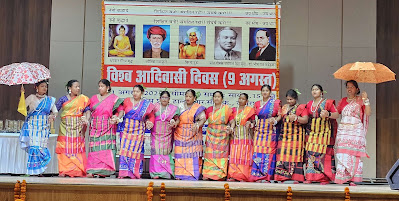
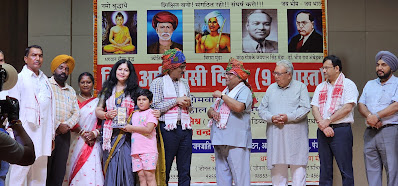
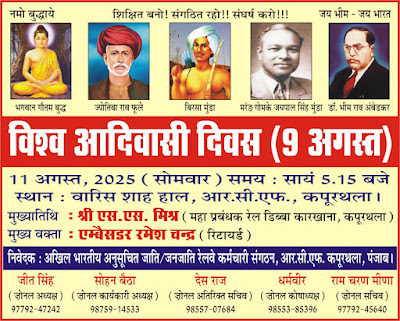 Rail Coach Factory at Kapurthala in Punjab, an enterprise of the Ministry of Railways, celebrated the Day on August 11 at the sprawling complex of the RCF. It fell on me to be the Chief Speaker at a well hosted function by the Zonal Chapter of All India SC/ST Railway Employees Organisation, courtesy Jit Singh, a senior executive at the RCF and his colleagues and associates. GM of RCF, S.S. Mishra was the Chief Guest of the function held at the prestigious hall of the RCF, Waris Shah Auditorium, a site in the lush green trees and fully manicured lawns as a flag bearer of the Adivasi’s lofty way of life conforming to the nature and its respect – Jal, Jungle, Jamin. I was told that more than 600 ST employees of the RCF along with their families life in the RCF Township. The cultural programme presented by them really gave a glimpse of the rich tribal tradition particularly of Jharkhand and Rajasthan. The song and dance sequences presented by the men and women ensembles attired in colourful costumes were soothing not only to the eyes and ears but also the soul. It reminded me of my days in East Africa – The song and dance is in
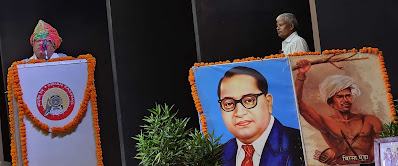
 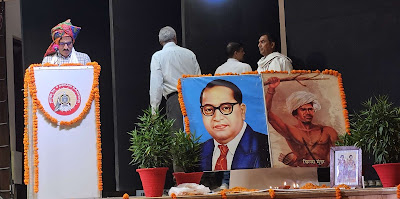 the blood of tribal people. I was personally touched by the traditional tribal welcome accorded to me and the Chief Guest Mishra Sahib amidst the beats of Dhol, honour with traditional Jharkhandi Gamshas and Rajasthani Safaas. Chief Guest Mishra Sahib spoke briefly and expressing happiness to join the function to observe an important Day at the RCF. He duly recognized the positive role of All India SC and ST Railway Employees Organisation in the functioning and success of RCF. My informal interaction with the hosts, Jit Singh, Ranjit Singh among others gave a constructive and pleasant feedback about the ability and helping approach of GM Mishra Sahib particularly with regard to his always positive respons in listening to his juniors and the supporting staff. As a disciplined diplomat, I went prepared to speak on the occasion, as expected. But the friendly and informal scenario at the function motivated me to deviate from the Talking Notes of my speech. While appreciating the cultural inputs of the local talent, I shared a poetic assertion of Allma Iqbal –
Kuch Baat Hai Ki Hasti Mitti Nahin Hamari
Sadion Raha Hai Dushman Daure Jahan Hamra
 I attach herewith as an appendix my Speaking Notes for perusal of my discerning readers. In some of my off the cuff remarks, I said that the tribal icon, Birsa Munda was a hero of the national struggle for freedom and not only a champion of nature and environment. While recognizing the good and positive role of Mahatma Gandhi and the current agenda of Samrasta of RSS with regard to integrate dalits with the mainstream of the society, I added that more was needed to be done shedding the restraints and constraints of Manuwadi Varan Vivasta and recited yet another Urdu couplet –
Masjid To Baba Di Sab Bhar Mein; Imaan Ki Hararat Walon Ne
Dil Apna Purana Papi Hai Barson Se Namazi Ho Na Saka.
All said and done, it was a wonderful evening which I thoroughly enjoyed in good company and excellent hospitality – home cooked tribal dishes for a good dinner.
 With a view to give an over-view of RCF, I quote here some excerpts from the website of RCF for the benefit of my readers –
“RCF is a coach manufacturing unit of Indian Railways established in 1985. The factory is located at a distance of 7 kms. from the historical city of Kapurthala. The integrated township is very well planned and boasts of lush green surroundings. It is considered one of the best residential complexes in the country. RCF is a self-contained unit with its own shopping complex, six schools, banks with ATM facilities and a 76 bedded hospital. Apart from this RCF colony has a beautiful lake complex, a large sports stadium, an 18-hole golf course, Cricket Stadium, synthetic lawn-tennis courts, Astroturf Hockey Stadium, international size swimming pool, skating rink and other sports facilities. RCF has already carved a niche in the industrial scenario of the country at large and Indian Railways, in particular. After turning out its first coach in March 1988, RCF has moved on to become the largest and most modern coach manufacturing unit of Indian Railways. At present more than 46,000 RCF built coaches are traversing the length and breadth of our nation. Every year RCF is adding more than 1500 coaches to this fleet, which includes AC and Non-AC coaches for Broad Gauge. RCF is equipped with a state-of-the art CAD centre and CNC machines to undertake design and manufacture of bogies, shells, FRP interiors as per customer requirement.”
On my reporting back to my family, my children and grandchildren were much impressed and wished to visit RCF as a study tour and sightseeing in the coming weeks. I would avail of the generosity of GM Mishra Sahib and others in this regard, in due course.