
S.R. Darapuri I.P.S. (Retd)
(Samajweekly)
Introduction
-
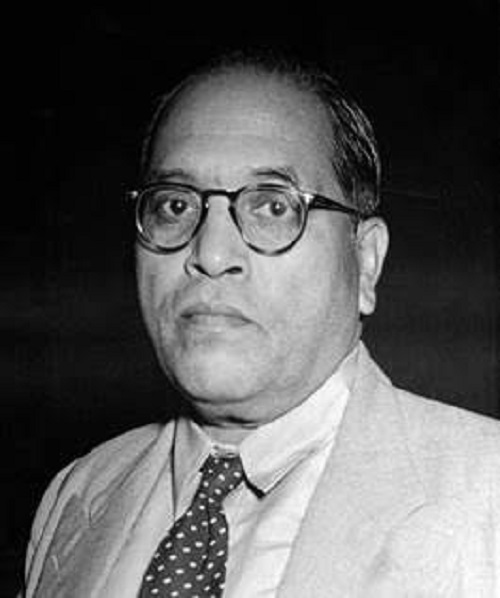
S.R. Darapuri I.P.S. (Retd) R. Ambedkar regarded religion as a powerful social institution that profoundly influences the moral, cultural, and political life of society. However, he believed that the prevailing structure of Hinduism, particularly its caste-based hierarchy and hereditary priesthood, perpetuated inequality and denied millions of people their dignity and fundamental rights. While Ambedkar eventually embraced Buddhism, he also proposed a comprehensive programme for the reform of Hinduism. In his landmark work Annihilation of Caste and other writings, he advocated radical changes in the appointment of priests, the administration of Hindu temples, and the use of temple wealth. His objective was to transform religious institutions into democratic, accountable, and socially beneficial organizations that reflected the principles of liberty, equality, and fraternity.
Reforming the Priesthood
One of Ambedkar’s strongest criticisms of Hinduism was directed against the hereditary monopoly of the Brahmin caste over the priesthood. He argued that the position of a priest was not merely a religious office but also a source of immense social authority. Since this authority was reserved exclusively for one caste, it reinforced the caste system and legitimized social discrimination.
Ambedkar rejected the notion that priesthood should be inherited by birth. Instead, he argued that every Hindu, irrespective of caste or gender, should have an equal opportunity to become a priest, provided he or she possessed the necessary qualifications. In his view, priesthood should become a profession based on merit rather than lineage.
He proposed that priests should receive systematic religious education, pass qualifying examinations, and obtain licenses issued by the State. Just as doctors, lawyers, and teachers are required to meet professional standards, priests too should be accountable to society. Those found guilty of misconduct or incompetence should lose their licenses. Such reforms, he believed, would eliminate caste privilege and establish professionalism and ethical responsibility in religious life.
Democratic Administration of Hindu Temples
Ambedkar believed that Hindu temples were public institutions supported by the faith and donations of millions of devotees. Therefore, they should not remain under the control of hereditary families, priestly elites, or dominant castes.
He advocated democratic and representative management of temples. Temple management committees, according to him, should include members from all sections of society, including Scheduled Castes, Scheduled Tribes, women, and other marginalized groups. Decisions concerning temple administration should be transparent, accountable, and free from corruption or caste discrimination.
Ambedkar also believed that public institutions receiving donations from ordinary citizens should function according to democratic principles rather than hereditary privilege. Proper financial auditing, public disclosure of accounts, and responsible administration were essential for preserving public confidence in religious institutions.
Temple Wealth as an Instrument of Social Welfare
Perhaps Ambedkar’s most far-reaching proposal concerned the utilization of temple donations. He observed that enormous sums of money were spent every year on elaborate rituals, ceremonies, and festivals while millions of people remained illiterate, impoverished, and deprived of healthcare.
He argued that religion should serve humanity rather than merely sustain ritualism. Temple revenues, in his opinion, should primarily be devoted to public welfare. He envisioned temple funds supporting schools, colleges, hospitals, hostels for poor students, libraries, orphanages, old-age homes, scholarships, and programmes for the upliftment of disadvantaged communities.
Such an approach would transform temples from centres of ritual expenditure into institutions contributing directly to national development and social justice. For Ambedkar, true religion was measured not by the grandeur of ceremonies but by its contribution to human welfare.
Ambedkar’s Broader Vision of Religious Reform
Ambedkar’s proposals extended beyond priesthood and temple administration. He believed that Hinduism required a comprehensive restructuring to become compatible with democratic values. He suggested the adoption of a single authoritative scripture acceptable to all Hindus, the abolition of caste distinctions, and the complete elimination of hereditary religious privileges.
His vision sought to establish a religion based on morality rather than birth, equality rather than hierarchy, and reason rather than unquestioned tradition. These reforms were intended to align religion with the constitutional ideals that later became the foundation of independent India.
The Present Scenario
Independent India has witnessed important, though incomplete, progress towards some of Ambedkar’s objectives.
Several states, particularly Tamil Nadu and Kerala, have introduced reforms allowing trained non-Brahmins, including members of Scheduled Castes, to serve as temple priests. These reforms have challenged the traditional monopoly of hereditary priesthood and have received judicial support in several cases. However, in most parts of India, the priesthood continues to be overwhelmingly dominated by hereditary Brahmin families, and women priests remain relatively uncommon.
Temple administration has also undergone significant changes. Many major temples are administered through statutory bodies such as Devaswom Boards and Hindu Religious and Charitable Endowments departments in states including Tamil Nadu, Karnataka, Andhra Pradesh, Telangana, and Kerala. These bodies are intended to ensure better financial management and public accountability. Nevertheless, allegations of political interference, corruption, lack of transparency, and inadequate representation of marginalized communities continue to be raised.
Temple donations today amount to thousands of crores of rupees annually. A considerable portion is used for temple maintenance, salaries, festivals, pilgrim facilities, and charitable activities such as free meals, hospitals, educational institutions, and social welfare programmes. Some of India’s largest temples have established impressive charitable initiatives benefiting millions of people. However, critics argue that a much larger proportion of temple wealth could be directed towards education, healthcare, scientific research, and poverty alleviation, in keeping with Ambedkar’s vision of socially productive religion.
Constitutional and Legal Developments
The Constitution of India embodies many of the principles that inspired Ambedkar’s reform agenda. It abolishes untouchability under Article 17 and guarantees equality before the law through Articles 14, 15, and 16. Judicial decisions have generally recognized that hereditary succession to the office of priest is not an essential religious practice and that the State may prescribe qualifications for temple priests without violating religious freedom. At the same time, Articles 25 and 26 protect the autonomy of religious denominations in matters of essential religious practice, creating an ongoing constitutional balance between religious freedom and social reform.
Conclusion
Dr. B.R. Ambedkar’s proposals for reforming the Hindu priesthood, democratizing temple administration, and utilizing temple wealth for public welfare remain among the most comprehensive programmes of religious reform ever articulated in modern India. His objective was not merely administrative efficiency but the establishment of a religion consistent with the democratic ideals of equality, liberty, fraternity, and social justice.
Although independent India has taken meaningful steps towards opening the priesthood to all castes, improving temple governance, and expanding charitable activities funded by temple resources, Ambedkar’s broader vision remains only partially realized. Hereditary traditions continue to dominate much of the priesthood, representation in temple administration remains uneven, and the immense wealth of religious institutions is still not consistently directed towards the transformative social purposes that he envisioned.
More than seven decades after the adoption of the Constitution, Ambedkar’s ideas continue to provide a compelling framework for debates on religious reform, equality, and the social responsibilities of religious institutions. His vision reminds us that religion can truly serve society only when it upholds human dignity, rejects discrimination, and contributes actively to the welfare and progress of all citizens.