SR Darapuri I.P.S. (Retd)
Introduction
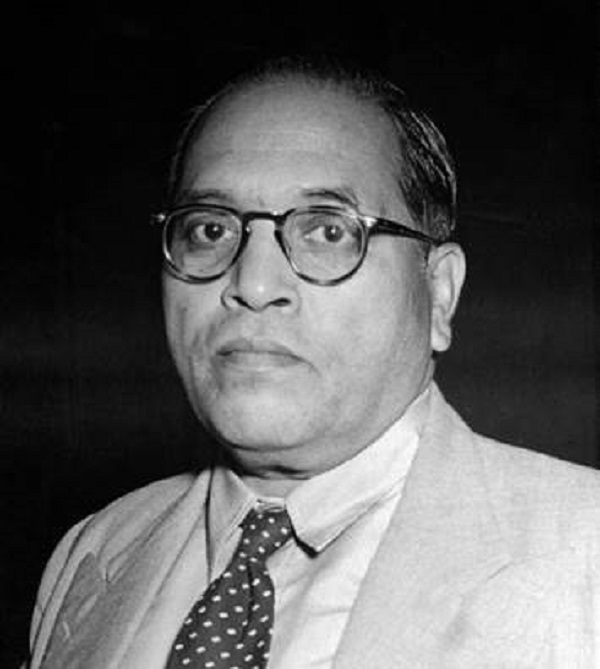
(Samajweekly) The struggle for temple entry occupies an important place in the history of the Dalit movement in India. During the late nineteenth and early twentieth centuries, Dalits were denied entry into Hindu temples as a consequence of the practice of untouchability. Many social reformers viewed temple-entry movements as a means of removing this discrimination and integrating Dalits into Hindu society. Dr. B.R. Ambedkar, however, approached the issue from a fundamentally different perspective. For him, the demand for temple entry was never merely a religious question; it was a question of civil rights, social equality, and human dignity. His views, however, evolved over time. While he initially supported temple-entry movements as a strategy to challenge caste discrimination, he later concluded that they could not bring about the annihilation of caste or secure genuine emancipation for Dalits. This evolution reflects the broader development of his political philosophy—from reforming Hindu society to seeking liberation from the caste system altogether.
Temple Entry as a Struggle for Human Rights
Ambedkar’s early support for temple-entry movements was based not on religious devotion but on the principle of equality before society. He understood that exclusion from temples symbolized the larger system of caste oppression. Dalits were denied entry because they were regarded as “untouchables” and therefore considered ritually impure. Such exclusion denied them recognition as equal members of society.
Ambedkar argued that if Hinduism genuinely believed in the equality of all human beings, there could be no justification for excluding any section of society from places of worship. Therefore, the struggle for temple entry was intended to expose the hypocrisy of caste Hindus who preached religious morality while simultaneously practicing social discrimination.
Temple entry was thus a democratic demand aimed at asserting equal citizenship rather than a plea for religious privilege. By demanding admission into temples, Dalits challenged the legitimacy of the caste order itself.
The Kalaram Temple Satyagraha
The most significant expression of this strategy was the Kalaram Temple Satyagraha of 1930 in Nashik, Maharashtra. Under Ambedkar’s leadership, thousands of Dalits organized a peaceful movement demanding entry into the famous Kalaram Temple.
The movement sought recognition of three fundamental principles: equal right to worship; recognition of Dalits as equal human beings; and abolition of untouchability in religious institutions.
The satyagraha attracted national attention and represented one of the earliest mass movements led by Ambedkar. However, despite prolonged protests and disciplined organization, the temple authorities and orthodox Hindu society refused to admit Dalits.
The failure of the movement profoundly influenced Ambedkar’s subsequent thinking.
Reassessment of Temple Entry
The repeated refusal of caste Hindus to accept Dalits as equals led Ambedkar to question the effectiveness of temple-entry movements. He gradually realized that the problem of caste extended far beyond access to temples.
He observed that even if Dalits were permitted to enter temples, the fundamental structure of caste society would remain unchanged. They would still face discrimination in education, employment, housing, access to public resources, marriage, and political representation.
Ambedkar therefore began asking a fundamental question: Would entry into temples make Dalits socially equal? His answer became increasingly clear—it would not.
Temple entry could remove one visible symbol of untouchability, but it could not destroy the social and economic foundations of caste.
Self-Respect over Religious Acceptance
As his thinking matured, Ambedkar emphasized self-respect rather than acceptance by caste Hindus. He questioned why Dalits should seek admission into institutions where they were regarded as inferior.
He argued that genuine liberation could never depend upon the goodwill of those who upheld caste hierarchy. Instead, Dalits should concentrate on building their own strength through education, organization, political participation, and economic advancement.
His famous slogan—“Educate, Agitate, Organize”—captured this new direction. Rather than investing energy in seeking symbolic recognition, Ambedkar urged Dalits to acquire knowledge, develop leadership, and struggle for political power and constitutional rights.
For Ambedkar, dignity could not be bestowed by temple authorities; it had to be achieved through self-assertion and social transformation.
Critique of Hindu Social Order
Ambedkar’s reassessment of temple-entry movements led him to a deeper critique of Hinduism itself. He argued that untouchability was not an accidental distortion of Hindu society but a logical consequence of the caste system embedded in traditional Hindu religious texts and practices.
He maintained that temple entry could never eliminate caste because caste was sustained by religious doctrines, hereditary hierarchy, and notions of ritual purity and pollution.
Unless these foundations were dismantled, symbolic reforms would merely conceal deeper inequalities.
This conviction found its fullest expression in his celebrated work Annihilation of Caste, in which he argued that caste could not be abolished without fundamentally rejecting the religious principles that sustained it.
Difference with Mahatma Gandhi
Ambedkar’s position differed significantly from that of Mahatma Gandhi. Gandhi strongly supported temple-entry movements and campaigned against untouchability. However, he viewed these movements primarily as efforts to purify and reform Hindu society while preserving its religious framework.
Ambedkar believed that this approach failed to confront the structural basis of caste. In his view, abolishing untouchability without abolishing caste was impossible. Temple entry might improve appearances, but it would not alter the unequal distribution of social status, economic resources, or political power.
This fundamental disagreement reflected their broader differences regarding caste, social reform, and the future of Hindu society.
From Temple Entry to Religious Conversion
By the mid-1930s, Ambedkar had largely abandoned temple-entry campaigns. In 1935, at Yeola, he made his historic declaration: “I was born a Hindu, but I will not die a Hindu.” This statement represented a decisive break with his earlier hope of reforming Hindu society from within.
Over the next two decades, Ambedkar devoted his energies to securing constitutional safeguards, political representation, educational advancement, labour rights, and social justice for the oppressed.
His search for a religion based on liberty, equality, and fraternity culminated in his conversion to Navayana Buddhism in 1956, together with several hundred thousand followers.
For Ambedkar, conversion was not merely a change of religious identity; it was a rejection of caste oppression and an affirmation of human dignity.
Contemporary Relevance
Ambedkar’s analysis continues to shape contemporary debates on caste and social justice. Although constitutional guarantees now prohibit untouchability and many temples have formally opened their doors to Dalits, discrimination continues in various forms in many parts of India.
His writings remind us that genuine equality cannot be achieved through symbolic inclusion alone. Social justice requires equal access to education, economic opportunities, land, political representation, legal protection, and human dignity.
Temple entry may signify the rejection of one form of discrimination, but it cannot substitute for the broader struggle against structural inequality.
Conclusion
Dr. B.R. Ambedkar’s views on temple-entry movements underwent a profound transformation. He initially regarded them as an important instrument for asserting equality and exposing the injustice of untouchability. However, experience convinced him that temple entry alone could neither eradicate caste nor secure genuine freedom for Dalits.
His mature philosophy emphasized that the struggle for dignity must extend beyond religious institutions to encompass education, political empowerment, economic justice, constitutional rights, and the complete annihilation of caste. Ultimately, Ambedkar concluded that self-respect and equality could not be achieved merely by entering temples but by transforming the social order itself.
His journey from leading temple-entry movements to embracing Buddhism reflects one of the most significant intellectual and political developments in modern Indian history. It underscores his unwavering commitment to liberty, equality, fraternity, and the creation of a society free from caste-based oppression.