SAMAJ WEEKLY UK
Vidya Bhushan Rawat
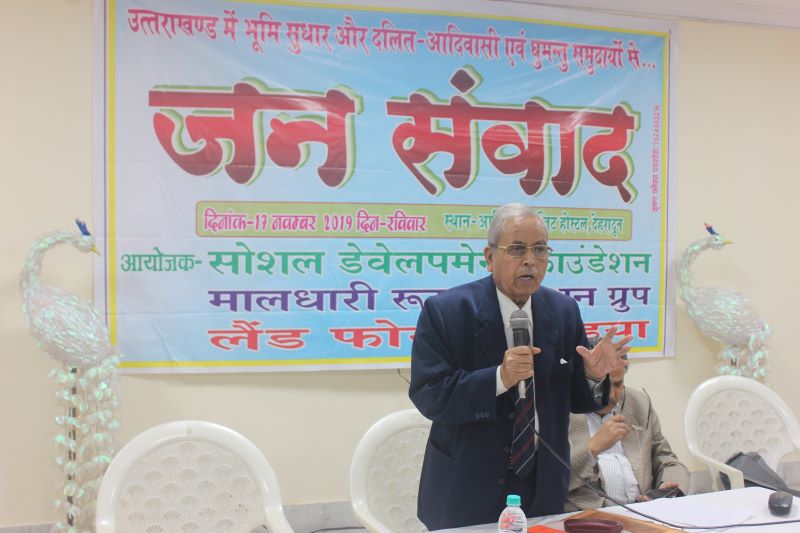
Mr Chandra Singh, a very well-known public figure in Uttarakhand who had served in different capacities in the government of Uttarakhand and Uttar Pradesh and retired as Secretary, Uttarakhand Government as well as former member of Uttarakhand Lok Seva Abhikaran, passed away on July 9th, 2026 at his home in Dehradun. He was 84. Though he lived a very purposeful life and remain committed to the cause of the most marginalised people yet in his own life style too he remained like a ‘Rishi’. Despite holding such high administrative positions in the state of Uttarakhand, Mr Chandra Singh travelled through private vehicles and did not own anything. He would walk like ordinary citizens.
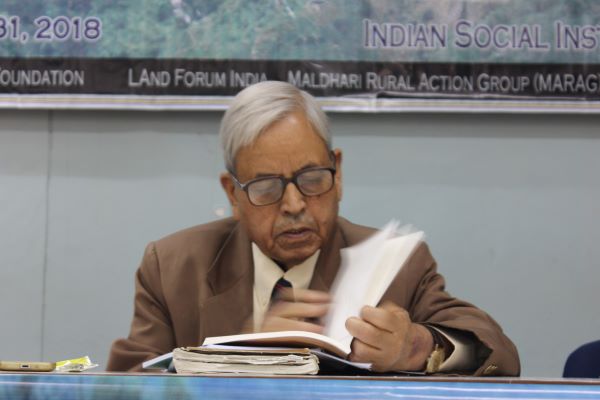 Mr Chandra Singh was born on 15 August 1942 in the extremely poor family of village Kelsu Bhankoli in Tehri district. In the old days, there was always a discrepancy in dates of birth. Chandra Singh Ji says his actual date of birth was 12 January 1943, but it was shown as later in school so that he could get admission on time. His father was a kathavachak (storyteller) and his mother came from a goldsmith family. His father knew the entire Ramayana by heart. The story of his journey from childhood to entering the administrative services is highly inspiring and will benefit all of us.
It is also important to understand that Shri Chandra Singh belonged to a marginalized community and came from a remote border region of the country, where students still struggle to find opportunities to join the mainstream. The standard of education has still not advanced much, and the practice of untouchability continues in villages. Incidents of discrimination against Dalits are frequently heard. Uttarakhand is a state about which people outside have very little clear information. The ‘nationalist’ section living in Uttarakhand remains unaware of the atrocities being committed against Dalits here, and their main opposition to Dalits revolves around the issue of reservation. He was vocal on the issues of the Dalit Rights and violence against them in the state. He would travel to remote locations to get a first-hand information about the issue.
In his childhood education in the village, Shri Sunil Negi taught him. He and two other companions were the first from the village to complete primary education, and their teacher played a major role in this. After completing primary education in Ankoli village, Chandra Singh did his high school from Kirti Nagar and Intermediate from Rajkiya Pratap Inter College, Tehri. His classmate there was Barfiya Lal Juanta, a former Minister. He was a diligent student.
 Chandra Singh Ji obtained his higher education from Allahabad. There is a very interesting story behind this too. He had reached Rishikesh to take admission in DAV College, Dehradun, when he met the great environmentalist Shri Sundarlal Bahuguna at the bus stand. Bahuguna asked him to go with Shri Kundan Singh Rawat and gave him Rs Forty borrowed from the shop in front for the journey to Allahabad. He already had One hundred rupees given by his brother. Thus, on his first journey from the village to Allahabad, he had only 140 rupees.
After getting admission in the university, he got a room in Oxford Wing Hostel, where Shri Hari Singh Rawat was his roommate. This happened in 1961. He was able to do all this because his entire fee was waived and he also received a scholarship. In Allahabad, his other friend was Shri Devi Dayal, who later retired as Secretary in the Central Government. Shri Jaswant Singh Negi of the Economics Department became his local guardian and helped him. He had taken admission in MA History, but Shri Jaswant Singh Negi introduced him to Professor J.K. Mehta of the Economics Department, and thus he took admission in Economics.
I feel that his journey from the village to Allahabad also gives an important indication that he built good relations with people of all castes. Although he faced untouchability in the hostel or other places, living with friends made him feel otherwise. However, he also says that in the villages of these same friends, he had to face untouchability. This also means that while most people change after getting educated, they still carry forward many things in the name of village relations and traditions, from where the stench of casteism and untouchability emanates.
After completing his studies in Allahabad, Shri Chandra Singh got his first appointment as a Lecturer in Economics at P.B. Degree College, Pratapgarh. Later he was selected as Assistant Development Officer and posted in Ballia. After being selected in the Provincial Administrative Service in 1967, he was preparing for the IAS and his appointments were repeatedly stopped on one pretext or another. Sometimes officers did not grant him leave, sometimes something else, but he continued to work hard. In 1985, he got his first IAS posting as Joint Divisional Development Commissioner, Basti.
He served in the Indian Administrative Service from 1986 to 31 August 2002 — a total of 34 years and 15 days — and then retired. Later he was appointed as a member of the State Public Service Commission, Uttarakhand, where he worked for two full years. The way he shared his experiences in this entire interview will be extremely useful for any politician and officer, especially his tour notes, which are highly insightful. He remembers every single incident of his life, and his understanding of administrative processes is very inspiring for new officers today.
Regarding Uttarakhand, I can definitely say that he is not only a witness to important events here but can be called an encyclopaedia of related information. He says that in his 35 years of administrative life, he was transferred 38 times, which was extremely painful because he was being punished for his honesty and outspokenness. There was no coordination in his transfers. Between 1980-1983 he was Additional District Magistrate in Pithoragarh, and after transfer he was sent as General Manager of the Sugar Mill in Saraswa, Saharanpur. From 1990-93 he was Joint Development Commissioner in Pauri and later was sent as District Magistrate, Basti. Because of these transfers, he could not pay proper attention to his children, which affected their education. He also faced difficulties in his personal life. In 1992, there was a devastating earthquake in Chamoli and Uttarkashi districts of Uttarakhand, in which hundreds of people lost their lives and there was widespread destruction. He was posted in Pauri district but could not take care of his family. Both his in-laws died in this disaster and he could not even go to see them. He says that his wife, Smt. Lata Singh, herself performed the last rites of her parents and then took care of her brother as well. He was very respectful to his wife and spoke very highly of her.
The most special thing about Shri Chandra Singh Ji was that he understood administrative nuances very well and advised people accordingly. In 2001, he was made District Magistrate of the most important district in terms of land management — Shaheed Udham Singh Nagar — and he knows all the land-related problems of that area. Whenever he attends any program, people surround him and he personally answers each person’s questions one by one and helps them.
After retiring from government service and his last assignment with the government was Secretary in 2002, he dedicated his entire life to social service. Shri Chandra Singh says that he first heard about Babasaheb Ambedkar in 1961. During school, he had no information about Babasaheb. But now he was completely dedicated to the Ambedkar mission. At the age of 75, he obtained a law degree and got himself registered to practice as a lawyer. This is the result of his dedication and commitment to society. Interestingly in the last few years, he had been taking copies of the Constitution of India along with him where he got invited, asking the students all other participants to buy the Constitution book and read it.
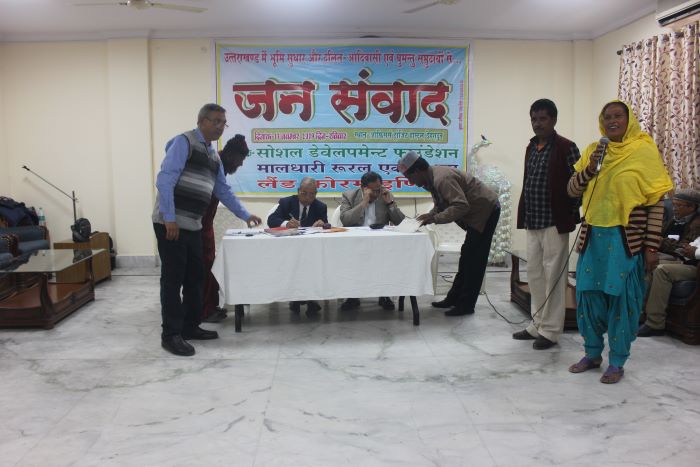
He respected my work on land rights for the people in the Tarai region in particular where I fought for the rights of the landless Dalit villagers for nearly twenty years. That experience gave me the understanding as how the Dalit issues remain on the margin in Uttarakhand and why a popular support for their cause is rarely achieved. He knew well that what I was doing was a difficult task where the local support would be difficult yet he enjoyed the conversations with me and joined various events that I and my colleagues had organised in Uttarakhand on the issue of land and other related questions of Dalit Rights. He also expressed desire to visit our Prerna Kendra in Kushinagar but alas his health was not great during the last four five years but he always ensured to participate in events and programme organised by me in Uttarakhand and Delhi but all that was about four to five years ago prior to Covid. I travelled with him in the local ‘Sampera’ Bastis in Dehradun where he was deeply involved and gave credit to his wife late Lata Singh for the awareness among the community. I also criss crossed with him in the settlements of Samperas, where he discusses their problems and tries to find solutions. I did not know much about the different Dalit castes of Uttarakhand, and Shri Chandra Singh greatly enhanced my knowledge on this subject. He was the first person of his level to raise the issues of Kolta and Bajgis in Uttarakhand with complete honesty. We all know about the issue in the Jaunsar Bawar region where dominant castes consume the Scheduled Tribes quota and Dalits get no benefit, but his comments on why the Jaunsar area was made Scheduled and what should be done in this context should be heard.
Shri Chandra Singh was a treasure trove of experience, and regarding Uttarakhand, I can say that he had extensive knowledge of village rivers and streams, gads, communities, traditions, and castes. His CR reports contain high praise from senior officers for his work. When Shri Chandra Singh was District Magistrate of Chamoli district, Commissioner Subhash Kumar wrote about him that he is the DM of the people.
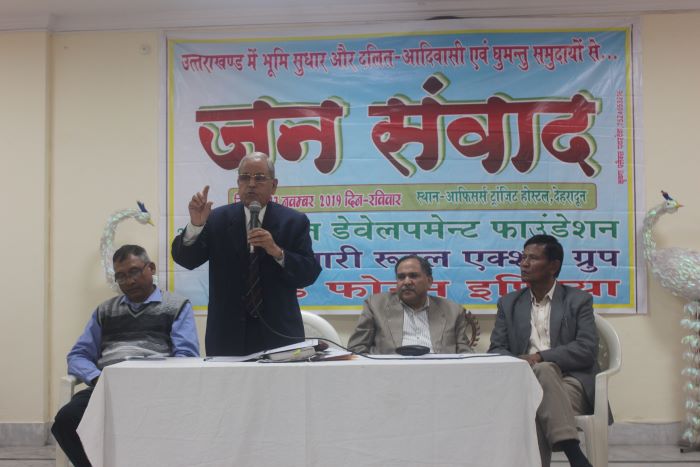 Even at the age where health and other complications disturb us, Shri Chandra Singh continued to speak for the deprived people of the region and tried to be physically present where ever it was possible. His administrative experience is so vast that the new generation of officers and the government system can benefit from it. Today, the Uttarakhand state should take advantage of the experience and capability of officers like Shri Chandra Singh.
I felt that after retirement he became even more active. I have read the opinions of senior officers about his tenure, but never got the direct opportunity to know and understand his tenure as mostly I was not based in Uttarakhand and secondly my opinion about the state was that it was simply a Brahmanical upper caste state with almost no respect for the Dalit Rights. It was difficult to get along with people who could stand up and speak keeping their jaati pride aside. I faced it during my petition in the High Court as how the officials tried to evade the Dalit Adivasi issues in the state. One senior officer was reprimanded by the court for not taking the directions of the court seriously. It was my dear friend Raju Mahar who was also associated with me for several years during our work on Land Rights issues, that he got me in touch with Mr Chandra Singh but in real sense it was after retirement that I got the opportunity to talk to him frequently and more candidly apart from visiting many places in and around Dehradun with him. I can say that his kindness and extraordinarily simple living with high thinking greatly influenced me as he made me believe that you can find socially committed people in the governance structure too. Though he did not make it to Central pool yet I have no hesitation in saying that Chandra Singh belonged to the category of great pro people intellectuals such as B D Sharma, S Sankaran, K B Saxena and P S Krishnan which made our bureaucracy proud for their work for the marginalised.
In democracy today, public servants have actually become symbols of the power of system over the people. These are India’s elite services which inspires millions of youths to apply to become part of the elite club and that is good and bad both. Good because it is attracting every new talent and bad because it gives them an illusion of being a super boss over the people. I am sure young boys and girls will not join these services to be like Shri Chandra Singh worked by making these administrative services accountable to the people without having any big privilege which our bureaucrats have become habitual of today but that is why that even years after his retirement, people remember him and had high hopes from him.
Mr Chandra Singh is no more but his life will always inspire young generations who are committed to social justice and uplift of the most marginalised of how a person hailing from such difficult socio economical cultural background rose to such heights and never compromised with his principles. Frankly, he was a misfit in the entire world of networking babus as his main forte was his connectivity with the common person and hence the politicians were uncomfortable with his plain speaking and high integrity. It is sad that such a giant was never honoured by his own state for his remarkable work for the people. Mr Chandra Singh’s death is a big loss for the state of Uttarakhand particularly for its marginalised people for whose rights he committedly stood all the time despite his failing health. My sincere tribute to this great son of Uttarakhand.