Prem Singh
(Samajweekly) Yesterday, a friend asked me what my comment was on the ongoing protest at Jantar Mantar. When I remained silent, he said he had been waiting for my comment for several days. I gave my friend my rehearsed answer – “I have long since given up the task of saving the country.” My friend said he had heard this many times, so please elaborate. I replied that since the 2019 Lok Sabha elections, I have stopped participating in political activities, making political statements, attending or commenting on protests, demonstrations, public meetings, marches, etc. I have almost stopped attending meetings and seminars. So, why do you expect my comment? I am not a civil society activist, nor a journalist, nor the founder/director of any NGO. My friend quipped, “At least you are a citizen; The ‘Bharat Samvad Abhiyan’ has been running since 2019 to spread civic consciousness in the country.
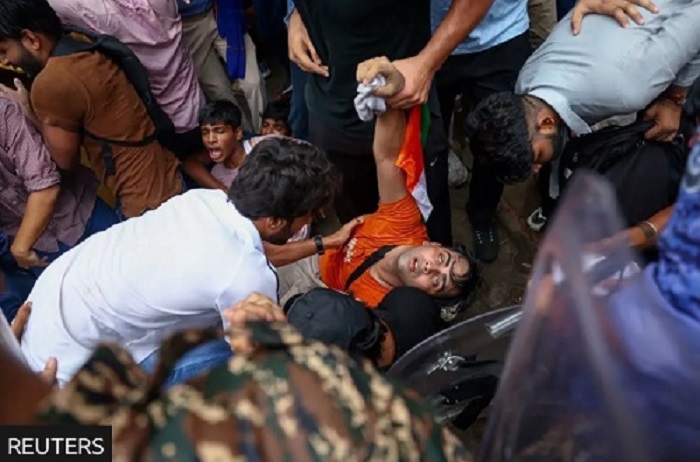
Any way, as a citizen, I write commentary on political, economic, social, cultural, educational, and other topics intermittently. This protest will definitely be mentioned in my next commentary that I would write in near future. In keeping with my friend’s request, the first thing I would like to say here is that there should be a fast-track investigation into the violent police attack on protesters during the Parliament March on 20 July; and strict legal action should be taken against the guilty police officers and personnel. This investigation must also include the violent attack by police forces on students in the campus, library, and hostels of Jamia Millia Islamia University in December 2019. The investigation must be conducted with the utmost seriousness and responsibility. It would be best if the Supreme Court of India, taking cognizance of the gravity of the incident, either ordered an inquiry itself or directed the government to institute one.
Secondly, Indian education has been plunged into a serious crisis over the past three decades of the neoliberal era. The protesters and those encouraging them should not confuse the irregularities in the examination system of professional courses with education itself. To do so would be to suppress the voice of struggle against the privatization, commercialization, and communalization of education in the neoliberal era. It should be noted that neither Sonam Wangchuk nor the founders of the CJP have been involved in the ideological and active struggle that has been going on in the country against the marketization of the character of education and the education economy.
Thirdly, at least for now, the leaders of opposition political parties should be asked to pledge that if they come to power, places like Jantar Mantar, Ramlila Maidan, and Rajghat will be free from barricades; that there will be no restrictions on rallies or marches in Delhi or any other city in the country; that police permission will not be required for seminars, discussions, or presentations in seminar halls or auditoriums; and that the police will not have free access to college and university campuses.
While it may take time for the demands for Dharmendra Pradhan’s resignation and reforms in the existing examination system to be accepted, but the opposition can immediately give a commitment that is absolutely essential for improving the declining health of democracy.