
SAMAJ WEEKLY UK

Bal Ram Sampla
Geopolitics
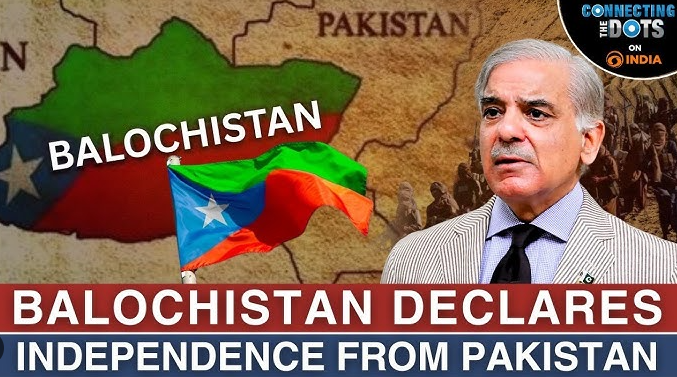
The recent “declaration of independence” by Baloch nationalist leaders has generated significant buzz on social media, but in the actual halls of global diplomacy, it is being completely bypassed.
For the United Nations (UN) and the international community, deciding whether to recognize a new country is not about social media trends or sympathy for a cause. It is governed by strict, pragmatic rules of international law and global geopolitics.
1. The Legal Reality: Failing the Test of Statehood
Under international law ( the Montevideo Convention), a group cannot simply declare themselves a country. They must meet strict, physical requirements to be recognized as a state:
(a) A Defined Territory & Permanent Population: While Balochistan has a clear map and millions of residents, the borders are not under the control of the separatists.
(b) An Effective Government: This is the biggest hurdle. To be a state, a group must actually run the area. They must collect taxes, run schools, operate courts, and control the police. Despite the declaration claiming 85% control, Pakistan’s government and military still actively administer, patrol, and run the province. The “Republic of Balochistan” exists on paper and online, but not as a physical administration on the ground.
(c) The Capacity to Enter Relations with Other States: A country is only a country if other countries agree to treat it like one. Currently, no government in the world has agreed to open diplomatic relations with this proposed state.
2. Global Geopolitics and “Sovereignty First”
The international system is built on a foundational rule: respecting the territorial integrity and sovereignty of existing nations.
The UN and major global powers almost always ignore unilateral declarations of independence because they fear the chaotic chain reaction it could cause:
(a)Fear of “Balkanization”: If the UN begins recognizing every ethnic group that declares independence online, it fears it would open a Pandora’s box. Dozens of regions across Europe, Africa, and Asia have active separatist movements. Supporting one could encourage others, leading to global instability and border conflicts.
(b) The Nuclear Factor: Pakistan is a nuclear-armed country. Any official move by foreign powers or the UN to carve away nearly half of Pakistan’s landmass (Balochistan is its largest province) would be viewed by Islamabad as an existential threat. This could trigger a catastrophic war in South Asia, a risk no global power is willing to take.
(c) Major Power Interference: China has invested tens of billions of dollars in Balochistan through the China-Pakistan Economic Corridor (CPEC). As a veto-wielding permanent member of the UN Security Council, Beijing would immediately block any attempt by the UN to officially recognize or assist Baloch separatists.
3. The Lack of a Unified Rebel Government
In successful independence movements of the past, there was usually a single, clearly defined political body representing the rebellion (like the Awami League in East Pakistan in 1971).
The Baloch movement is highly fractured. It is divided between various exiled political activists, tribal leaders, and armed militant groups like the Baloch Liberation Army (BLA). Because there is no single, unified leadership that can claim to speak for all Baloch people, foreign governments do not even know who they would negotiate with.
Conclusion
Ultimately, the UN and the international community choose to ignore the declaration because recognizing it would violate international law, anger a nuclear-armed state, conflict with Chinese interests, and disrupt global diplomatic norms.
While the declaration is a powerful tool for activists to highlight local human rights abuses and economic neglect, it remains a symbolic protest rather than a viable path to immediate statehood.
References
1.https://lawstreet.co/international/balochistans-independence-declaration?hl=en
2.https://www.groundreport.in/viral/balochistan-declared-independence-from-pakistan-but-legally-is-that-possible/?hl=en
3.https://dailyarchives.in/global-news/balochistan-declares-independence-from-pakistan-india-faces-a-complex-diplomatic-test/?hl=en
4.https://youtu.be/_dFsg2Yb7iY?si=J5pgRmr2C2N4zCqz