SAMAJ WEEKLY UK

Bal Ram Sampla
Geopolitics
To understand the war that erupted in February 2026 between Pakistan and
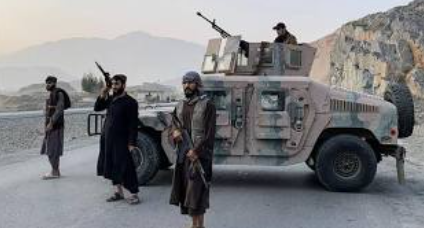
Afghanistan, you have to go back decades. The two countries have never really been at peace. Their shared border — the Durand Line — was drawn by British colonial rulers in 1893 and was never fully accepted by Afghanistan. But the immediate roots of the current conflict go back to 2021, when the Taliban swept back into power in Kabul after the American withdrawal.
Pakistan initially celebrated the Taliban’s return. After all, Pakistan’s intelligence
agency, the ISI, had for years sheltered, funded, and guided the Afghan Taliban during the years they spent fighting American and NATO forces. Islamabad thought a Taliban run Afghanistan would be a friendly neighbour — a strategic partner. What Pakistan got instead was a nightmare it had helped to create.
The Tehrik-i-Taliban Pakistan — the TTP, or Pakistani Taliban — found a safe haven inside Afghanistan under Taliban rule. The TTP is a brutal militant group that wants to topple the Pakistani state and impose its own version of Islamic law. From Afghan soil, it began launching increasingly deadly attacks inside Pakistan: bombings in markets, assaults on army checkposts, massacres of civilians. Hundreds of Pakistani soldiers and ordinary people died.
The Road to Open War
By late 2025, Pakistan had run out of patience. In October 2025, the two countries fought a brief but deadly ten-day conflict that killed over seventy people. Qatar stepped in to broker a ceasefire. But the peace was fragile. The TTP kept attacking. Pakistan kept accusing Afghanistan of turning a blind eye. Afghanistan’s Taliban government, never particularly interested in pleasing Islamabad, did little to stop the militants
Then, in February 2026, a series of devastating terrorist attacks hit Pakistani cities — Islamabad, Bajaur, and Bannu. Pakistan blamed the TTP operating out of Afghanistan.
On 21st February 2026, the Pakistani Air Force struck targets in the Afghan provinces of Nangarhar, Paktika, and Khost, claiming it was hitting militant camps. Afghanistan said the strikes killed eighteen civilians, including eleven children.
The Taliban retaliated. Pakistan struck back harder, bombing Kabul itself. Pakistan’s Defence Minister declared open war, announcing what the military called ‘Operation Ghazab Lil Haq’ — meaning Righteous Fury.
The Bitter Irony: Pakistan’s Own Record of Sponsoring Terror
This is where the story becomes deeply uncomfortable — for Pakistan. Because
even as Islamabad screams about cross-border terrorism from Afghanistan, it has spent decades doing exactly the same thing to its other neighbour: India.
The Lashkar-e-Taiba and the Jaish-e-Mohammed are two of the most dangerous terrorist organisations in the world. Both are based in Pakistan. Both have been documented by the United Nations, the United States, the United Kingdom, and India as being sheltered and supported by Pakistan’s military intelligence, the ISI. These groups have carried out attacks that killed hundreds of innocent people — not in war zones, but in railway stations, hotels, schools, and markets.
The most infamous example is the Mumbai attacks of November 2008. Gunmen crossed into India by sea and carried out a coordinated massacre across the city for three days, killing 166 people. The attack was planned and directed by Lashkar-e-Taiba.
The masterminds — including Hafiz Saeed and Zaki-ur-Rehman Lakhvi — were based in Pakistan. Saeed lived openly in Pakistan for years, holding press conferences and political rallies, before being placed under house arrest only after intense international pressure. Even then, Pakistani courts repeatedly released him.
In 2019, a suicide bomber killed forty Indian security personnel in the Pulwama district of Kashmir. The attack was claimed by Jaish-e-Mohammed, whose chief, Masood Azhar, sat comfortably in Pakistan. The world knew it. Pakistan knew it. And yet, for years, Pakistan blocked attempts at the United Nations to designate Azhar as a global terrorist.
The Financial Action Task Force — the global body that monitors terrorist financing —placed Pakistan on its ‘grey list’ for years, precisely because Pakistan failed to take meaningful action against these groups and their financial networks. Pakistan was only removed from the grey list in 2022, after agreeing to a long list of reforms. Many observers believe the reforms remain incomplete.
Good Taliban, Bad Taliban: The Strategy That Backfired
To understand Pakistan’s approach to militancy, you need to understand one concept: the distinction between ‘good Taliban’ and ‘bad Taliban.’
This is not a phrase invented by critics — it has been openly used by Pakistani officials themselves.
The logic goes like this: militant groups that fight Pakistan’s enemies are useful tools of the state. They are to be protected, funded, and given freedom to operate. Groups that turn their guns on Pakistan itself are enemies to be destroyed. So the Afghan Taliban —
who fought America and India’s allies in Kabul — were ‘good.’ The TTP — who bomb Pakistani cities — are ‘bad.’
Militants are not mercenaries who follow orders. Ideology, once lit, does not stay in the box. The same networks that Pakistan used to bleed India and to fight its wars in Afghanistan have now come home to haunt it.
This is not a new observation. Analysts, diplomats, and journalists have been warning Pakistan about this for thirty years. The chickens, as they say, have come home to roost.
Dishing It Out But Unable to Take It
There is a certain dark irony in watching Pakistan rage about cross-border terrorism from Afghanistan. The language Islamabad uses today — the fury, the accusations, the demands that a neighbouring government take action against militants on its soil — is
has known almost no peace in half a century. An open war between them risks enormous civilian casualties, a massive refugee crisis.
Qatar, Saudi Arabia, and Turkey — who all have relationships with the Taliban — will be under pressure to mediate. But the deeper problem cannot be solved by diplomacy alone.
The deeper problem is Pakistan’s own contradictory relationship with militancy
— a relationship it has never honestly confronted, and which has now exploded into open war on one of its own borders.
Conclusion: A Reckoning Long Overdue
Pakistan’s war with Afghanistan is, at its heart, a reckoning with its own past. For too long, Pakistan believed it could use terrorism as a tool of foreign policy without consequence — that it could light fires in other people’s homes while keeping its own safe. That belief has proven catastrophically wrong.
The country that sheltered Osama bin Laden. The country whose intelligence agency built the Taliban. The country whose soil was home to the planners of the Mumbai massacre. That same country is now bombing a neighbour and demanding the world recognize it as a victim of cross-border terrorism. The hypocrisy is not subtle. It is not
debatable. It is written in blood — the blood of Indians killed in Pakistani-sponsored attacks, and now the blood of Pakistanis and Afghans dying in a war Pakistan’s own policies helped make inevitable.
If there is a lesson here — and there must be one, paid for in so much suffering — it is this: a state that nurtures terrorism as a weapon will eventually be devoured by it.
Pakistan is learning that lesson the hard way. The tragedy is that it is not learning it alone. Ordinary Pakistanis, ordinary Afghans, and ordinary people across the region are paying the price for decisions made by generals and spymasters who believed they could play with fire forever.
References
1.https://www.euronews.com/2026/02/27/pakistan-declares-open-war-with-afghanistan-and-launches-strikes-on-kabul
2.https://edition.cnn.com/2026/02/27/asia/afghanistan-pakistan-strikes-what-we-know-intl-hnk
3.https://www.aljazeera.com/video/newsfeed/2026/2/27/pakistan-strikes-kabul-declares-open-war-on-afghanistan-following-clashe
4.https://moderndiplomacy.eu/2026/02/27/pakistan-declares-open-war-after-strikes-on-afghan-cities/
5.https://www.theguardian.com/world/2026/feb/27/pakistan-declares-state-of-open-war-after-bombing-major-afghan-cities?CMP=share_btn_url