
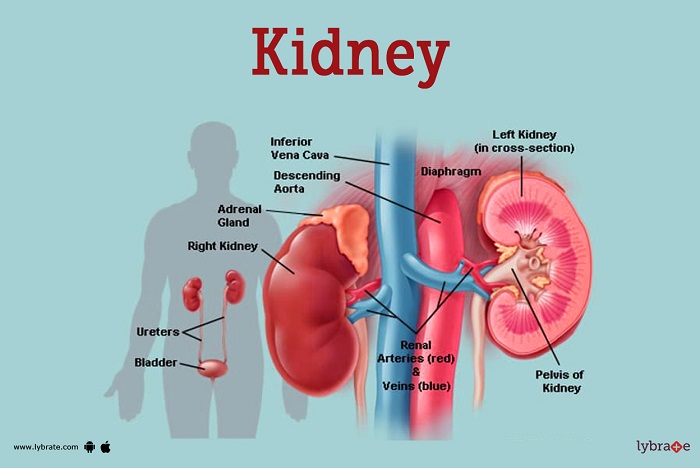

(Samajweekly) The human body contains two remarkable bean-shaped organs that are world wide known as the kidneys . The kidneys carries equal importance as that of heart and lungs .The main importance of kidneys is that they serve as nature’s own high-efficiency reverse osmosis system. Kidneys are biologically located on either side of the spine just below the ribcage.The size of each kidney is approximately same as the size of a fist.The right kidney is generally slightly lower than the left kidney to make space for the liver.Each kidney is approximately 3 centimeters (cm) thick, 6 cm wide, and 12 cm long. Across all sexes and weights, the left kidney is 10 grams (g) heavier than the right kidney.The kidneys handles an enormous workload of filtering around 50 gallons (190 liters) of blood daily to remove waste products, balance electrolytes and maintain the body’s internal environment.
Kidneys as a Natural Reverse Osmosis System
Reverse osmosis (RO) technology is a process where water passes through a semipermeable membrane to remove the dissolved impurities. The kidneys also performs a similar process naturally but with even greater complexity and precision:
- Filtration (Glomerular Stage) –The blood enters the kidney through the renal artery and passes into millions of microscopic filters called nephrons, each containing a glomerulus. These filters allow water and small molecules to pass while retaining essential blood cells and proteins.
- Selective Reabsorption – Unlike artificial RO systems the kidneys don’t just discard everything which they filters.With the help of a unique intricate network of tubules they reabsorb essential minerals, glucose and water back into the bloodstream.
- Secretion & Fine-Tuning – Waste products such as urea, creatinine and excess ions are secreted into the urine. Hormones like antidiuretic hormone (ADH) adjust water reabsorption according to hydration levels.
- Final Excretion – Purified blood leaves the kidney via the renal vein while concentrated urine is sent to the bladder for elimination.
This self-regulating system runs 24/7 without external power and without any maintenance.Such a system which resembles the reverse osmosis system is truly a biological marvel that outperforms man-made RO systems in efficiency and the adaptability.
Essential Functions of the Kidneys
- Waste Removal – The most important function of the kidneys is to eliminate nitrogenous waste, toxins and excess salts.
- Fluid & Electrolyte Balance – The kidneys also performs the task to maintains the levels of sodium, potassium and calcium within the required levels.
- pH Regulation – The kidneys also helps in keeping the blood pH between 7.35 and 7.45.
- Blood Pressure Control – The kidneys helps in controlling the blood pressure of the body through the renin-angiotensin-aldosterone system.
- Hormone Production – The kidneys also produces erythropoietin which stimulates red blood cell formation and calcitriol which is active vitamin D for bone health.
- Detoxification – They also neutralizes the effects of some drugs and harmful metabolites.
How Kidneys Become Unhealthy
Kidneys are resilient but can be severally damaged by several factors.
Some of the factors effecting the kidneys are enlisted below:
- Chronic Diseases – Diabetes and hypertension are the leading causes of chronic kidney disease .
- Dehydration – Persistent low water intake concentrates toxins and increases the risk of kidney stone.
- Excessive Salt & Protein Intake –The use of excessive salt and protein intake can strains filtration capacity resulting in poor kidney health.
- Overuse of Painkillers –The unnecessary use of painkillers and some antibiotics can harm kidney tissues.
- Infections – Untreated urinary tract infections can spread to the kidneys.
- Toxic Exposure – Heavy metals, contaminated water or certain herbal supplements can be nephrotoxic.
Keeping Kidneys in Perfect Shape
- Stay Hydrated – In order to restore the kidneys in perfect shape one should aim for drinking 2–3 liters of water daily.
- Control Blood Sugar & Blood Pressure – The regular health monitoring and a balanced diet are key to keep the natural reverse osmosis system in perfect shape and condition.
- Reduce Salt Intake – Excess sodium intake results in increasing fluid retention and this further puts extra pressure on kidneys leading to its degradation.
- Eat Kidney-Friendly Foods – Fresh fruits, vegetables, whole grains and foods rich in antioxidants are excellent sources to boost the kidneys health.
- Avoid Overmedication – The another factor which contributes in keeping the kidneys hail and hearty is reduction in use of painkillers and if required should be used only when necessary and that too under proper medical guidance.
- Exercise Regularly – Regular physical exercises supports healthy blood flow and reduces obesity risk.
- Avoid Smoking & Excess Alcohol – Smoking and Alcohol consumption both can severely damage the kidney blood vessels.
- Regular Screening – Regular screening of the kidneys is highly essential and it is recommended in individuals having a family history of kidney disease.
The kidneys are termed as biological engineers with special ability of operating with the precision of a perfect reverse osmosis system but with unmatched accuracy and adaptability. Protection of the kidneys is not only essential for the removal of wastes from the body but also for keeping overall health, immunity and longevity. By making some conscious lifestyle choices,proper hydration, intake of a balanced diet and avoiding sedantary harmful habits one can ensure that these natural RO systems continues to work flawlessly for decades.
SURINDERPAL SINGH
FACULTY IN SCIENCE DEPARTMENT
SRI AMRITSAR SAHIB
PUNJAB.