SAMAJ WEEKLY UK

Bal Ram Sampla
Geopolitics
When we read about India’s fight for freedom, we often hear names like Mahatma Gandhi, Bhagat Singh, or Subhas Chandra Bose. However, many brave leaders who fought just as hard are often overlooked in history books. One of the greatest among them was Birsa Munda, a young tribal leader who stood up against the mighty British Empire armed with little more than bows and arrows.
Birsa Munda was born in 1875 in a small village in present-day Jharkhand. He belonged to the Munda tribe, an indigenous community that lived peacefully in the dense forests. The Mundas had their own way of farming, where the entire community shared the land. But when the British came, everything changed. They introduced harsh taxes, took away the tribe’s land rights, and gave control to wealthy landlords and moneylenders. To make matters worse, new forest laws prevented the tribal people from gathering wood or grazing their animals in their own ancestral homes.
Seeing his people suffer in poverty and lose their dignity, Birsa decided to fight back. In his early twenties, he united the tribal communities. He started a new movement called the Ulgulan, which means “The Great Tumult” or rebellion. Birsa gave his people a clear message: the land belongs to those who clear it and live on it, not to foreign rulers or corrupt landlords. He envisioned a self-ruled society where his people could live freely and honor their own traditions.
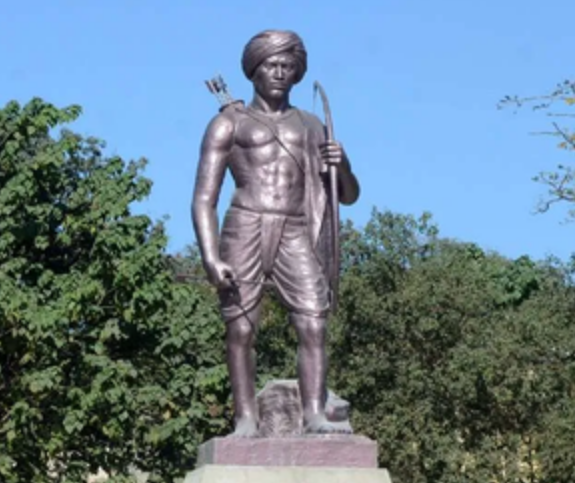
What makes Birsa’s story truly incredible is how he fought. His followers did not have rifles, cannons, or advanced military training. Instead, they relied on traditional weapons, bows, poisoned arrows, spears, and axes, along with their deep knowledge of the dense forests. Between 1899 and 1900, Birsa led daring attacks against British police stations and landlord posts, shaking the colonial administration to its core.
Tragically, the fight was unequal. In January 1900, at Dumbari Hill, British troops used modern guns against the tribal rebels. Despite fighting bravely, hundreds of tribespeople lost their lives. Birsa escaped into the forest but was eventually betrayed and arrested while he slept. On June 9, 1900, he died in Ranchi Jail under mysterious circumstances at the young age of just 24.
Even though Birsa Munda died very young, his sacrifice was not in vain. Eight years after his death, the British were forced to pass the Chota Nagpur Tenancy Act of 1908, which legally protected tribal land from being taken by non-tribals. Today, he is fondly remembered as Dharti Aba (Father of the Earth).
Birsa Munda proved that courage does not depend on age or expensive weapons. His story is a powerful reminder that the fight for freedom was fought in every corner of India, including the deep forests, by everyday heroes whose bravery should never be forgotten.