
SAMAJ WEEKLY UK

ASST. PROF. (DR.) VAISHALI
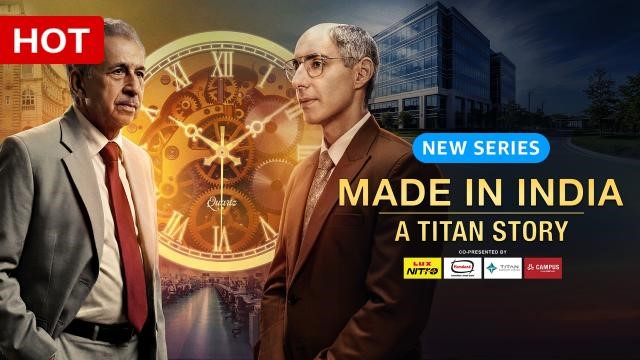
This month Amazon Prime has come up with the wonderful biographical drama series “Made in India: A Titan Story”. The actual voyage of a legacy begins with the final frames of a biopic slowly fading into stillness. This biopic on screen has sparked hot debate again everywhere about the unbeatable contribution and legacy of Titan watches. This story of Titan is much more than a business victory! It’s more like a live archive that really speaks to the spirit of the institutional imagination of contemporary India. For a historian, it’s not only inspiration; it’s all about the indisputable evidence of how vision, trust, and strategic patience can utterly influence the long game. This experience has inspired me to pen down this article, as I believe Titan was not simply a brand but a national institution of trust with years of committed leadership. It’s where the history of the firm, the philosophy of leadership and the legacy that lives on come together in one magnificent tale.
The story of Titan started in 1984, the era when most of the enterprises were born in caution and died in mediocrity. This company did not just start as a manufacturer of timepieces but as a statement of civilizational aspiration. Only those who want to change the world or enforce a history that honors their name and bravery can understand this statement of courage. The partnership between the Tata Group and the Tamil Nadu Industrial Development Corporation proved significantly next level bold decision. This team timely recognized that Indian consumers were not just looking for low-priced products but were ready to pay for products that offered them a combination of beauty, precision, and a sense of identity. However, achieving such balance was not straightforward, particularly because the Indian economy was still grappling with constraints inherited from the colonial period.
Before Titan’s market entry, the HMT Company enjoyed an absolute monopoly in the market and was king with Soviet-inspired functionality. However, the founder of Titan quickly identified the market loophole and the available space for growth. They noticed that although these watches were highly attractive and sought after by Indian buyers, they lacked emotions and a story to connect with. It still lacked the real flair.
Here, Titan decided to address this issue by introducing new technology called “quartz” and precision engineering, which blends Swiss elegance with a bold Indian spirit. This combo did its job perfectly when it created a spark in the eyes of Indian consumers that had never been articulated before.
Their spectacular journey was not merely marked with launching a product in the market, but this brand is celebrated for the audacity of the distribution strategy. It became India’s first branded retail chain in the watch industry. They broke the mold of multi-brand counters and offered consumers an exceptional experience rather than a mere transaction. This allows Titan to move beyond the catalog of ordinary business to leave the imprints of an extraordinary journey.
The prominent scholars in their academic literature focusing on brand architecture consistently affirm that exceptional brands are not built on products—they are built on promises. The original promise of Titan was undoubtedly radical or unconventional for its age—that an Indian firm could provide world-class quality watches with esthetic refinement embedded emotional resonance for Indian middle-class consumers. And the company still keeps its promise intact with the same steadfast dedication today, just as it was on day one!
In the view of scholars engaged in strategic management, like Michael Porter and Clayton Christensen, sustainable competitive advantage is not just about single decisions, but it has to be developed through interlocking systems of choices. Titan’s founding architecture is a perfect example of this approach! It was next to impossible to break the four-pillar combination of quartz technology, branded retail, aspiration-led pricing, and Tata trust. No market turbulence or competitive challenges could shake such a strong foundation!
Scholars studied the paradox of emerging market luxury at INSEAD and Harvard Business School, emphasis that it’s all about striking that perfect balance— being premium yet accessible and aspirational yet inclusive. Titan has cracked this code not just through the market theories elaborated in business books but by truly living it. They did not hesitate to experiment; they understand that when Indian consumers buy a watch, they are not just making a purchase but investing in a piece of their future selves. No research, empirical data, or theoretical report can earn such a connection or expertise. It’s all about going deep into the hearts of your audience.
The foundational story of brands such as Titan is truly a master class in what today’s strategists call “blue ocean creation.” Instead of just fitting into the popular business practices around them, they smartly built an altogether new canvas where watches were secured as canvases of identity, emotion, and aspiration. This quest for an exceptional space helped Titan to secure a leading position, one that no competitor can easily break.
Resilience architecture is a combination of crisis, competitiveness, and liberalization.
The foundation of Titan was a bold move. The survival strategies of this new startup in the stormy 1990s must be celebrated as an act of sheer strategic genius. People at the time of India’s economic liberalization in 1991 feared that this emerging domestic champion would be swallowed up by the global giants lurking nearby. Little did those naysayers know that Titan had built such a foundation that no earthquake could make it tremble.
This period of liberalization crisis was taken as a Darwinian test by Titan; that is, survival of the fittest, adapts or dies, and differentiates or dissolves. They make themselves well-equipped to integrate business theorist Gary Hamel’s idea of “strategic resilience” into their execution. They think true capacity is not just bouncing back from adversity but emerging from it stronger and more purposeful. This process of rebirth was not just considered merely a business strategy for Titan but was also marked as a spiritual reinvention.
Instead of engaging in suicidal price wars with Swiss and Japanese competitors, Titan took another road of premiumization and portfolio diversification, creating massive distribution by launching sub-brands that spoke to and resonated with different segments of the Indian psyche: Fastrack for the rebellious youth, Sonata for the value-conscious middle class, and Raga for the contemporary Indian woman. This multi-brand strategy transformed Titan into a business empire that spoke to millions of Indians in their language in a single minute. The Fastrack story deserves special academic attention, as it is one of the most successful youth-targeted brand launches in Indian marketing history. We must applaud them for their authentic roots and successful mastery of the language of rebellion, humor, and irreverence. It totally transcended its parent’s conservative image and proves that the real maturity of a big brand is when it provides its youth the freedom to carve out their own unique identity.
The academic research concentrates on consumer behavior, particularly of scholars like Aaker and Keller, whose seminal work is known to enlarge our understanding of brand extension and architecture, suggesting that the most dangerous moment for a dominant brand is not competitive pressure but internal stagnation. Titan’s leadership thankfully understood the concept intuitively, constantly interrogating their assumptions, refreshing their design philosophy, and chasing those “adjacent possible” opportunities. And it was this relentless pursuit of possibilities that kept Titan always one step ahead of the curve, always one step ahead of the game!
Their entry into the jewelry market through Tanishq in 1995 was perhaps the most audacious strategic bet in Titan’s history. They entered as a game-changer, stepping boldly into a market filled with unorganized players and long-standing family jewelers. The initial years were, of course, brutal, with mounting losses and critics sharpening their knives and ready to pounce. However, no business study book captures the tenacity of the Titan leadership team during those challenging years. It is a lesson learned by leaders who faced defeat but remained steadfast. This incredible turnaround of Tanishq is now a hot topic in lecture rooms of business schools across India as a case study in organizational tenacity.
This brand effectively addressed the primary concern of Indian jewelry buyers fear of impurity. They converted a structural disadvantage (being new) into a structural advantage (being trustworthy). Their approach to converting faith into a product is the philosophy that established Titan as a national institution rather than just a simple company.
Scholars who studied India’s post-liberalization corporate environment are unequivocal in their admiration of Titan’s diversification approach as an example of what we can call “disciplined opportunism.” They show an unremarkable ability to identify untapped areas in developing market sectors while maintaining a persistent emphasis on the quality of execution. This very trait of disciplined opportunism has the potential to transform any entrepreneurial venture into a successful business and elevate that business into a lasting legacy.
The Trust Architecture: How Titan Built a Brand Based on Conscience
In a world in which corporate trust often hinges on quarterly earnings calls and social media buzz. Titan’s exclusive approach of building trust truly stands out. It serves as a reminder that the most powerful and well-recognised brands in human history were crafted not from algorithms but from strong foundations. Present entrepreneurs really need to learn from Titan. Their brand-building method was exceptionally and intentionally rooted in conscience and wisdom, and this methodology really pushed them to build a legacy that neither economic downturns nor fierce competition can undermine.
The Tata heritage from which Titan draws its foundational philosophy stands out as a stunning example of stakeholder capitalism. Jamsetji Tata articulated these principles long before: they are not just about profits but also about serving communities, uplifting societies, and honouring every person who encounters the enterprise. You can experience the essence of this idea imbibed in every Titan product, every store, and the behavior of every employee.
Tanishq’s introduction of the Karat meter in the jewellery market was nothing less than a revolution in the industry and merits a chapter in the annals of customer trust. In the eyes of consumers, it secured a place and recognition for a company willingly revealing the impurity of the very industry it had entered. They were fully aware that this transparency would alienate traditional buyers in the beginning, but they believed that honesty is the ultimate competitive edge! Their vision was to use honesty as a strategic weapon that promised to change the rules of the game in the Indian jewellery industry permanently.
For over two decades, the Edelman Trust Barometer has measured global consumer trust, and it consistently marks trust as the ultimate game-changer for brand value. Trusted brands are capable enough to command premium pricing, survive crises, attract talent, and build communities that no amount of advertising spending can replicate. Titan has embedded this research-proven principle into its corporate DNA so deeply that now it’s no longer a strategy but a culture. The way the company treats its employees is a reflection of the inner fabric; it shows how strong their trust model is. Titan has consistently been rated as one of the best employers in India. They are recognized as a company that successfully ensures higher retention rates than the industry average. Titan’s employee engagement ideology is based on the belief that internal employee trust must come before the efforts for customer trust. This internal-to-external trust bridge sustains the essence of this organization.
Studying the Titan advertising legacy under the title “Emotional Brand Architecture” reveals a master class in branding. Their campaigns have burned themselves into the collective memory of the Indian audience. From the iconic ‘What’s Your Story?’ to the Tanishq wedding advertisement, celebrating interfaith wedlock celebrations at a moment of fierce social polarization, choosing humanity over hashtags, and courage over commerce, proving that a brand with real values stands tall even when the world gets complicated and not bending was the biggest marketing statement Titan ever made.
Rosabeth Moss Kanter, a Harvard Business School professor, argued that organizations that shine across generations do so not because they are shying away from controversy but because they have internalized and are guided by moral grammar even when the cost is high. Titan’s moral grammar as a language is so strong that one cannot escape noticing it in every decision, every product, every conversation, and whatnot.
Our modern global leader needs to acknowledge Titan’s trust architecture not just as a formula but as a philosophy that identifies brand equity and moral equity not as parallel tracks but as the same track. This helps us to look at a business not just as a machine for profit but as a medium of serving society. The greatest temptation or most seductive trap for any successful enterprise is the comfort of its mythology, the dangerous belief that strategies that made them great yesterday will make them great tomorrow. This is a significant cognitive bias that Clayton Christensen famously diagnosed as the “innovator’s dilemma.” Titan, by successfully avoiding this trap, remains relevant for four decades.
Titan’s innovation journey isn’t a straight march from analog to digital. It’s a complex, sometimes contradictory dance between heritage and disruption. A company that celebrates the craftsmanship of its watchmakers and invests aggressively in capabilities set a new smart watch era. And that capacity to exist in both worlds simultaneously is the measure of exceptional creativity.
MIT Sloan Management The review consistently stresses that the companies most likely to survive technological disruption are those that nurture what researchers call “ambidextrous organizations.” The strongest entities in the market possess the ability to simultaneously exploit existing strengths and explore new possibilities. Titan’s portfolio management spanning watches, jewellry, eyewear, perfumes, and accessories is the best example of a successful business strategy. This kept Titan operational and an excellent performer in all seasons of the market.
The in-depth study of the Titan corporate world left a valuable lesson for contemporary business leaders: it is not just about innovating but about innovating with identity. We need to ensure that in the path of a never-ending quest for the new, we do not forget the ideas that made our organizations so valuable. Disruption is not a pretext for discontinuity, and the most advanced form of innovation is the kind that makes customers feel both surprised and recognized at the same time. Titan has attained this balance through years of practice and innumerable failures.
The Leadership Genome: Crucial Lessons from the Titan’s Journey for the Global Boardroom
At the pinnacle of any big business, there is not just a strategy but a leadership genome. Titan’s corporate culture is characterized by a set of values, behaviors, and decision-making philosophies that are so deeply embedded that they endure leadership changes, market cycles, and technological revolutions smoothly. This genetic makeup of Titan is the single biggest asset that no competitor can buy and no consultant can design.
Titan’s leadership philosophy always embraced the essence of “servant leadership,” the idea put forward by Robert Greenleaf here. As per this philosophy, being a founder, your highest loyalty is to the purpose that the organization is there to serve, rather than just shareholders or personal accolades. This unique approach has forged a unique management culture that balances high expectations with genuine care, creating an environment that is both challenging and compassionate. The Xerxes Desai era, when the basic architecture of Titan’s brand and retail philosophy was built, revealed a quality that McKinsey researchers have identified as the hallmark of transformational leadership. According to this principle, one must learn the ability to embrace complexity without rushing to simplify it, to navigate through ambiguity while still pushing forward. Your intention and power to articulate a vision must be so crystal clear that it serves as the guiding star for the organization. This North Star can provide accurate guidance even in turbulent times.
Bhaskar Bhat’s tenure as managing director, from 2002 to 2019, also stands as a best-amplifier example for modern leadership, especially in the context of “strategic patience.” His readiness to invest in capabilities, categories, and cultures that may not yield immediate returns in quarterly reports but will create significant advantages over time deserve appreciation. Such patience is the most rare leadership quality to sustain in today’s world of instant gratification, and this is the greatest challenge.
The most amazing boardroom lessons from Titan’s four decades of growth can be captured in five strategic imperatives that every entrepreneur must pen down to ensure his growth. First, that your brand is not a marketing function but an institutional philosophy; second, that trust is not a soft value but the hardest asset on any balance sheet that you have to earn; third, that portfolio diversification must not be considered risk avoidance but should be grasped as an opportunity for multiplication; fourth, that every innovation must involve identity consciousness; and fifth, that leadership succession is in itself a strategic product.
We also need to remember that Titan has been an outstanding early practitioner in the contemporary discourse on ESG—Environmental, Social, and Governance. This company’s strategy was social responsibility before regulation or investor demands existed. Titan frameworks, embedding social responsibility into its core business model long before it became a regulatory requirement or an investor expectation.
But the best lesson for the global leadership community from Titan perhaps comes when you try to unravel tension between two words: “scale” and “soul.” Most organizations in their relentless search for scale gradually lose soul; most organizations that guard their soul struggle to ensure the scalability of their products. Titan has navigated this tension with unusual grace, establishing the phenomenal equation that scale and soul are not opponents but, when properly orchestrated, prove powerfully complementary to each other.
Titan is an optimistic narrative in the long saga of human history. Empires of commerce rise on hubris and fall on amnesia. Titan stands as a luminous testimony to a different possibility: rather than exploiting market loopholes, it demonstrates how a corporation may grow by elevating human aspirations. It values the pleasure of serving more than the struggle to gain and preserve market share. Titan has created a legacy, imprints of which must be followed by the young entrepreneurs to contribute a lot!
Today, when we are at the intersection of artificial intelligence, globalization, and climate reckoning, these three forces will reshape the map of global business more than any event since the Industrial Revolution. The story of Titan takes on the quality of prophecy: what Titan achieved is precisely what the next generation with startups has to achieve. Like Titan, future outstanding companies must be purposeful, innovative, trustworthy, and resilient. We must acknowledge and learn the language of future learning in order to gain mastery over rapidly changing scenarios. A watch is the closest human engagement with time, a mechanism that touches your pulse; when you wear it on your wrist, it counts not just the hours but the beats of a living life. Titan has valued this deep philosophy and infused it in each of its creations, bringing life to a mechanism that transcends into a companion. For the global leader reading this article in the crowded silence of a boardroom or the midnight hush of a corner office, Titan’s four-decade journey imparts a humbling and exhilarating lesson: that greatness in business is not a destination but a discipline, not a trophy but a temperament. The companies that will matter in the next fifty years will be those that, like Titan, dare to build for the century, not for the quarter or the cycle. This courage to build for the century empowers Titan to create an extraordinary legacy, which is essential for anyone in the world of entrepreneurship who wishes to secure a place in history.
(Dr. Vaishali has a Ph.D. in History from the University of Delhi and specializes in the Partition of India and Dalit history. She has a postgraduate degree from Jawaharlal Nehru University and teaching experience from the University of Delhi. During her Ph.D., she also worked as a research consultant for museum projects on freedom fighters. Her academic interests include the Partition of India, movies, education, business, biographies, and ed-tech, and she actively teaches undergraduate and postgraduate students. Currently she is working at Sanskaram University, Jhajjar, Haryana, India.)