
SAMAJ WEEKLY UK

Bal Ram Sampla
Geopolitics
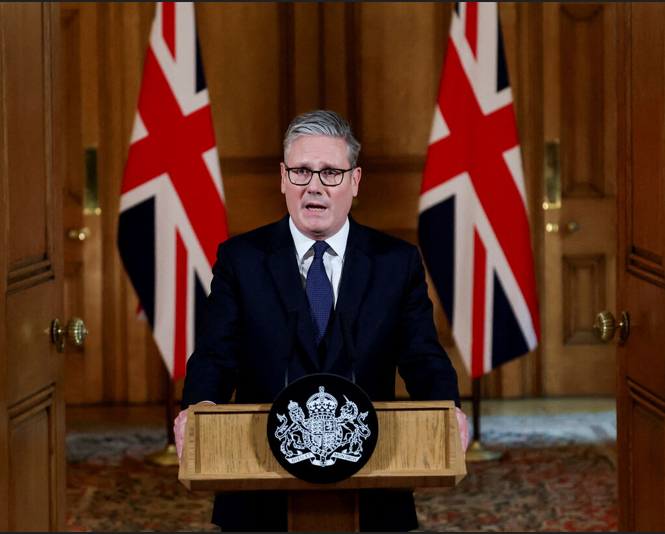
On 29th July 2025, Prime Minister Keir Starmer announced the UK would recognize Palestinian statehood by September unless Israel agreed to a Gaza ceasefire. While this decision appears designed to recover Muslim votes lost in 2024, it may represent a catastrophic miscalculation. With rising anti-Muslim sentiment, immigration concerns, and public anger over grooming gangs, Starmer’s Palestine recognition could alienate far more voters than it attracts, potentially committing electoral suicide in pursuit of a minority voting bloc.
Electoral Strategy
Starmer’s strategy ignores dangerous shifts in public opinion that could make Palestine recognition politically toxic. Current polling reveals record levels of anti-immigration sentiment, with 70% of Britons believing immigration over the past decade has been “too high,” including 50% who say it was “much too high.” More specifically, four in ten Britons feel Muslim immigrants have a negative impact on the UK.
These attitudes have been inflamed by recent controversies over grooming gangs, with renewed attention to findings showing disproportionate numbers of Pakistani men involved in child sex exploitation. Social media has become increasingly hostile, containing Islamophobic content. Far-right figures and international personalities like Elon Musk have amplified these concerns, creating a volatile political environment.
The Electoral Suicide Risk
Starmer’s Palestine recognition creates several potentially catastrophic electoral risks.
1. It reinforces perceptions that Labour prioritizes minority concerns over majority voters at precisely the moment when public sentiment is turning against Muslim immigration and integration issues. The timing appears tone-deaf, suggesting Labour learned the wrong lesson from 2024.
2. The policy provides ammunition for opposition parties to frame Labour as out of touch with public concerns about immigration and national identity. Conservative and Reform UK politicians can argue that while ordinary Britons worry about illegal migration and community tensions, Starmer focuses on Palestinian recognition to appease Muslim voters.
3. While Labour lost 300,000 votes in Muslim-majority areas, the broader electorate’s anti-immigration sentiment could cost millions of votes. The 70% of Britons concerned about high immigration vastly outnumber the Muslim demographic Labour seeks to retain.
Miscalculating the Electoral Balance
Recent violent protests and rising community tensions suggest immigration and integration issues are becoming more important for mainstream voters. Palestine recognition risks being seen as evidence that Labour hasn’t learned from public concerns about multiculturalism and community cohesion.
While working-class voters worry about housing, jobs, and community changes linked to immigration, Starmer announces foreign policy initiatives designed to satisfy Muslim voters. This reinforces narratives about Labour being captured by minority interests.
Alternative
Rather than protecting Muslim seats, Palestine recognition could accelerate Labour’s decline by alienating the broader electorate without guaranteeing Muslim vote recovery.
The grooming gangs controversy particularly complicates this strategy, as any perception that Labour appeases Muslim concerns while downplaying child exploitation issues could prove electorally devastating.
Conclusion
Starmer’s Palestine recognition represents a dangerous misreading of contemporary British politics. While designed to address specific electoral losses in Muslim constituencies, the policy risks massive backlash from a broader electorate increasingly concerned about immigration and Muslim integration. With 70% of Britons viewing recent immigration as excessive and rising tensions over grooming gangs, Palestine recognition appears politically toxic rather than electorally beneficial.
References
- https://hyphenonline.com/2024/07/06/the-impact-of-muslim-voters-at-the-2024-election-was-even-bigger-than-you-think-apsana-begum-shabana-mahmood-birmingham-perry-barr-blackburn-leicester-dewsbury-uk-election/
2. 44per cent of British Muslims rank the Gaza conflict as one of the five most important issues in the election – so how will this affect their support for Labour?
https://religionmediacentre.org.uk/news/general-election-2024-the-muslim-vote/
3. https://www.aa.com.tr/en/europe/record-number-of-muslims-elected-to-uk-parliament-despite-rising-islamophobia/3270749