SAMAJ WEEKLY UK

Bal Ram Sampla
Geopolitics
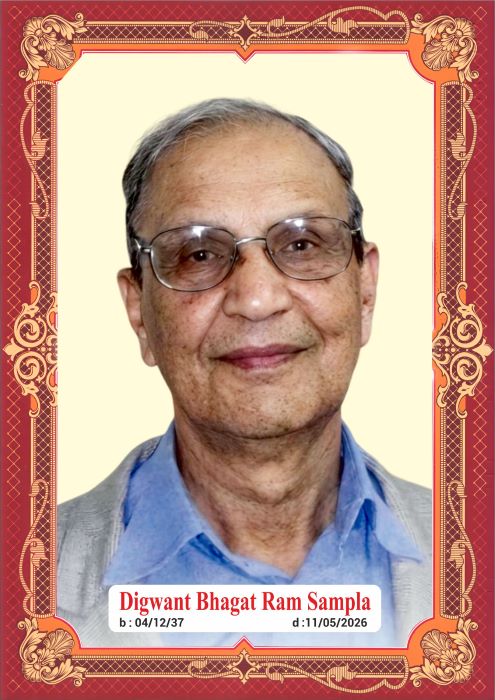
Obituary: Bhagat Ram Sampla
4 December 1937 – 11 May 2026
Scholar, Humanitarian, Servant of Dr. Ambedkar’s Mission
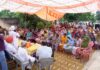
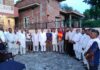
Shri Bhagat Ram Sampla, who left us peacefully on the morning of 11th May 2026 at 8:00am. Born on 4th December 1937 in the village of Jagpal Pur, Namaney, Kapurthala, Punjab, he lived a life of extraordinary simplicity, humility, and unwavering purpose. He was the eldest of five brothers and one sister, and the first in his family to journey to Britain, paving the way for those who would follow. His funeral took place in leafy green of Godalming, Surrey. A calm, tranquil of green surrounding place on Monday, 1st June 2026.
Roots and a Defining Encounter
 Bhagat Ram Sampla grew up in Sofi Pind, a village whose place in the Ambedkarite story would prove deeply significant. As a teenager, he had the profound privilege of meeting Dr. B.R. Ambedkar in 1952, an encounter that would become the compass of his entire life. From that moment, he dedicated himself wholly to Dr. Ambedkar’s mission of social justice, human dignity, and the liberation of the oppressed. He never wavered, never sought recognition, and never placed himself before the cause.
The roots of this commitment ran deep within the family. The first Republican Party conference in Punjab was held in Sofi Pind itself, and his father, Shri Chanan Ram Sampla, played an active role in the landmark 1964 agitation movement — a legacy of activism that Bhagat Ram would carry forward with great honour throughout his life.
Embracing the Dhamma: Conversion to Buddhism
On 17th June 1958, in a moment of profound personal and spiritual significance, Bhagat Ram Sampla and his father Shri Chanan Ram Sampla formally converted to Buddhism together. The ceremony was conducted by the Venerable G. Pragyanand , a deeply moving occasion that marked not merely a change of faith, but a public declaration of their commitment to the path of justice and liberation that Dr. Ambedkar had illuminated just two years earlier with his own historic conversion. Father and son, standing together, embracing the Dhamma as one, it was a bond that would define both their lives.
Yet this courageous act came at a price. In those deeply hostile times, conversion was met not with acceptance but with open persecution. Father and son suffered greatly for their choice, stones were thrown at them, and they faced real danger from those who viewed their conversion as an affront. It was a period of profound hostility, and it took exceptional courage to stand firm.
 Both men were devoted followers of Sant Braham Dass, himself a staunch follower and champion of Dr. Ambedkar’s teachings. It was Sant Braham Dass who presented Shri Chanan Ram Sampla with a flag of the Republican Party — a flag that flew proudly at the family residence in Sofi Pind, a visible symbol of their convictions for all to see. Bhagat Ram and his father never once diverted from the path that Sant Braham Dass had shown them. That path became their life.
A Brotherhood in the Cause: Shri L.R. Balley
Among all the friendships and alliances that Bhagat Ram Sampla formed in a lifetime of activism, none was more cherished or more enduring than his bond with Shri L.R. Balley. The two men were, in every sense that mattered, blood brothers, united not by birth but by an unshakeable shared conviction. Together they led rallies for equality, shoulder to shoulder, giving voice to communities who had long been denied dignity and rights. Theirs was a partnership forged in struggle and deepened by trust.
The depth of that bond was perhaps best expressed through a moment of great family significance. When the time came for the wedding of Bhagat Ram’s sister, it was Shri L.R. Balley who played an instrumental role in making it a historic occasion, the first Buddhist wedding ever held in Punjab in 1965. A ceremony that broke with tradition, that asserted a new identity rooted in dignity and the Dhamma, and that made history quietly, as so many of their finest acts did.
A New Beginning: Arrival in Britain
In 1962, Bhagat Ram Sampla set sail for Britain, arriving at Inverness in Scotland — with just £5 in his pocket. It was a journey undertaken with nothing but courage, faith, and a determination to build a life worthy of the values he carried within him.
 The Britain he arrived in was not a welcoming one. Society operated openly under the so-called ‘Colour Bar’, a system of casual, shameless discrimination that was displayed without apology in the windows of boarding houses and lodgings across the country: ‘No Blacks. No Dogs. No Irish.’ These were not rumours or whispers; they were written notices, hung in plain sight, telling a generation of migrants that they were unwanted.
Bhagat Ram faced this reality head on. He made his way through Inverness and Glasgow, then on to Wolverhampton and Birmingham, struggling at each step to find work, lodging, and dignity in a society that sought to deny him all three. Yet he persevered — with the quiet, unbreakable resolve that defined everything he did. He eventually settled in Aldershot, a town famous as the home of the British Army, where he would put down roots and begin the next extraordinary chapter of his life.
In 1966, he invited his father, Chanan Ram Sampla, to join him in England. The rest of the family followed in 1967. His wife, Parkasho, and daughter, Sunita, eventually came to England, and in 1969 his son Rahul was born — completing the family that would be his anchor throughout a life of tireless public service.
Aldershot: A Hub of the Ambedkarite Movement
Once settled in Aldershot, Bhagat Ram Sampla threw himself into the Ambedkarite movement with characteristic dedication. In the 1960s and early 1970s, Aldershot became an unlikely but vital centre for Ambedkarite activity within the Punjabi community in Britain. Leaders and activists would regularly visit, drawn by the energy and seriousness of the group that had gathered there. In those early years, there was no formal Ambedkarite organisation as such, but a very active Republican Group kept the flame alive.
Bhagat Ram linked with pioneering figures of the movement, most notably Mr. K.C. Leal, widely regarded as the real pioneer of the Ambedkarite movement in Britain, and connected with a Maharashtrian activists in East London who shared the same vision. Fellow activists such as Sansari Lal and Jhumat were among those with whom he built enduring bonds. Together, they laid the groundwork for what would eventually grow into a nationwide movement, with organisations forming in communities across the United Kingdom.
In the 1970s, he founded the Dr. Ambedkar International Association in Southall.
Scholar, Speaker, and Keeper of the Flame
As the Buddhist community in Britain grew and organisations began to form, Bhagat Ram Sampla became a sought-after speaker. His encyclopaedic knowledge of Dr. Ambedkar’s life and thought, combined with a deep and genuine spirituality, made him a natural teacher and guide. He deepened his understanding of Buddhism under the guidance of venerable teachers including Dr. Saddhatissa Bhante, Bhante Rewa Dhamma, and Bhante Nagasena, scholars and monks whose influence shaped the Ambedkarite Buddhist movement in Britain profoundly.
A prolific writer, he produced over 80 books across his lifetime — works on Dr. Ambedkar, on Buddhism, on social justice, and on the history of the movement. He wrote in HIndi, Punjabi, English and also was fluent in Urdu. He wrote for magazines, newspapers and periodicals. Yet despite this extraordinary output and his reputation as a speaker of rare depth, he remained resolutely modest. He never promoted himself. He never sought the limelight. He simply lived and breathed Dr. Ambedkar’s mission, day after day, decade after decade.
He wrote two volumes of Dr. Ambedkar: Messiah of the Downtrodden, this was based on 10 year research of documents. He uncovered historic documents from India Office library. He read 12 volumes ” Transfer of Power, 1942-47″.
A Life of Giving: The Humanitarian
Bhagat Ram Sampla translated his faith and philosophy into practical compassion on a remarkable scale. He built a charitable hospital in India, using his own life savings to ensure that healthcare was available to those most in need, dedicating the institution to the memory of his beloved father, Chanan Ram Sampla. He also established a Buddhist centre in the name of the Venerable Dr. Saddhatissa, honouring the teacher who had given him so much. In the family village of Sofi Pind, he built a post office, a simple but transformative gift to the community from which he came.
Beyond these lasting institutions, he gave quietly and generously to countless individuals over the years, helping people financially without fanfare, asking for nothing in return. This was the character of the man: a profound belief that wealth and comfort were tools to be used in service of others, not ends to be pursued for oneself.
Legacy
Bhagat Ram Sampla leaves behind his beloved wife Parkasho, his daughter Sunita, his son Rahul, and a family whose lives were shaped by his quiet example. He leaves behind 80 books which he distributed free. He never sought a profit. He leaves behind a hospital, a Buddhist centre, a post office, and the memories of the many people he helped along the way. He leaves behind a movement that is stronger and more deeply rooted in Britain because he was part of it.
A active member of Labour Party , as he canvassed in Conservative Party stronghold constituency, he would face racism and abuse. But it did not deter him. He was a passionate fan of West Ham United. He named the operating theatre after the late Bobby Moore. Bobby Moore, captain of West Ham United and England winning captain of the World Cup. His wife, Tina happily gave permission.
Most of all, he leaves behind a way of living , humble, purposeful, devoted. A life that asked nothing for itself and gave everything to others. A life that showed what it truly means to honour Dr. Ambedkar not just in words, but in deeds.