SAMAJ WEEKLY UK
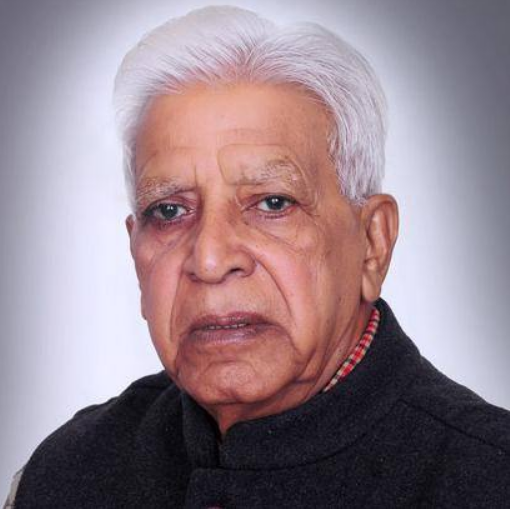
DR RAMJILAL, Social Scientist,
Former Principal, Dyal Singh College,
Karnal (Haryana, India).
Email: [email protected]
The name “Kamboja”, or “Kambu”, originates from Sanskrit and refers to present-day Cambodia, a region with a profound history that spans approximately 2,500 years. The story of the Kamboja people begins in the rocky terrain of the Hindu Kush Mountains and concludes at the renowned site of Angkor Wat. The Kshatriya Kamboja tribe is especially notable for its exceptional horses, which were held in high regard and often perceived to be of superior quality compared to those associated with royalty.
Originally from north-west India, the historical significance of the Kambojas is evident from their mention in the Vamsa Brahmanas, dating back to 1000 BCE. The ancient scholar Panini recognised them as kings and Kshatriyas, with their territory extending from the cold highlands of Uttarapath to Rajouri in Kashmir through Badakhshan to the Pamirs and Oxus. This narrative highlights the enduring spirit of a civilisation that has significantly influenced Cambodia’s identity and shaped the very essence of the nation.
In the seventh century BCE, the scholar Yaska observed that the dialect of the Kamboja exhibited Iranian phonetic features, yet their cultural and intellectual roots were deeply entrenched in Vedic traditions. The Kamboja were situated at a cultural crossroads, which is highlighted in a Persian inscription by Darius I, where they are referred to as Kambojia, signifying their status as a border province. Throughout their history, the Kamboja experienced a series of significant conflicts, including participation in the Mahabharata War and interactions with figures such as Queen Kripa Kamboja. who resisted Alexander. Their territory witnessed the rise and fall of major empires, including the Achaemenid, Greek, and Mauryan empires.
Historically, India’s borders have remained relatively stable and peaceful. In 326 BCE, Alexander entered India, and following the deaths of her husband and son, Queen Kripa Kamboja effectively negotiated a treaty with him. However, the Kamboja homeland began to face fragmentation due to increasing pressure from Central Asia. According to Ashoka’s 13th rock edict from 280 BCE, the principles of Dhama began to diffuse among the border populations of Kamboja, Yemen, and Gandharva, marking a significant cultural transition in the 2nd and 1st centuries BCE.
Dr Buddha Prakash, a prominent 20th-century historian affiliated with Kurukshetra University, noted that the Kamboja migrated to India alongside the Shakas, gradually dispersing throughout North India. They established a notable presence in regions such as Punjab, Haryana, Rajasthan, Uttar Pradesh, Gujarat, and Bengal, notably founding the Kamboja-Pala Empire, which enjoyed a reign of 79 years.
Historical records indicate that marriage alliances have long facilitated political relations and migration. The Mahavamsa describes Kamboja girls journeying by ship to wed Sinhalese princes, marking the earliest documentation of Kamboja girls securing their lineage through marriages with distant royal families. This practice originated in the Mahabharata era and persisted for many centuries. According to Charan legends, Amrita Kamboja was wed into a Chauhan Rajput family in Rajasthan, fostering connections between the Kambojas of the north and the Chauhans of Rajasthan.
The second Kamboj daughter, Mira Kamboja ,travelled south with sea traders and, through marital relations, joined the Chola nobility on the banks of the Kaveri. As a result, the clan was named “Tamilakam”.
The Kamboja journey wasn’t limited to this. In fact, Indians, traders, Brahmins, and Kamboja Kshatriyas had reached Southeast Asia as early as the first century AD. They didn’t fight wars, but instead intermarried, built temples, and ruled over local satraps. Historians today call this “Indianisation”. The Kamboja were important in that era. They possessed the famous horse tradition, Kshatriya status, and a name famous from the Mahabharata. Therefore, calling the new kingdom Kamboja made it easier to gain Vedic recognition.
The Chinese traveller Xuanzang travelled this route in the 7th century. Describing the Kiu-pi-to Kamboja in his ‘Great Tang Records’, he writes that the Kamboja were residents of Badakhshan, north of Gandhara. He also describes their mixed Buddhist and non-Buddhist customs, distinct dialect, and excellent horses. The ancient Kamboja were still breeding horses when their name was being reborn on the Mekong.
There are different theories about the origin of the word Kamboja. For example, according to “The Divine Legend of Kamboja-Mera”, a great Aryan prince came to Southeast Asia from India. He married an Apsara or Naga princess named Mera. Their lineage gave rise to the kingdom of Kamboja. Literally, the word ‘Kamboja’ is derived from ‘Kambu’ + ‘Ja’. In Sanskrit, “Ja” means “lineage”, “descendant”, or “offspring”. Hence, according to this folk tale, Kamboja are descendants of Kambu. Although this folk tale cannot be agreed upon, the Khmers themselves wrote that in 881 AD, King Indravarman Ist himself said that he was descended from sage Kambu Swayambhuva and Apsara Mera. This statement was later confirmed by his successors also. In the Sdok Kok Thom stone inscription of 1053 AD, it is clearly written – the state is Kambuja Desh, and the ruler is Kambuja-Raja.
According to Chinese history, the 6th-century ‘Book of Liang’ describes the marriage of the Brahmin Kaundinya to the local queen to establish Funan. By the 10th century, the New Book of Tang refers to the kingdom as Kambuja. This link is continuous and unbroken. It is called ‘Kambojiya’ in ancient Persian, ‘Kamboja’ in Sanskrit, ‘Kambuja’ in Khmer, ‘Cambodge’ in French and ‘Cambodia’ in English.
In summary, there is a long history spanning from the Pamirs to the creators of Cambodia (Angkor Wat)—the largest empire in Southeast Asia. In this history, the contributions of Kamboja warriors, horses, and Kamboja daughters—such as Amrita, Meera, and Savitri—remain eternally memorable.
References for further study:
>Coedès,G.(1968). The Indianized States of Southeast Asia (S.B. Cowing Tran.). University of Hawaii Press.
>Hultzsch, E.(1925). Inscriptions of Ashoka: Rock Edictx111.Clarendon Press.
>Jacques.C.& Lafond. (2007). The Khmer empire: Cities and Sanctuaries From the 5th to the 13th Century. River Books
>Parkash. (1951). The Kambojas. In R.C. Majumdar & A.D. Pusalkar (Eds.), The Vedic Age(pp.314-316), Bharatiya Vidya Bhavan.
>Lal. Ramji. (2026). Main Sources of the Ancient Indian Kamboja Mahajanapada: An Overview/https://theasianindependent.co.uk/main-sources-of-the-ancient-indian-kamboja-mahajanapada-an-overview/
>Lal. Ramji. (2026).https://pratibimbmedia.com/primary-sources-on-the-ancient-indian-kamboj-mahajanapada-an-overview/
>Lal. Ramji. (2026). https://samajweekly.com/main-sources-of-the-ancient-indian-kamboja-mahajanapada-an-overview
>Lal. Ramji.(2026). https://samajweekly.com/the-great-queen-kripa-kamboja/
>Lal. Ramji.(2026). the Warrior Kamboj Queens in Ancient India: Martial Leadership and Historical Legacy/ https://the/,asianindependent.co.uk/the-warrior-kamboj-queens-in-ancient-india-martial-leadership-and-historical-
>Xuanzang (1996). The Great Tang Dynasty Record of the Western Regions (L. Rongxi Trans.). BDK America. (Original Work ca. 646 CE).
>Zhou, D. (2007) A record of Cambodia: The Land and its People (P. Harris Trans.)Silkworm Books.
>https://en.wikipedia.org/wiki/Angkor_Wat