
SAMAJ WEEKLY UK

Bal Ram Sampla
Geopolitics
Double Standards of the European Union: “We’ll punish India for having a Russian-owned business on Indian soil, but we’ll continue buying Russian energy directly”.
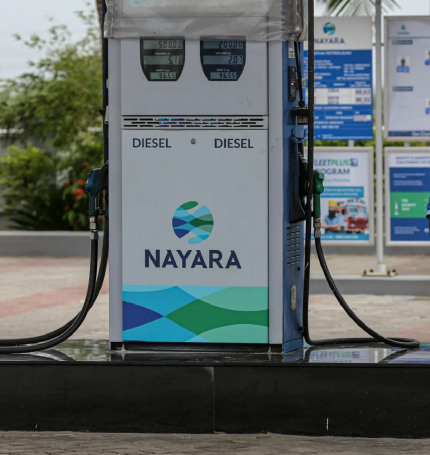
The topic of international sanctions often exposes the complex and sometimes contradictory nature of global politics. A good example is the European Union’s decision to sanction Nayara Energy’s Vadinar oil refinery in Gujarat, India. It raises the question of double standards, especially when the EU continues to purchase Russian oil and gas.
The EU’s Sanctions On Gujarat’s Refinery
The European Union sanctioned the Nayara Energy refinery in Gujarat mainly because Rosneft, Russia’s state-owned oil giant, owns nearly 49% of the company. The sanctions are intended to reduce Russia’s ability to finance its war in Ukraine by restricting its profits from energy exports. As a result, the EU bans imports of refined petroleum products from Nayara if they are produced using Russian crude oil.
EU’s Ongoing Imports of Russian Oil and Gas
While targeting India’s energy sector, the EU maintains a significant flow of Russian energy products into its own markets:
1. Oil
Russian crude oil imports into the EU dropped drastically, falling from 27% of total EU oil imports in 2021 to just 3% in 2024. However, certain countries like Hungary, Slovakia, and Czechia continue to import Russian oil due to special exemptions.
2. Natural Gas
EU remains a major buyer of Russian natural gas. In 2024, the EU imported approximately 52 billion cubic meters of Russian gas.
3.LNG and Pipeline Gas
The EU has become Russia’s largest customer for liquefied natural gas (LNG), and pipeline gas shipments, while reduced, have not ended. Russia still supplies a significant share
Case For Duplicity
India, points out that these selective actions reveal a double standard in the EU’s policy:
1. Selective
EU countries continue to import Russian fossil fuels on a large scale, using exemptions to justify their own purchases, while penalizing India for importing Russian oil and refining it for export.
2. Unilateral
The EU’s sanctions are not backed by the United Nations and are imposed selectively, raising questions about their legitimacy and fairness.
3. Rational
While the EU invokes its own energy security as a reason to keep importing Russian gas and some oil, it challenges the same argument when made by India.
Key Facts:
Over €5 billion worth of Russian gas was imported by the EU in the first four months of 2025.
The EU-27 countries imported over 837,000 metric tons of Russian LNG in just the first half of January 2025.
Conclusion
The EU’s dual approach of sanctioning India’s refinery over Russian ownership while maintaining its own energy ties to Russia, undermines its moral authority and makes its sanction regime appear selective and self-serving. These inconsistencies fuel criticism from India.
References
1.https://www.bloomberg.com/news/articles/2025-07-18/europe-sanctions-on-india-s-nayara-energy-puts-its-sale-at-risk?utm_source=website&utm_medium=share&utm_campaign=copy
2.https://swarajyamag.com/news-brief/nayaras-gujarat-refinery-hit-by-eu-sanctions-india-slams-double-standards Nayara’s Gujarat Refinery Hit By EU Sanctions, India Slams Double Standards
3.No double standards: India slams EU sanctions targeting Gujarat refinery https://www.indiatoday.in/world/story/india-slams-eu-sanctions-targeting-gujarat-refinery-glbs-2758043-2025-07-19?utm_source=washare&utm_medium=socialicons&utm_campaign=shareurltracking